 뒤로
뒤로Conjugated Systems, Orbital Symmetry, and Dienes: Structure, Stability, and Reactivity
스터디 가이드 - 스마트 노트
 자료에 맞춘 맞춤형 노트, 핵심 정의, 예시, 맥락을 확장해 제공합니다.
Conjugated Systems, Orbital Symmetry, and Dienes
Introduction to Dienes and Conjugation
Conjugated systems are a fundamental topic in organic chemistry, involving molecules with alternating single and double bonds. This chapter focuses on the structure, stability, and reactivity of dienes, with an emphasis on conjugated systems and their unique properties compared to isolated and cumulated dienes.
Structure and Classification of Dienes
Types of Dienes
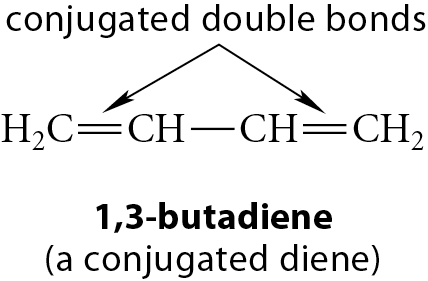
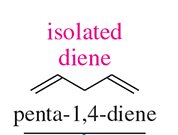
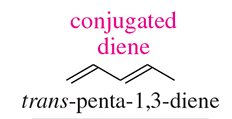
Conjugated Dienes: Two double bonds separated by a single bond, allowing for delocalization of π electrons. Example: 1,3-butadiene.
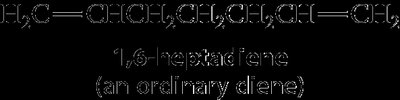
Isolated Dienes: Double bonds separated by two or more single bonds, with no interaction between the π systems. Example: 1,6-heptadiene.
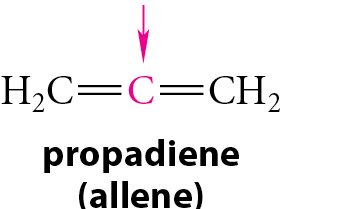
Cumulated Dienes (Allenes): Two double bonds sharing a single carbon atom, resulting in adjacent π bonds. Example: propadiene (allene).
Nomenclature of Dienes
Longest chain containing both double bonds is selected.
Suffix changes from -ane to -adiene.
Double bonds are numbered to give the lowest possible locants.
Use prefixes (di-, tri-, tetra-) for multiple double bonds.
Bonding and Structure in Alkenes and Dienes
Hybridization and Bonding in Alkenes
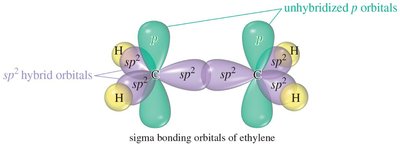
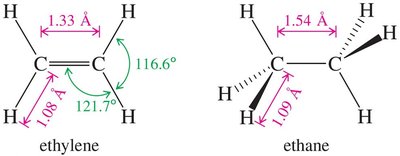
Alkenes have sp2 hybridized carbons, with unhybridized p orbitals forming the π bond. The geometry is trigonal planar with bond angles of approximately 120°.
π Bonding and Isomerism
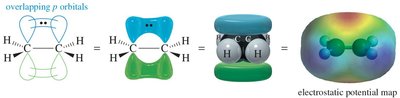
π bonds are formed by the sideways overlap of unhybridized p orbitals.
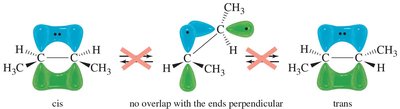
No free rotation around the double bond due to the π bond.
Cis-trans isomerism arises from restricted rotation.
Electron Delocalization in Conjugated Systems
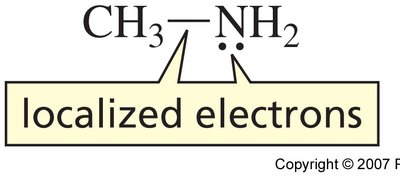
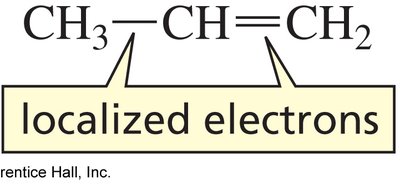
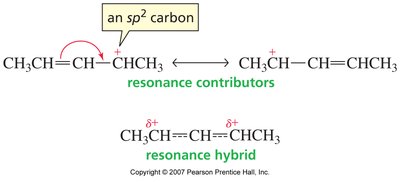
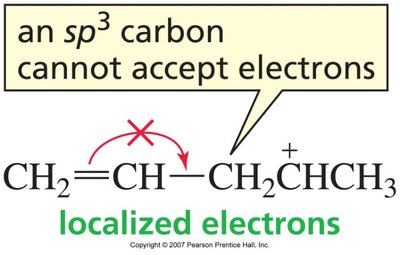
Localized vs. Delocalized Electrons
Localized electrons: Confined to a single atom or bond (e.g., lone pairs, single π bonds).
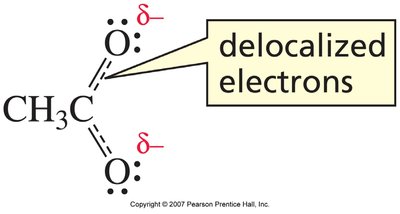
Delocalized electrons: Spread over several atoms, as in conjugated π systems, leading to resonance stabilization.
Stability of Dienes
Heats of Hydrogenation and Stability
The stability of alkenes and dienes can be compared using heats of hydrogenation (ΔH). Lower heat released upon hydrogenation indicates greater stability.
Conjugated dienes are more stable than isolated or cumulated dienes.
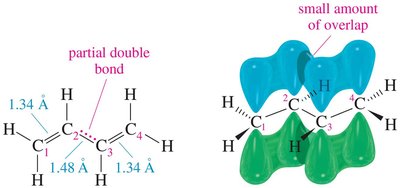
Stabilization arises from delocalization of π electrons and partial double bond character in single bonds between double bonds.





Bond Lengths and Delocalization
In conjugated dienes, the single bond between double bonds is shorter than a typical C–C single bond due to partial double bond character.
Example: In 1,3-butadiene, the C2–C3 bond is 1.48 Å (shorter than 1.54 Å in alkanes).
Bonding Models: Valence Bond and Molecular Orbital Theory
Valence Bond Theory
Covalent bonds form by overlap of atomic orbitals, with shared electron pairs.
Example: Overlap of two 1s orbitals in H2.
Molecular Orbital (MO) Theory
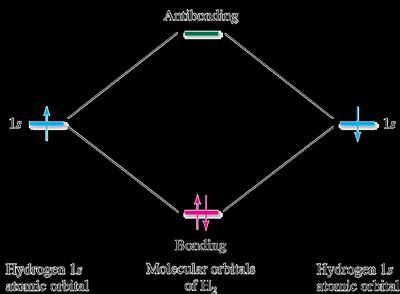
Atomic orbitals combine to form molecular orbitals (MOs), which can be bonding or antibonding.
Number of MOs equals the number of atomic orbitals combined.
Electrons fill the lowest energy MOs first.
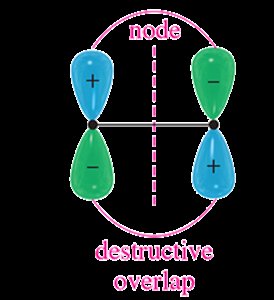
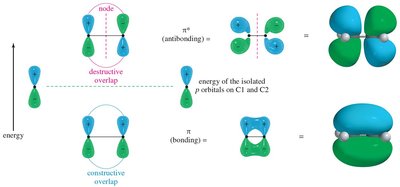
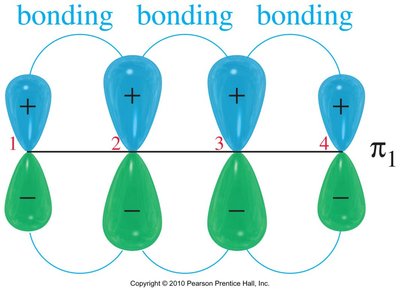
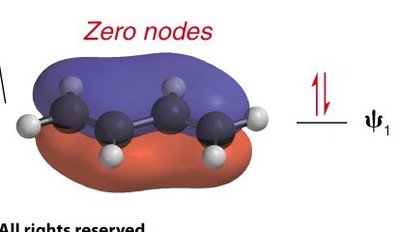
π MOs are formed by sideways overlap of p orbitals; constructive overlap forms bonding π MOs, destructive overlap forms antibonding π* MOs.
MOs in Conjugated Dienes
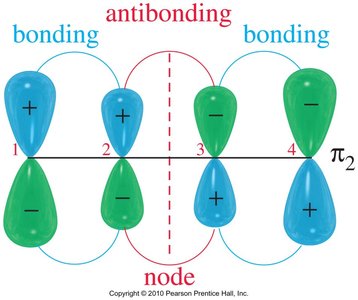
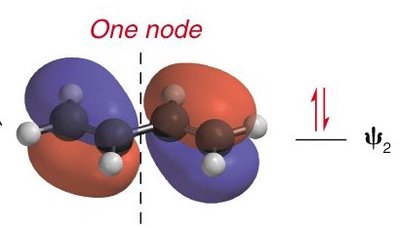
In 1,3-butadiene, four p orbitals combine to form four π MOs (two bonding, two antibonding).
Delocalization of electrons across the molecule leads to resonance stabilization.
Conformations and Reactivity of Dienes
Conformations of Conjugated Dienes
s-trans conformation: Most stable due to minimal steric strain and maximum orbital overlap.
s-cis conformation: Less stable due to van der Waals repulsions, but necessary for certain reactions (e.g., Diels-Alder).
Conjugated dienes can interconvert between conformations at room temperature.
Reactivity: Electrophilic Addition to Conjugated Dienes
Conjugated dienes react with electrophiles (e.g., HBr) to give mixtures of 1,2- and 1,4-addition products.
1,2-addition: Electrophile and nucleophile add to adjacent carbons.
1,4-addition: Electrophile and nucleophile add to terminal carbons, with double bond migration.
Product distribution depends on temperature (kinetic vs. thermodynamic control).
Kinetic vs. Thermodynamic Control
Product Distribution in Electrophilic Addition
Kinetic control (low temperature): Major product is formed fastest (lower activation energy), usually the 1,2-addition product.
Thermodynamic control (high temperature): Major product is the most stable (lower free energy), usually the 1,4-addition product.
The Diels-Alder Reaction
Overview and Mechanism
The Diels-Alder reaction is a [4+2] cycloaddition between a conjugated diene and a dienophile (alkene or alkyne), forming a six-membered ring.
The reaction is concerted (one-step, no intermediates) and requires the diene to be in the s-cis conformation.
Electron-withdrawing groups on the dienophile and electron-donating groups on the diene enhance reactivity.
Stereochemistry and Regioselectivity
The reaction is stereospecific: cis/trans relationships in reactants are preserved in the product.
Endo rule: Electron-withdrawing substituents on the dienophile prefer the endo position (inside the ring pocket) due to secondary orbital interactions.
Regioselectivity: Electron-donating and electron-withdrawing groups end up in 1,2- or 1,4-positions in the product, not 1,3-positions.
Summary Table: Types of Dienes
Type | Structure | Example | Stability |
|---|---|---|---|
Conjugated | Double bonds separated by one single bond | 1,3-butadiene | Most stable |
Isolated | Double bonds separated by two or more single bonds | 1,6-heptadiene | Less stable |
Cumulated | Double bonds share a carbon (allene) | Propadiene | Least stable |
Key Equations
Heat of hydrogenation (ΔH):
General Diels-Alder reaction:
Conclusion
Conjugated dienes exhibit unique stability and reactivity due to electron delocalization. Their behavior in electrophilic addition and cycloaddition reactions (such as the Diels-Alder reaction) is governed by both kinetic and thermodynamic factors, as well as stereochemical and regiochemical considerations. Understanding these principles is essential for predicting the outcomes of reactions involving conjugated systems in organic chemistry.
