 뒤로
뒤로Conjugated Systems, Orbital Symmetry, and Ultraviolet Spectroscopy: Study Notes
스터디 가이드 - 스마트 노트
 자료에 맞춘 맞춤형 노트, 핵심 정의, 예시, 맥락을 확장해 제공합니다.
Chapter 15: Conjugated Systems, Orbital Symmetry, and Ultraviolet Spectroscopy
Introduction to Conjugation and Stability of Conjugated Dienes
Conjugated systems are fundamental in organic chemistry, especially in understanding the stability and reactivity of molecules with alternating single and double bonds. Conjugation refers to the interaction between π-electrons across adjacent double bonds separated by a single bond, resulting in delocalization and increased stability.
Conjugated double bonds: Double bonds separated by one single bond, allowing π-electron delocalization.
Isolated double bonds: Double bonds separated by two or more single bonds, with minimal interaction.
Cumulated double bonds: Successive double bonds with no intervening single bonds (e.g., allenes).
Resonance energy: The extra stability (typically ~15 kJ/mol) gained by conjugation, measurable via heats of hydrogenation.
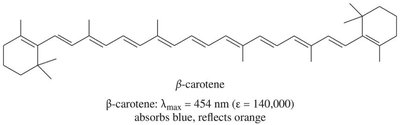
Applications: Many natural pigments, such as β-carotene in carrots, owe their color to extended conjugated systems.
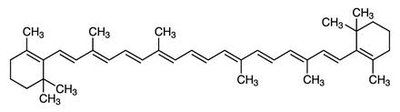
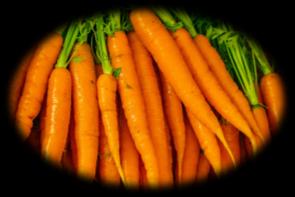
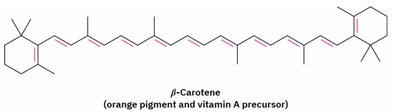
Additional info: Conjugated systems are prevalent in biological molecules, affecting their optical and electronic properties.
Structure of Conjugated Dienes
Conjugated dienes, such as buta-1,3-diene, exhibit unique structural features due to π-electron delocalization. This delocalization results in bond lengths intermediate between single and double bonds and planar geometry for optimal orbital overlap.
Bond lengths: C–C bonds in conjugated dienes are shorter than typical single bonds but longer than double bonds.
Hybridization: All carbons in buta-1,3-diene are sp2 hybridized.
Planarity: Planar conformation allows p orbitals to overlap, facilitating delocalization.
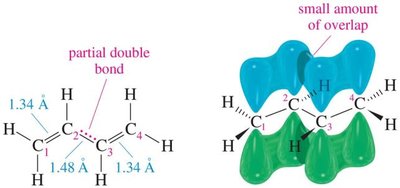
Construction of Molecular Orbitals (MO): Ethylene and 1,3-Butadiene
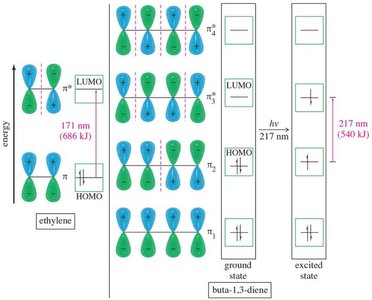
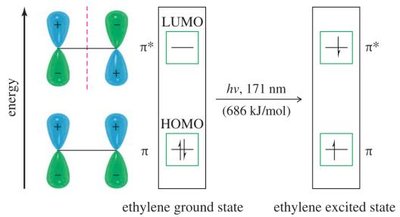
Molecular orbital theory explains the stability of conjugated systems by showing how atomic p orbitals combine to form bonding and antibonding molecular orbitals. The energy and occupancy of these orbitals determine the molecule's stability.
Bonding MO: Constructive overlap of p orbitals, lower energy.
Antibonding MO: Destructive overlap, higher energy.
Nodes: Regions where electron probability is zero; more nodes correspond to higher energy MOs.
Filling MOs: Electrons fill from lowest to highest energy, with the highest occupied molecular orbital (HOMO) and lowest unoccupied molecular orbital (LUMO) being key in reactivity.
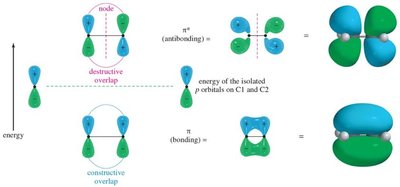
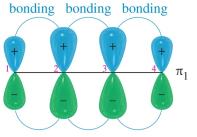
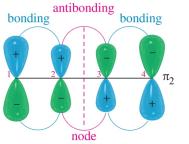
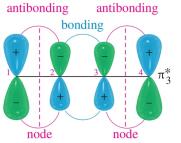
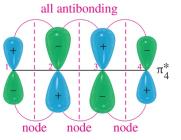
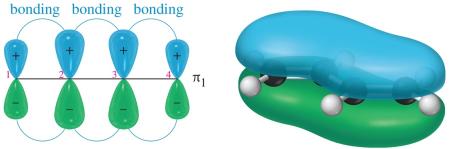
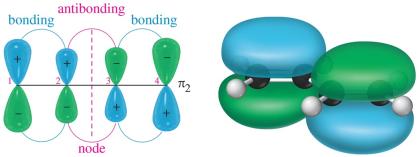
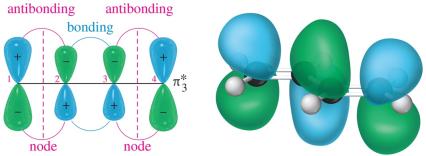
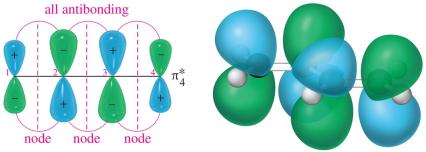
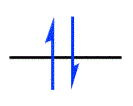
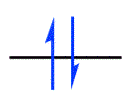
Additional info: The stability of conjugated systems is directly related to the delocalization of electrons in the bonding MOs.
Reactions and Stability of Conjugated Systems
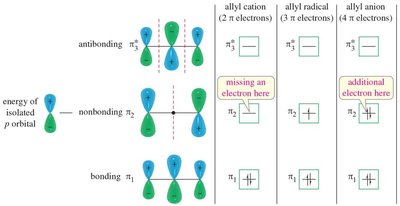
Conjugated systems undergo reactions that often retain some resonance stabilization. Key intermediates include allylic carbocations, radicals, and anions, each stabilized by delocalization.
Allylic carbocations: Formed when a positive charge is adjacent to a double bond; stabilized by resonance.
Stability order: 1° allylic ≈ 2° carbocation; 2° allylic ≈ 3° carbocation.
Allylic radicals: Free radicals adjacent to double bonds, also stabilized by resonance.
Allylic anions: Negative charge adjacent to a double bond, stabilized similarly.

Additional info: Resonance stabilization is a recurring theme in organic chemistry, affecting both reactivity and product distribution.
Electrophilic Additions to Conjugated Dienes
Electrophilic addition reactions to conjugated dienes can yield multiple products due to resonance-stabilized intermediates. The classic example is the addition of HBr to buta-1,3-diene, resulting in both 1,2- and 1,4-addition products.
1,2-addition: Nucleophile adds to the carbon adjacent to the original double bond.
1,4-addition: Nucleophile adds to the terminal carbon, resulting in a shift of the double bond.

Kinetic vs. Thermodynamic Control
The product distribution in reactions of conjugated dienes depends on temperature and the relative rates and stabilities of possible products. Kinetic control favors the product formed fastest, while thermodynamic control favors the most stable product.
Kinetic control: Lower temperature, product forms faster, not necessarily most stable.
Thermodynamic control: Higher temperature, equilibrium allows formation of most stable product.
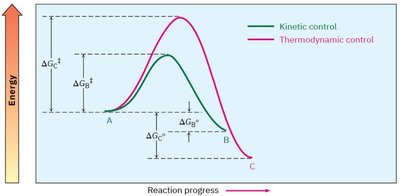
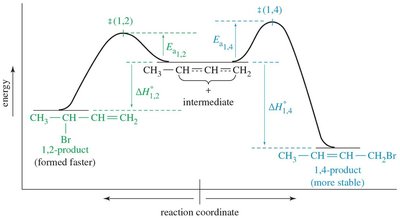
Additional info: Understanding these controls is crucial for predicting reaction outcomes in organic synthesis.
Allylic Bromination
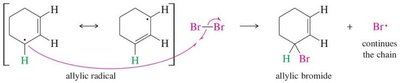
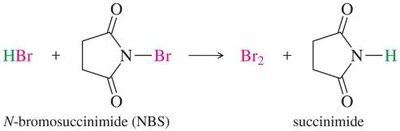
Allylic bromination is a selective reaction for introducing bromine at the allylic position, typically using N-bromosuccinimide (NBS) as the brominating agent. The reaction proceeds via a radical mechanism.
NBS: Maintains low Br2 concentration, preventing unwanted addition across double bonds.
Mechanism: Initiation, propagation, and termination steps involving allylic radicals.
Diels–Alder Reaction
The Diels–Alder reaction is a [4+2] cycloaddition between a conjugated diene and a dienophile, forming a cyclohexene ring. It is a concerted, one-step mechanism and is widely used in synthetic organic chemistry.
Diene: Must be in s-cis conformation to react.
Dienophile: Electron-deficient alkene or alkyne.
Product: Cyclohexene ring, often with stereochemical control.
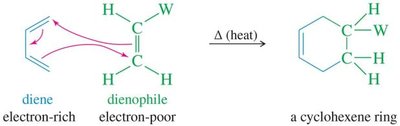
Additional info: The Diels–Alder reaction is named after Otto Diels and Kurt Alder, Nobel laureates in 1950.
Ultraviolet (UV) Spectroscopy
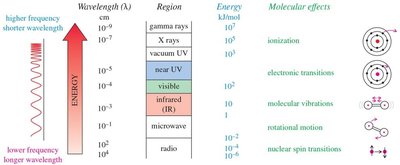
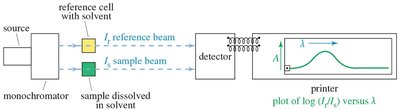
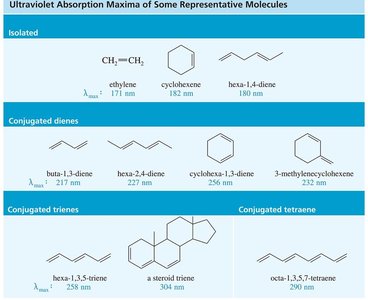
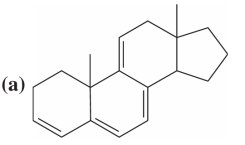
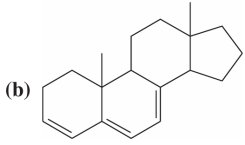
UV spectroscopy is a technique for studying electronic transitions in molecules, particularly π → π* transitions in conjugated systems. The wavelength of maximum absorbance (λmax) increases with the length of the conjugated system.
UV region: 200–400 nm, excites electrons from π to π* orbitals.
Beer’s Law: , where A is absorbance, ε is molar absorptivity, c is concentration, l is path length.
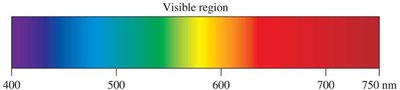
Longer conjugation: Results in absorption at longer wavelengths (visible region for highly conjugated compounds).
Colored Organic Compounds and Natural Products
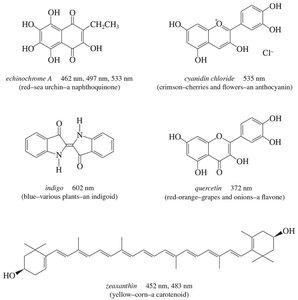
Highly conjugated systems absorb visible light, resulting in colored compounds. The color observed is due to the reflection of wavelengths not absorbed. β-Carotene, for example, absorbs blue light and reflects orange.
β-Carotene: λmax = 454 nm, ε = 140,000; absorbs blue, reflects orange.
Other pigments: Indigo (blue), echinochrome A (red), cyanidin chloride (crimson), quercetin (red-orange), zeaxanthin (yellow).
Additional info: The study of colored compounds is important in biochemistry, pharmacology, and materials science.
