 뒤로
뒤로Organic Chemistry: Dienes, Resonance, and Reaction Mechanisms Study Guide
스터디 가이드 - 스마트 노트
 자료에 맞춘 맞춤형 노트, 핵심 정의, 예시, 맥락을 확장해 제공합니다.
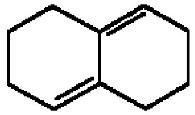
Q4. What descriptive term is applied to the type of diene shown?
Background
Topic: Types of Dienes
This question tests your ability to classify dienes based on the arrangement of their double bonds. Dienes can be conjugated, cumulated, or isolated, depending on the connectivity and separation of the double bonds.
Key Terms:
Conjugated diene: Double bonds separated by one single bond (–C=C–C=C–).
Cumulated diene: Double bonds share a common carbon (–C=C=C–).
Isolated diene: Double bonds separated by two or more single bonds (–C=C–C–C=C–).
Step-by-Step Guidance
Examine the structure of the diene provided (refer to the image if available).
Identify the positions of the double bonds and count the number of single bonds between them.
Compare the arrangement to the definitions above to determine if the diene is conjugated, cumulated, or isolated.
Try solving on your own before revealing the answer!
Final Answer: Isolated diene
The structure shows two double bonds separated by more than one single bond, which fits the definition of an isolated diene.
Q7. Which compound has the smallest heat of hydrogenation?
Background
Topic: Stability of Dienes and Heat of Hydrogenation
This question tests your understanding of how the structure of a diene affects its stability. The more stable the diene, the smaller (less negative) its heat of hydrogenation.
Key Terms and Concepts:
Heat of hydrogenation (ΔHhyd): The energy released when a compound is hydrogenated; lower values indicate greater stability.
Conjugation: Conjugated dienes are more stable than isolated or cumulated dienes.
Substitution and Stereochemistry: More substituted and trans (E) isomers are generally more stable.
Step-by-Step Guidance
Identify which compounds are conjugated, isolated, or cumulated dienes.
Recall that conjugated dienes are more stable than isolated or cumulated dienes.
Among conjugated dienes, look for the most substituted and trans (E) isomer for maximum stability.
Compare the options and determine which structure fits these criteria best.
Try solving on your own before revealing the answer!
Final Answer: (E)-2-methyl-2,4-hexadiene
This compound is a conjugated diene with the most substitution and trans geometry, making it the most stable and thus having the smallest heat of hydrogenation.
Q8. Rank the following dienes in order of increasing stability: trans-1,3-pentadiene, cis-1,3-pentadiene, 1,4-pentadiene, and 1,2-pentadiene.
Background
Topic: Diene Stability
This question tests your ability to compare the stability of different types of dienes based on their structure and conjugation.
Key Concepts:
Conjugated dienes are more stable than isolated or cumulated dienes.
Trans isomers are generally more stable than cis isomers due to less steric strain.
Cumulated dienes (like allenes) are the least stable.
Step-by-Step Guidance
Identify which diene is cumulated, which are conjugated (cis/trans), and which is isolated.
Recall the general order: cumulated < isolated < conjugated (cis) < conjugated (trans).
Arrange the given dienes according to this order.
Try solving on your own before revealing the answer!
Final Answer: 1,2-pentadiene < 1,4-pentadiene < cis-1,3-pentadiene < trans-1,3-pentadiene
Cumulated (1,2-pentadiene) is least stable, followed by isolated (1,4-pentadiene), then conjugated cis, and finally conjugated trans as most stable.
Q9. Among a series of isomeric trienes, the more negative the ΔH° of the hydrogenation reaction of a given triene, the ________ stable it is relative to the others in the isomeric series.
Background
Topic: Thermodynamic Stability and Hydrogenation
This question tests your understanding of the relationship between heat of hydrogenation and molecular stability.
Key Concepts:
Heat of hydrogenation (ΔH°): The more negative the value, the less stable the compound.
Stability is inversely related to the magnitude of ΔH° (more negative = less stable).
Step-by-Step Guidance
Recall that a more negative ΔH° means more energy is released upon hydrogenation, indicating a less stable starting material.
Fill in the blank with the appropriate comparative term based on this relationship.
Try solving on your own before revealing the answer!
Final Answer: less
The more negative the ΔH° of hydrogenation, the less stable the triene is compared to its isomers.
Q10. Which of the following compounds is the most stable?
Background
Topic: Diene Stability and Substitution
This question tests your ability to compare the stability of different diene isomers based on conjugation, substitution, and stereochemistry.
Key Concepts:
Conjugated dienes are more stable than cumulated or isolated dienes.
Trans (E) isomers are more stable than cis (Z) isomers.
More substituted double bonds increase stability.
Step-by-Step Guidance
Identify which compounds are conjugated, cumulated, or isolated dienes.
Among conjugated dienes, determine which is the most substituted and has the E (trans) configuration.
Compare the options to select the most stable compound.
Try solving on your own before revealing the answer!
Final Answer: (E)-2-methyl-1,3-pentadiene
This compound is a conjugated diene with the E (trans) configuration, making it the most stable among the choices.
Q13. When the relative energies of the s-cis and s-trans conformers of 1,3-butadiene are compared, one finds that ________.
Background
Topic: Conformational Analysis of Dienes
This question tests your understanding of the relative stabilities of s-cis and s-trans conformers in conjugated dienes like 1,3-butadiene.
Key Concepts:
s-cis conformer: Both double bonds are on the same side of the single bond.
s-trans conformer: Double bonds are on opposite sides of the single bond.
s-trans is generally more stable due to less steric hindrance.
Step-by-Step Guidance
Draw both s-cis and s-trans conformers of 1,3-butadiene.
Consider steric interactions and overall molecular strain in each conformer.
Recall which conformer is generally lower in energy for conjugated dienes.
Try solving on your own before revealing the answer!
Final Answer: the s-trans conformer is lower in energy than the s-cis
The s-trans conformer is more stable due to reduced steric interactions.
Q34. Provide the structure of the major product which results from 1,4-addition of Br2 to the diene shown below.
Background
Topic: Electrophilic Addition to Conjugated Dienes
This question tests your understanding of the 1,2- and 1,4-addition products formed when a conjugated diene reacts with bromine (Br2).
Key Concepts and Mechanism:
1,2-addition: Bromine adds across the first and second carbons of the diene.
1,4-addition: Bromine adds across the first and fourth carbons, with the double bond shifting to the 2,3-position.
Major product depends on reaction conditions (temperature, kinetic vs. thermodynamic control).
Step-by-Step Guidance
Identify the positions of the double bonds in the diene structure provided.
Determine which carbons are involved in the 1,4-addition (first and fourth carbons of the conjugated system).
Draw the product where Br atoms are added to the 1 and 4 positions, and the double bond shifts to the 2,3-position.
Try solving on your own before revealing the answer!
Final Answer:
The major product is the compound where Br atoms are attached to the 1 and 4 positions of the original diene, and the double bond is now between carbons 2 and 3.
This is the result of 1,4-addition to the conjugated diene system.
