 뒤로
뒤로Organic Chemistry: Dienes, Stability, Resonance, and Reaction Mechanisms
스터디 가이드 - 스마트 노트
 자료에 맞춘 맞춤형 노트, 핵심 정의, 예시, 맥락을 확장해 제공합니다.
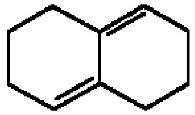
Q34. Provide the structure of the major product which results from 1,4-addition of Br2 to the diene shown below.
Background
Topic: Electrophilic Addition to Conjugated Dienes
This question tests your understanding of the 1,4-addition (conjugate addition) of bromine to a conjugated diene system. In such reactions, bromine can add across the 1,2- or 1,4-positions, but the major product is often the 1,4-addition product due to resonance stabilization of the intermediate.
Key Terms and Concepts:
Conjugated Diene: A molecule with two double bonds separated by a single bond, allowing for resonance stabilization.
1,4-Addition: Electrophilic addition where the electrophile (Br2) adds to the terminal carbons of the conjugated system (positions 1 and 4).
Resonance Stabilization: The intermediate carbocation formed during the reaction is stabilized by delocalization of charge over the conjugated system.
Step-by-Step Guidance
Identify the positions of the double bonds in the bicyclic diene structure. Label the carbons in the conjugated system as 1, 2, 3, and 4 for clarity.
When Br2 is added, the reaction proceeds via electrophilic addition. The first step is the formation of a bromonium ion intermediate at the 1-position.
Draw the resonance structures of the carbocation intermediate that forms after the initial attack by Br2. Show how the positive charge can be delocalized to the 3-position.
In the 1,4-addition, the bromide ion attacks the 4-position, resulting in the addition of bromine atoms at the 1- and 4-positions of the diene system.
Sketch the structure of the product, ensuring that the double bond shifts to the 2,3-position and bromine atoms are attached at the 1- and 4-positions.
Try solving on your own before revealing the answer!
Final Answer:
The major product of the 1,4-addition of Br2 to the given bicyclic diene is the compound where bromine atoms are attached to the 1- and 4-positions of the conjugated system, and the remaining double bond is between carbons 2 and 3. The structure is as follows:
Structure: (Show the bicyclic ring with Br at positions 1 and 4, and a double bond between positions 2 and 3.)
This product forms because the 1,4-addition pathway is favored due to resonance stabilization of the intermediate carbocation, leading to a more stable product.
