뒤로

Organic Chemistry: Stereochemistry, Cycloalkanes, and Spectroscopy Study Guide

학습 가이드 - 영상으로 배우기

업로드한 자료에 맞춘 엄선된 수업 – 모든 주제를 단계별로 배워보세요.

Newman Projections

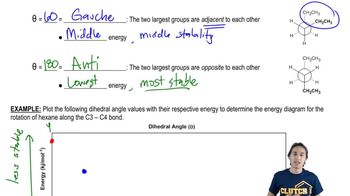
  • How to draw a Newman Projection Energy Diagram.
    07:27
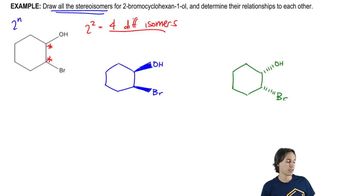
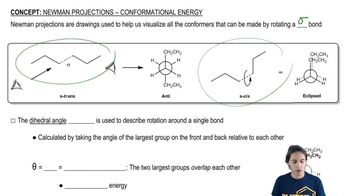
  • How sigma bond rotation is visualized
    03:11
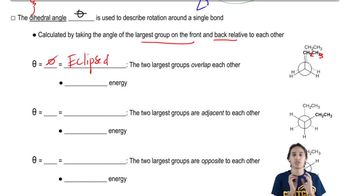
  • The energy states of 3 different Newman Projections.
    03:51

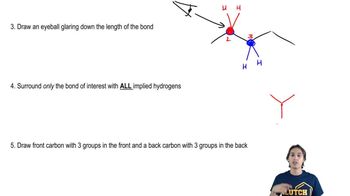
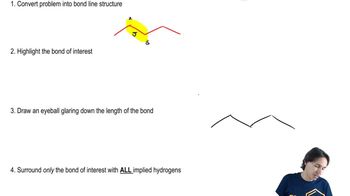
Drawing Newman Projections

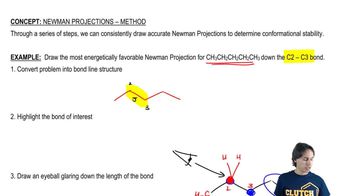
  • Step 6 to Drawing Newman Projections
    01:31
  • Step 5 to Drawing Newman Projections
    01:51
  • Step 3 to Drawing Newman Projections
    00:28

Intermolecular Forces

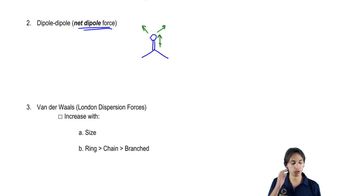
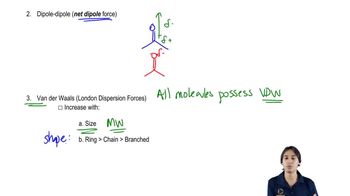
  • How dipole-dipole forces work.
    01:46
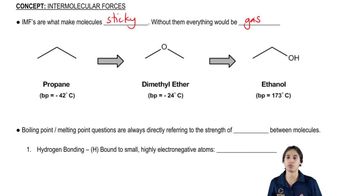
  • How IMFs are related to melting and boiling points.
    03:08
  • How Van der Waals forces work.
    03:01

Conformational Isomers

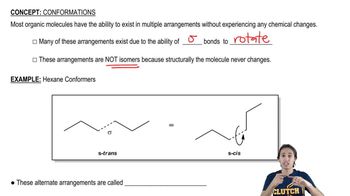
  • Understanding what a conformer is.
    03:29

Axial vs Equatorial

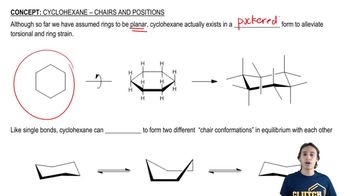
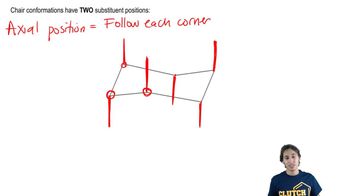
  • What is a chair conformation?
    01:05
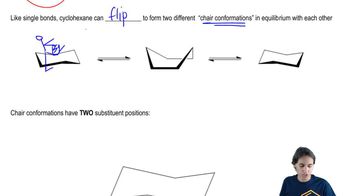
  • How chairs flip from one conformation to another
    02:22
  • How chairs flip from one conformation to another
    04:26

Chair Flip

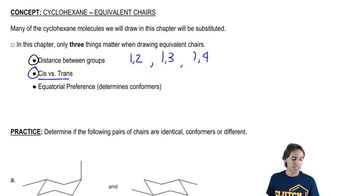
  • The 3 important factors when drawing chairs
    05:12

Cis vs Trans Conformations

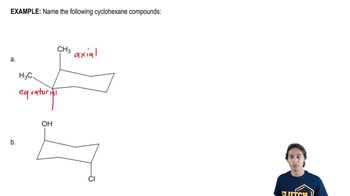
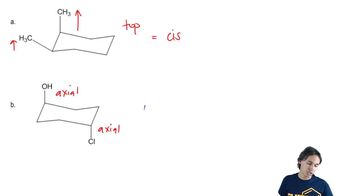
  • Is the following cyclohexane cis or trans?
    00:44
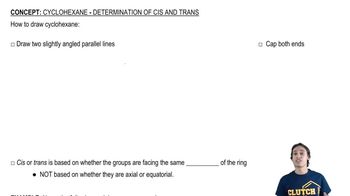
  • How to draw chairs.
    01:18
  • Is the following cyclohexane cis or trans?
    00:27
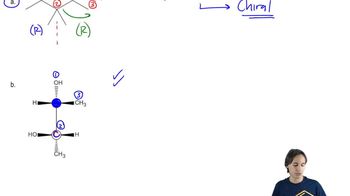
Skeletal Structure

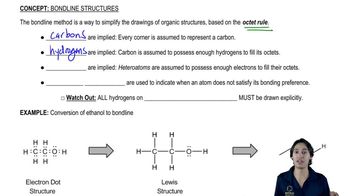
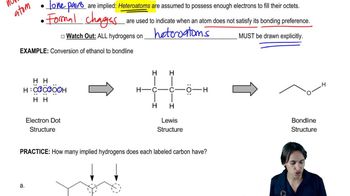
  • How bondline is different from Lewis Structures.
    04:03
  • Conversion of ethanol from electron dot to bondline
    01:50

Chirality

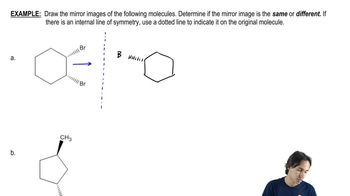
  • Drawing Mirror Images and Determining Chirality
    03:24
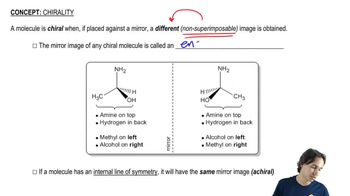
  • What is chirality?
    05:10
  • Drawing Mirror Images and Determining Chirality
    03:44

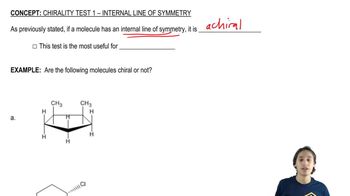
Chirality Test 1 - Internal Line of Symmetry

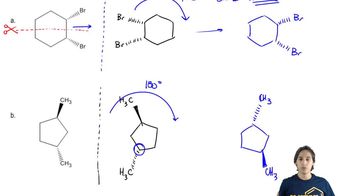
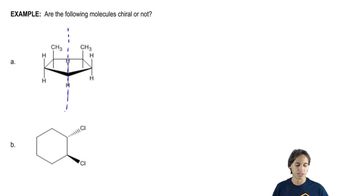
  • Determining Chirality with Plane of Symmetry
    00:25
  • Determining Chirality with Plane of Symmetry
    01:10
  • How and when to use the internal line of symmetry test.
    01:25

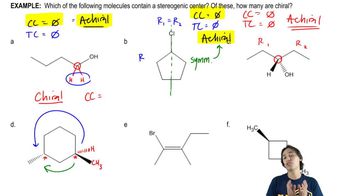
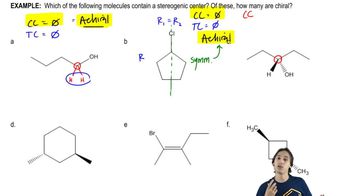
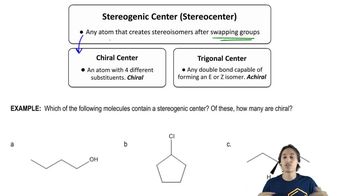
Chirality Test 2 - Stereocenters

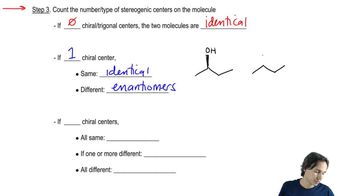
  • Determining Chirality using Stereocenter
    02:25
  • Determining Chirality using Stereocenter
    00:36
  • The difference between chiral and trigonal centers.
    02:38

Cahn-Ingold-Prelog Nomenclature

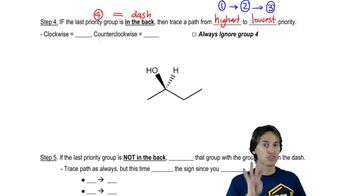
  • R and S Naming- Step 4
    03:07
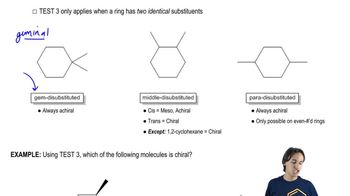
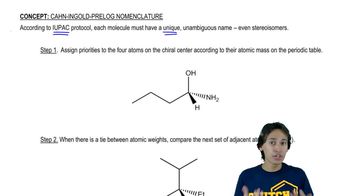
  • Why stereoisomers need their own naming system.
    01:48
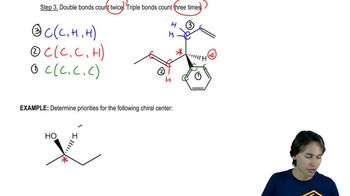
  • Determining Priorities
    01:19

Types of Stereoisomers

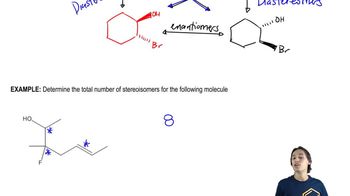
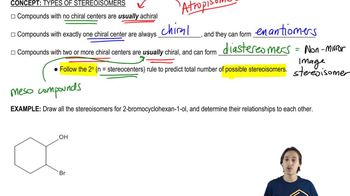
  • Determine total number of stereoisomers
    00:49
  • How to predict the total number of stereoisomers.
    01:03
  • Draw stereoisomers and determine relationship
    07:41

Meso Compounds

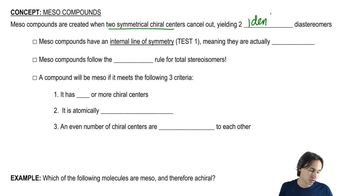
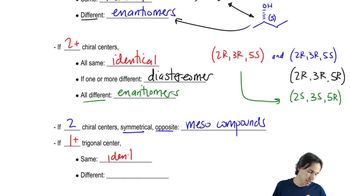
  • Defining meso compounds.
    01:40
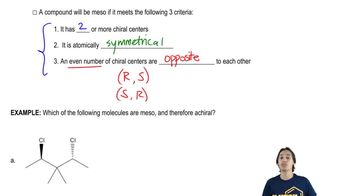
  • The 3 rules of meso compounds.
    04:10
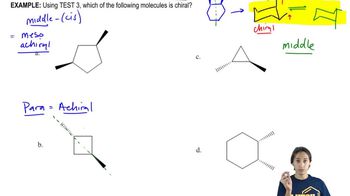
  • Which of the following molecules are meso?
    03:44

Chirality Test 3 - Disubstituted Cycloalkanes Shortcuts

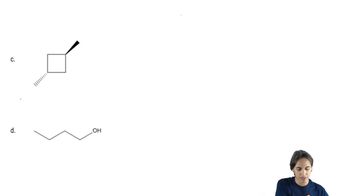
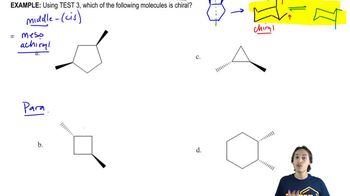
  • Is the following disubstituted cyclobutane chiral?
    00:35
  • Three types of disubstituted cycloalkanes
    03:52
  • Is the following disubstituted cyclopropane chiral?
    00:22

Isometric Relationships

  • Same atoms, same connectivity, 1 chiral center.
    01:40
  • Same atoms, same connectivity, 1 or more trigonal centers.
    02:05
  • Different atoms or different connectivity.
    01:41

Chirality

  • Drawing Mirror Images and Determining Chirality
    03:24
  • What is chirality?
    05:10
  • Drawing Mirror Images and Determining Chirality
    03:44

Chirality

  • Drawing Mirror Images and Determining Chirality
    03:24
  • What is chirality?
    05:10
  • Drawing Mirror Images and Determining Chirality
    03:44

1H NMR:Number of Signals

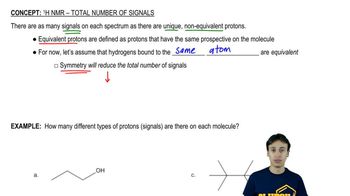
  • General Assumption for 1H NMR Signals
    04:35
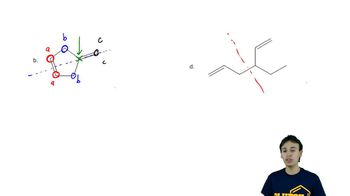
  • Identifying Proton Signals
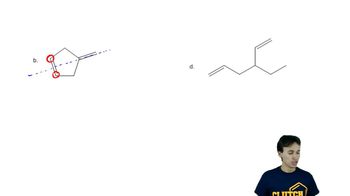
    02:02
  • Identifying Proton Signals
    01:55

NMR Spectroscopy

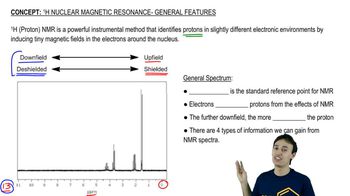
  • General NMR Features
    10:06