뒤로

Organic Chemistry Study Guide: Chapters 3 & 4 Key Concepts

학습 가이드 - 영상으로 배우기

업로드한 자료에 맞춘 엄선된 수업 – 모든 주제를 단계별로 배워보세요.

Functional Groups

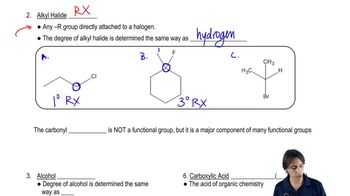
  • Assigning Degrees to Alkyl Halides
    01:30
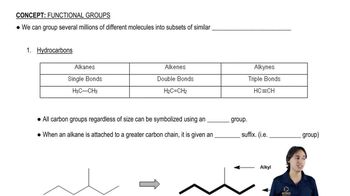
  • Why we need functional groups.
    01:49
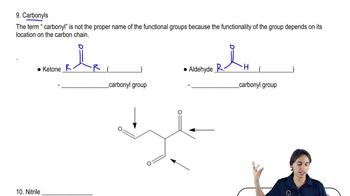
  • The difference between aldehydes and ketones.
    03:08

Constitutional Isomers

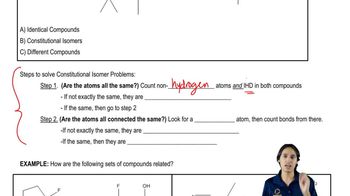
  • Isomeric Relationships
    03:28
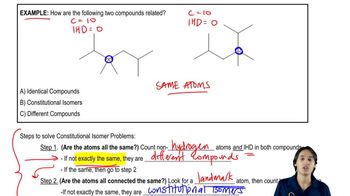
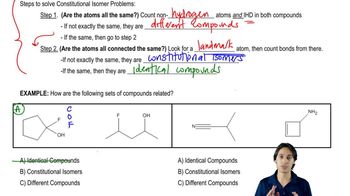
  • Using the flowchart to determine isometric relationships.
    05:02
  • Isomeric Relationships
    02:56

Alkane Nomenclature

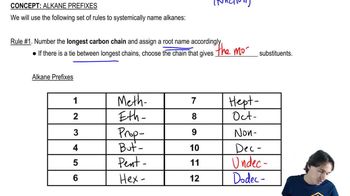
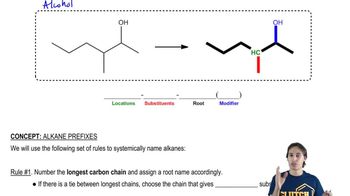
  • Naming the root chain
    01:02
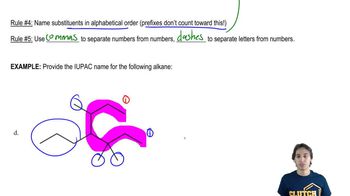
  • Provide the IUPAC name for the following alkane
    07:08
  • The different parts of an IUPAC name
    03:43

Cis vs Trans

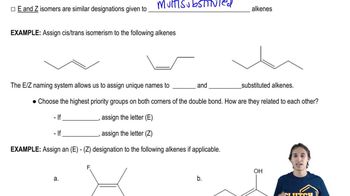
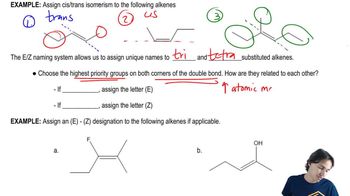
  • Why we need to use the E/Z naming system
    02:07
  • What does E and Z stand for?
    00:50
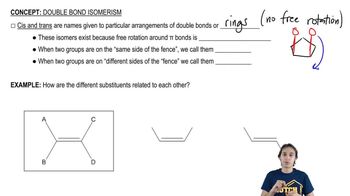
  • How to name different types of double bonds or rings
    04:28

Intermolecular Forces

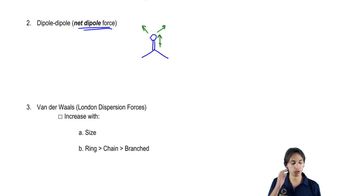
  • How dipole-dipole forces work.
    01:46
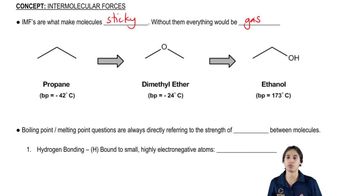
  • How IMFs are related to melting and boiling points.
    03:08
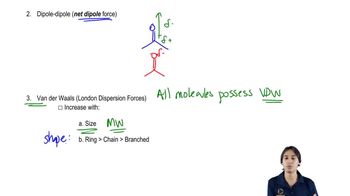
  • How Van der Waals forces work.
    03:01

Solubility

  • Introducing common solvents and other molecules in organic chemistry.
    02:01
  • Understanding “like dissolves like”.
    01:47

Newman Projections

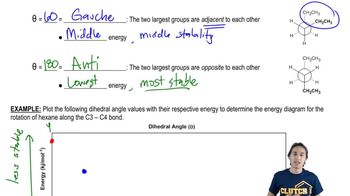
  • How to draw a Newman Projection Energy Diagram.
    07:27
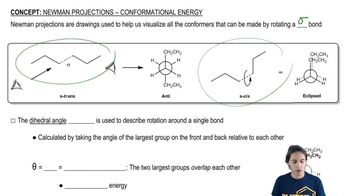
  • How sigma bond rotation is visualized
    03:11
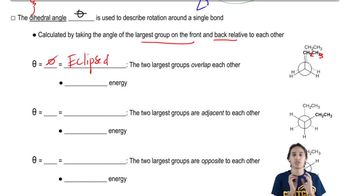
  • The energy states of 3 different Newman Projections.
    03:51

Conformational Isomers

  • Understanding what a conformer is.
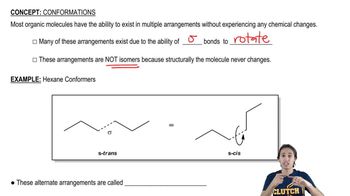
    03:29

Barrier To Rotation

  • 4 Values You Should Memorize
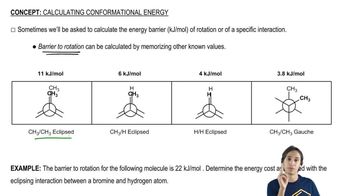
    02:54
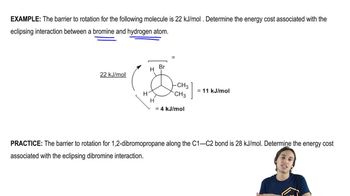
  • Determining energy cost of eclipsed interaction
    03:00

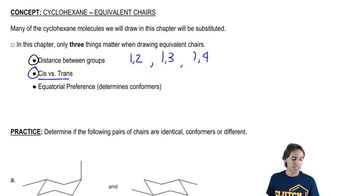
Cis vs Trans Conformations

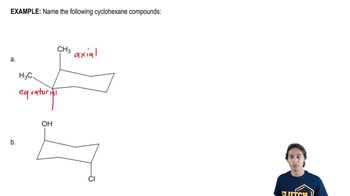
  • Is the following cyclohexane cis or trans?
    00:44
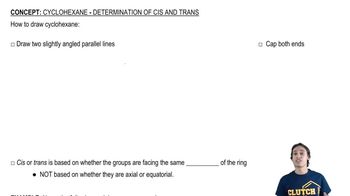
  • How to draw chairs.
    01:18
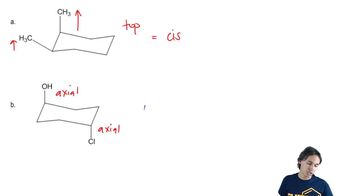
  • Is the following cyclohexane cis or trans?
    00:27

Chair Flip

  • The 3 important factors when drawing chairs
    05:12

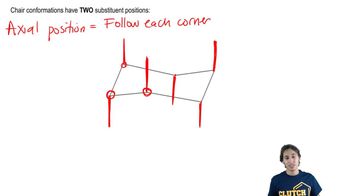
Axial vs Equatorial

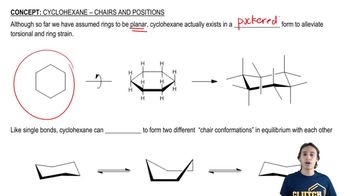
  • What is a chair conformation?
    01:05
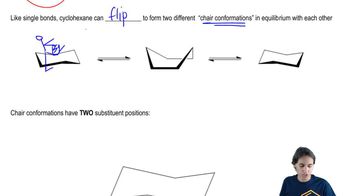
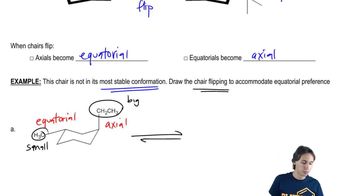
  • How chairs flip from one conformation to another
    02:22
  • How chairs flip from one conformation to another
    04:26

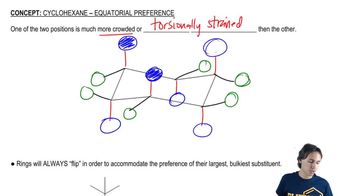
Equatorial Preference

  • Equatorial Preference
    04:02
  • Draw the following chair in the most stable conformation.
    03:17

Ring Strain

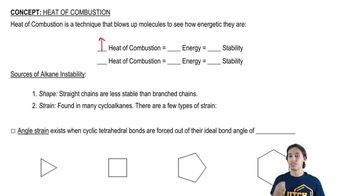
  • Understanding Heat of Combustion
    01:11
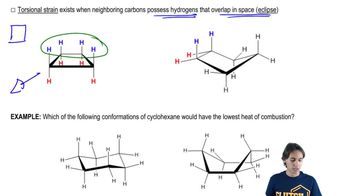
  • What is torsional strain?
    02:00
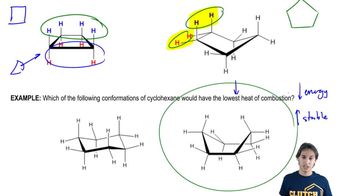
  • Lowest Heat of Combustion
    02:34

Calculating Energy Difference Between Chair Conformations

  • Explaining how A-Values are related to cyclohexane flip energy
    09:55