뒤로

Organic Chemistry Study Notes: Mechanisms, Alkanes, Stereochemistry, and Alkene Addition Reactions

학습 가이드 - 영상으로 배우기

업로드한 자료에 맞춘 엄선된 수업 – 모든 주제를 단계별로 배워보세요.

Reaction Mechanism

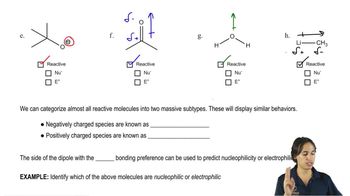
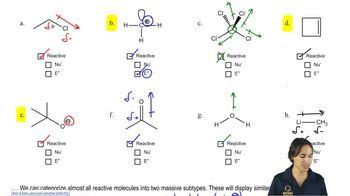
  • How to tell if charged molecules will react as nucleophiles or electrophiles.
    02:39
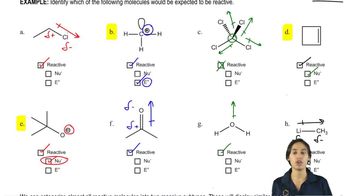
  • Nucleophile or Electrophile
    01:49
  • How to tell if uncharged molecules will react as nucleophiles or electrophiles.
    02:48

Carbocation Intermediates – Stability

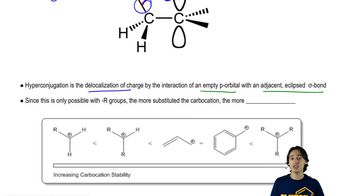
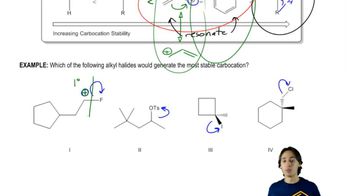
  • Determining Carbocation Stability
    05:58
  • Predicting the most stable carbocation
    01:21

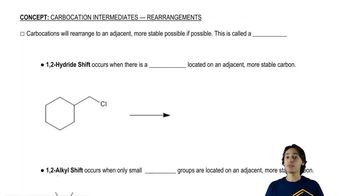
Carbocation Intermediate Rearrangements

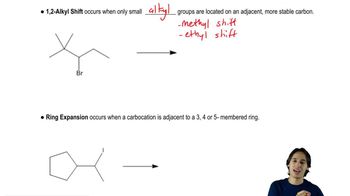
  • Alkyl Shift
    03:43
  • Understanding why carbocations shift.
    00:47
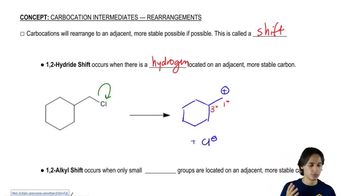
  • Hydride Shift
    03:34

Bonding Preferences

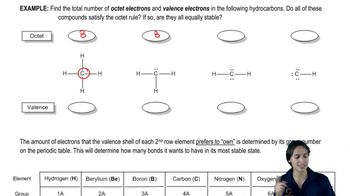
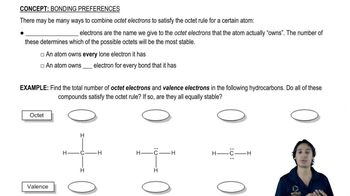
  • What is the difference between valence and octet electrons?
    02:04
  • Understanding the hydrogen isotopes.
    08:32
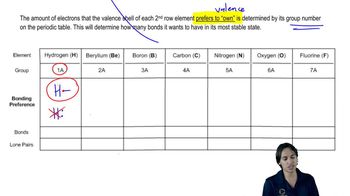
  • What is a valence electron?
    02:14

Conformational Isomers

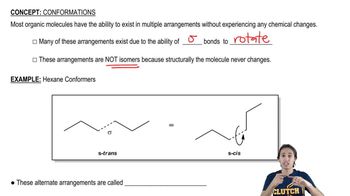
  • Understanding what a conformer is.
    03:29

Newman Projections

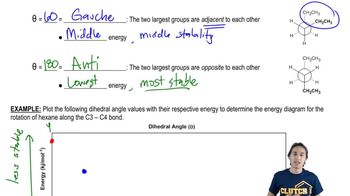
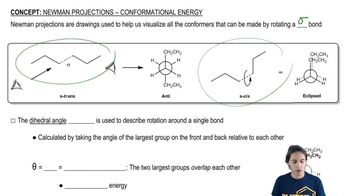
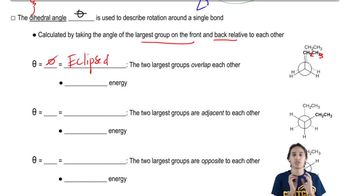
  • How to draw a Newman Projection Energy Diagram.
    07:27
  • How sigma bond rotation is visualized
    03:11
  • The energy states of 3 different Newman Projections.
    03:51

Sigma and Pi Bonds

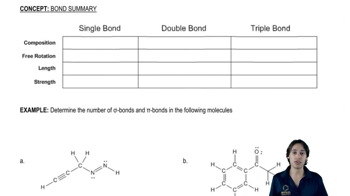
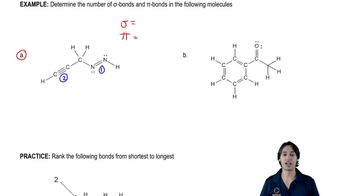
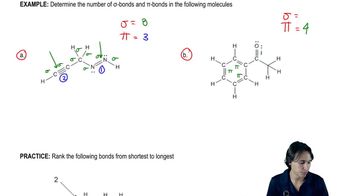
  • Single bonds, double bonds, and triple bonds.
    06:00
  • Sigma bonds and pi bonds
    01:05
  • Sigma bonds and pi bonds
    00:59

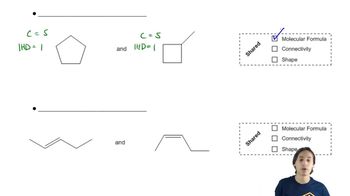
Types of Isomers

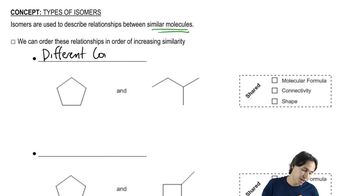
  • Determining when molecules are conformers.
    01:39
  • Determining when molecules are different.
    03:51
  • Determining when molecules are constitutional isomers.
    01:33

Chirality

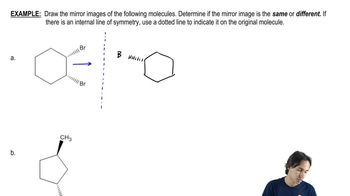
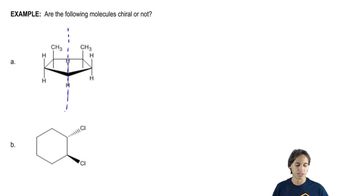
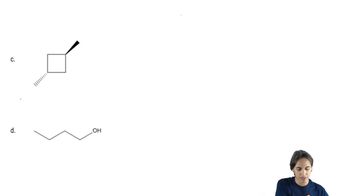
  • Drawing Mirror Images and Determining Chirality
    03:24
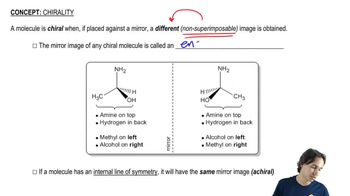
  • What is chirality?
    05:10
  • Drawing Mirror Images and Determining Chirality
    03:44

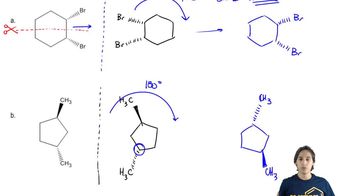
Chirality Test 1 - Internal Line of Symmetry

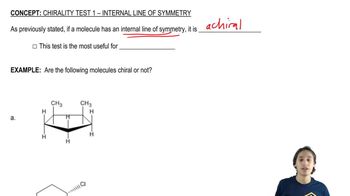
  • Determining Chirality with Plane of Symmetry
    00:25
  • Determining Chirality with Plane of Symmetry
    01:10
  • How and when to use the internal line of symmetry test.
    01:25

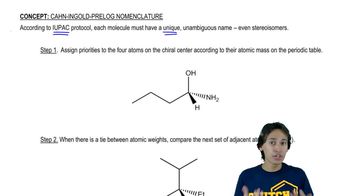
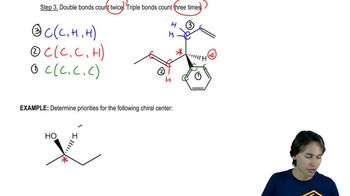
Cahn-Ingold-Prelog Nomenclature

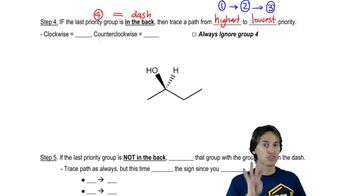
  • R and S Naming- Step 4
    03:07
  • Why stereoisomers need their own naming system.
    01:48
  • Determining Priorities
    01:19

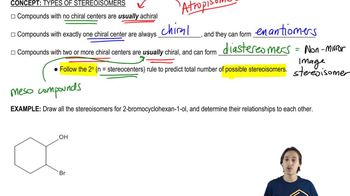
Types of Stereoisomers

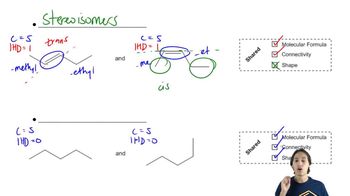
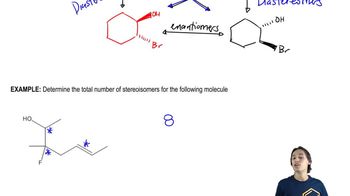
  • Determine total number of stereoisomers
    00:49
  • How to predict the total number of stereoisomers.
    01:03
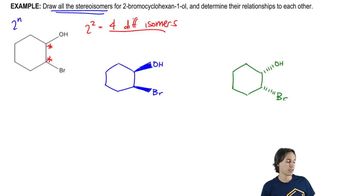
  • Draw stereoisomers and determine relationship
    07:41

Addition Reaction

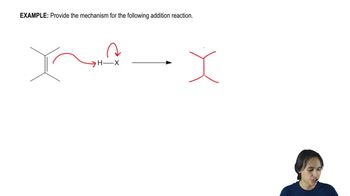
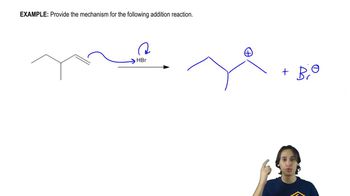
  • Provide the mechanism
    01:15
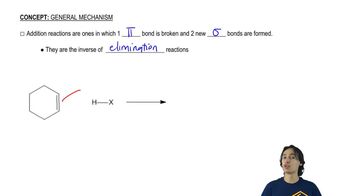
  • Features of Addition Mechanisms.
    05:39
Hydrohalogenation

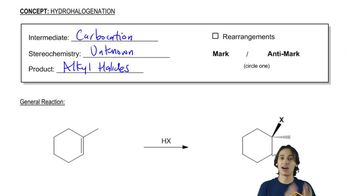
  • General properties of hydrohalogenation.
    04:07
  • Provide the mechanism
    02:24

Markovnikov

  • Provide the mechanism
    01:26
  • How to add to asymmetrical double bonds.
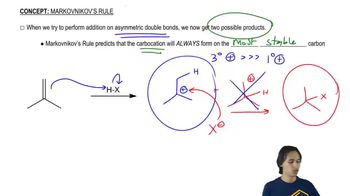
    03:38

Addition Reaction

  • Provide the mechanism
    01:15
  • Features of Addition Mechanisms.
    05:39
Hydroboration

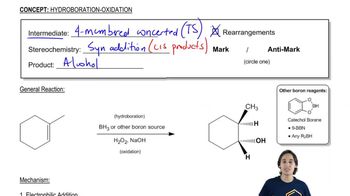
  • General properties of hydroboration-oxidation.
    06:38
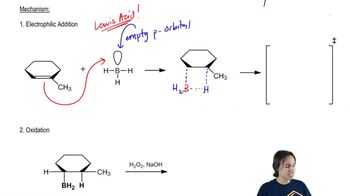
  • Acid-catalyzed hydroboration-oxidation mechanism
    06:14

Oxymercuration

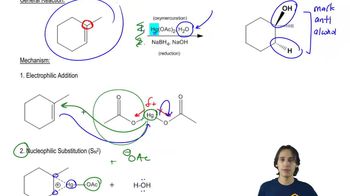
  • Acid-catalyzed oxymercuration-reduction mechanism
    09:01
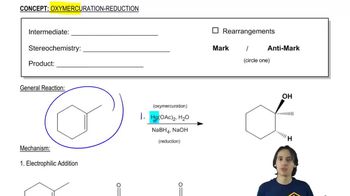
  • General properties of oxymercuration-reduction.
    05: