 뒤로
뒤로Reactions of Aldehydes and Ketones & More Reactions of Carboxylic Acid Derivatives
스터디 가이드 - 스마트 노트
 자료에 맞춘 맞춤형 노트, 핵심 정의, 예시, 맥락을 확장해 제공합니다.
Reactions of Aldehydes and Ketones & More Reactions of Carboxylic Acid Derivatives
Introduction to Aldehydes and Ketones
Aldehydes and ketones are important classes of organic compounds containing the carbonyl group (C=O). Their reactivity and properties are central to organic synthesis and biological chemistry.
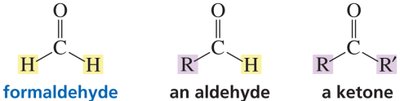
Aldehyde: Contains a carbonyl group bonded to at least one hydrogen atom.
Ketone: Contains a carbonyl group bonded to two alkyl groups.
Formaldehyde: The simplest aldehyde, with two hydrogens attached to the carbonyl carbon.
Occurrence and Properties
Aldehydes and ketones are found in nature and have distinct odors and biological roles.
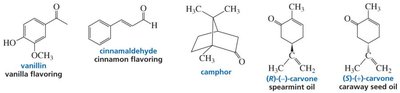
Aldehydes: Often have pungent odors (e.g., cinnamaldehyde in cinnamon).
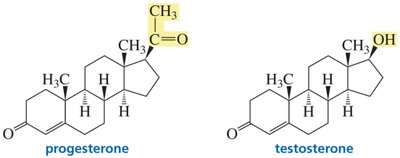
Ketones: Typically have sweet odors (e.g., camphor, carvone in spearmint and caraway).
Nomenclature of Aldehydes and Ketones
Naming Aldehydes
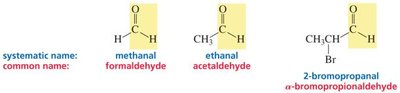
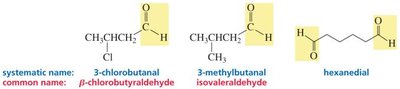
The IUPAC system names aldehydes by replacing the "-e" ending of the parent alkane with "-al". For aldehydes on rings, the suffix "-carbaldehyde" is used.
Formaldehyde: Methanal
Acetaldehyde: Ethanal
Substituted Aldehydes: Prefixes indicate substituents (e.g., 2-bromopropanal).
Naming Ketones
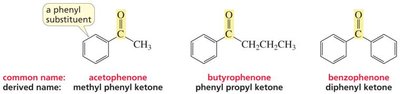
Ketones are named by replacing the "-e" ending of the parent alkane with "-one". The position of the carbonyl group is indicated by a number. In cyclic ketones, the carbonyl is assumed to be at position 1.
Acetone: Propanone
3-Hexanone: Indicates the carbonyl at the third carbon
Cyclic Ketones: e.g., cyclohexanone


Naming Compounds with Multiple Functional Groups
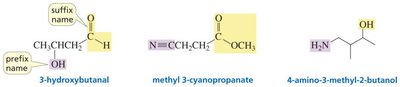
When a molecule contains more than one functional group, the group with the highest priority determines the suffix, while others are indicated by prefixes. The priority order is as follows:
Priority | Class | Suffix Name | Prefix Name |
|---|---|---|---|
1 | Carboxylic acid | -oic acid | carboxy- |
2 | Ester | -oate | alkoxycarbonyl- |
3 | Amide | -amide | amido- |
4 | Nitrile | -nitrile | cyano- |
5 | Aldehyde | -al | oxo- (double bond O) |
6 | Aldehyde | -al | formyl- (CH=O) |
7 | Ketone | -one | oxo- (double bond O) |
8 | Alcohol | -ol | hydroxy- |
9 | Amine | -amine | amino- |
10 | Alkene | -ene | alkenyl- |
11 | Alkyne | -yne | alkynyl- |
12 | Alkane | -ane | alkyl- |
13 | Ether | n/a | alkoxy- |
14 | Alkyl halide | n/a | halo- |
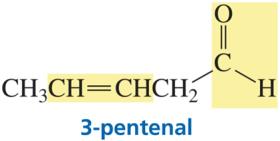
When both an alkene and another group are present, the suffix for the alkene is "-en" and is stated first.

Reactivity of Aldehydes and Ketones
Electrophilicity of the Carbonyl Group
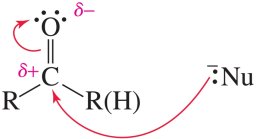
The carbonyl carbon is partially positive due to the electronegativity of oxygen, making it susceptible to nucleophilic attack.
Relative Reactivity
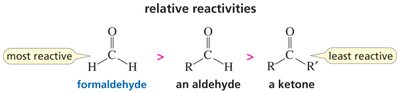
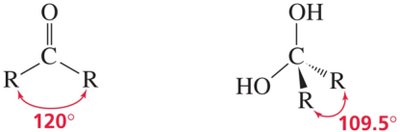
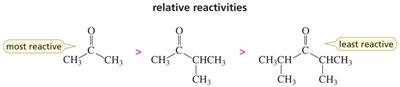
Aldehydes are more reactive than ketones due to less steric hindrance and a greater partial positive charge on the carbonyl carbon.
Formaldehyde is the most reactive, followed by other aldehydes, then ketones.
Comparison with Carboxylic Acid Derivatives
Aldehydes and ketones are less reactive than acyl halides and acid anhydrides, but more reactive than esters, carboxylic acids, amides, and carboxylate ions.
Mechanisms of Nucleophilic Addition and Substitution
Nucleophilic Acyl Substitution vs. Addition
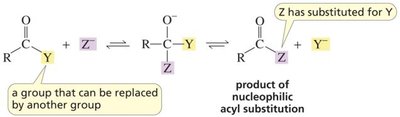
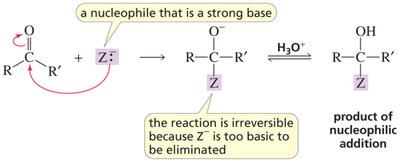
Nucleophilic acyl substitution: Occurs when the group attached to the carbonyl (Y) can be replaced by another group (Z).
Nucleophilic addition: Occurs when the group attached to the carbonyl cannot be replaced.
Nucleophilic Addition–Elimination
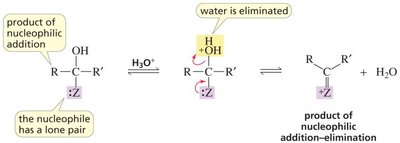
When the nucleophile has a lone pair, addition–elimination can occur, often resulting in the elimination of water.
Reactions with Grignard Reagents
Formation of New Carbon–Carbon Bonds
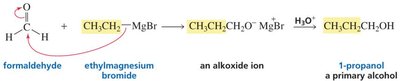
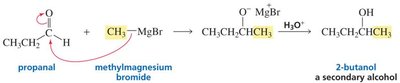
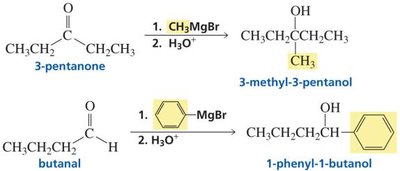
Grignard reagents (RMgX) are powerful nucleophiles that react with aldehydes and ketones to form alcohols after hydrolysis.
Primary alcohols from formaldehyde
Secondary alcohols from other aldehydes
Tertiary alcohols from ketones



Grignard Reaction with Carbon Dioxide
Grignard reagents react with CO2 to form carboxylic acids with one more carbon than the original Grignard reagent.

Reactions with Esters and Acyl Chlorides
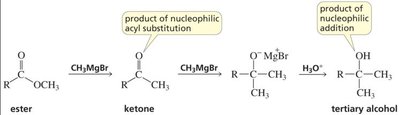
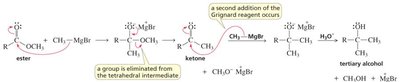
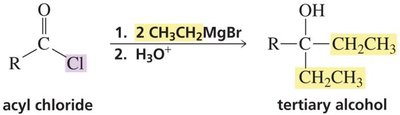
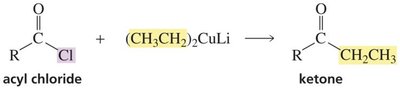
Esters and acyl chlorides react with Grignard reagents to give tertiary alcohols (esters) or ketones (acyl chlorides with organocuprates).
Other Nucleophilic Addition Reactions
Reactions with Acetylide and Cyanide Ions
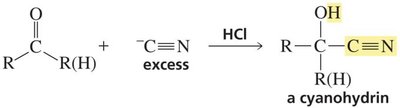
Acetylide ions add to aldehydes and ketones to form propargylic alcohols.
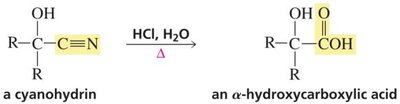
Cyanide ions add to form cyanohydrins, which can be further hydrolyzed or reduced.



Reduction Reactions
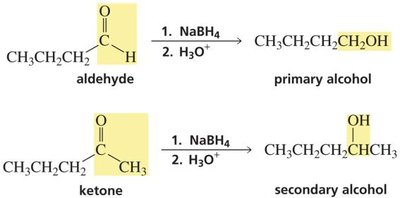
Reduction of Aldehydes and Ketones
Reduction involves the addition of hydrogen, which can occur via hydride transfer, hydrogenation, or electron/proton addition.
Hydride donors: NaBH4 and LiAlH4 are common reducing agents.
Primary alcohols are formed from aldehydes; secondary alcohols from ketones.


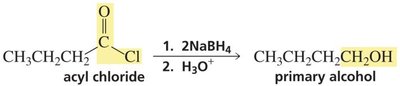
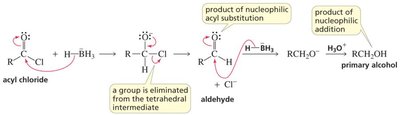
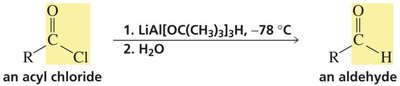
Reduction of Carboxylic Acid Derivatives
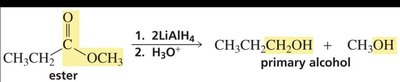
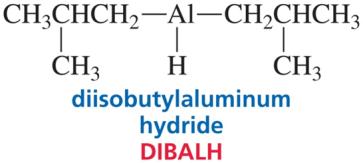
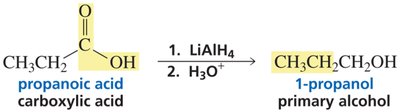
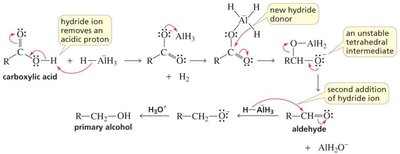
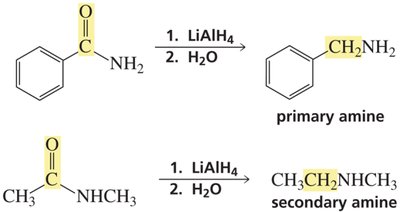
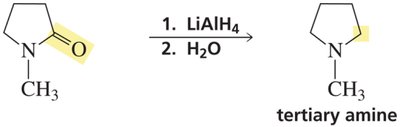
Acyl chlorides, esters, and carboxylic acids can be reduced to alcohols or aldehydes depending on the reagent and conditions.


Reactions with Amines: Imine and Enamine Formation
Imine Formation
Primary amines react with aldehydes and ketones to form imines (Schiff bases). The reaction is acid-catalyzed and involves the elimination of water.
Imine: Compound with a C=N double bond.
Mechanism: Nucleophilic addition of amine, followed by elimination of water.
pH Control: Optimal pH is about 1.5 units below the pKa of the amine.
Imine Hydrolysis
Acid-catalyzed hydrolysis converts imines back to carbonyl compounds and amines. The reaction is irreversible due to the non-nucleophilicity of the protonated amine.
Enamine Formation and Hydrolysis
Secondary amines react with aldehydes and ketones to form enamines, which can also be hydrolyzed back to the carbonyl compound and amine.
Reductive Amination
Reaction of aldehydes/ketones with ammonia or amines, followed by reduction, yields amines. NaBH3CN is a selective reducing agent for imines and enamines.
Reactions with Water and Alcohols
Hydration of Aldehydes and Ketones
Water adds to the carbonyl group to form hydrates (geminal diols). The equilibrium constant depends on the stability of the hydrate versus the carbonyl compound.
Formaldehyde: Almost completely hydrated at equilibrium.
Acetaldehyde: Significant hydration.
Acetone: Very little hydration.
Compound | Percent Hydrated | Keq |
|---|---|---|
Formaldehyde | 99.9% | 2300 |
Acetaldehyde | 58% | 1.4 |
Acetone | 0.2% | 0.002 |
Acetal and Hemiacetal Formation
Aldehydes and ketones react with alcohols to form hemiacetals and acetals. Acetals are important as protecting groups in synthesis and are also found in carbohydrates.
Protecting Groups in Synthesis
Protecting groups are used to temporarily mask reactive functional groups during multi-step synthesis. Alcohols can be protected as silyl ethers or esters, and carbonyls as acetals.
Other Important Reactions
Baeyer–Villiger Oxidation
Aldehydes and ketones react with peroxyacids to form esters or carboxylic acids (mechanism not required for exam).
Wittig Reaction
The Wittig reaction forms alkenes from aldehydes or ketones and phosphonium ylides. The ylide is prepared from an alkyl halide and triphenylphosphine.
Conjugate Addition to α,β-Unsaturated Carbonyl Compounds
α,β-Unsaturated aldehydes and ketones have two electrophilic sites. Nucleophiles can add directly (1,2-addition) or conjugately (1,4-addition).
Thermodynamic control: Weak bases favor conjugate addition (more stable product).
Kinetic control: Strong bases favor direct addition (faster product formation).
Grignard reagents: Direct addition.
Organocuprates: Conjugate addition.
Summary Table: Reactivity of Carbonyl Compounds
Compound | Reactivity (Nucleophilic Addition) |
|---|---|
Formaldehyde | Most reactive |
Aldehyde | More reactive |
Ketone | Less reactive |
Ester, Amide, Carboxylate | Least reactive |
Additional info: This guide covers the core reactions and mechanisms for aldehydes, ketones, and carboxylic acid derivatives, including nucleophilic addition, reduction, Grignard reactions, imine/enamine chemistry, and the use of protecting groups. For detailed mechanisms and further examples, refer to your textbook or lecture notes.
