Ch. 4 - Acids and Bases/Electron Flow
Mullins - Organic Chemistry: A Learner Centered Approach 1st Edition
Mullins1st EditionOrganic Chemistry: A Learner Centered ApproachISBN: 9780137566471당신이 사용하는 게 아니라요?교과서 변경
3장, 문제 10a

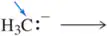
What is the conjugate acid of each of the following bases? [The most basic atom is indicated.]
(a) H3C:− with an arrow indicating the direction towards the conjugate acid of the base.

검증된 단계별 안내
1
Step 1: Identify the base in the given structure. The base is the negatively charged carbon atom (CH₂⁻) in the ethyl anion (CH₃CH₂⁻).
Step 2: Recall the concept of conjugate acids and bases. A conjugate acid is formed when a base gains a proton (H⁺).
Step 3: Add a proton (H⁺) to the most basic atom, which is the negatively charged carbon atom in this case. This will neutralize the negative charge.
Step 4: Write the resulting chemical structure after the proton is added. The ethyl anion (CH₃CH₂⁻) becomes ethane (CH₃CH₃).
Step 5: Verify the result by checking that the conjugate acid (CH₃CH₃) is neutral and consistent with the addition of a proton to the base.

비슷한 문제에 대한 검증된 영상 답변:

이 영상 해법은 위 문제에 도움이 된다고 튜터들이 추천한 것입니다.
영상 길이:
3m

주요 개념

질문에 올바르게 답하기 위해 반드시 이해해야 하는 핵심 개념들은 다음과 같습니다.

Conjugate Acid-Base Pair

A conjugate acid is formed when a base accepts a proton (H+). In acid-base chemistry, every base has a corresponding conjugate acid, which is the species that results from the base gaining a proton. Understanding this relationship is crucial for predicting the behavior of substances in chemical reactions.
추천 영상:
가이드 코스
2:56
Base Pairing Concept 1

Basicity and Proton Affinity

Basicity refers to the ability of a substance to accept protons. The most basic atom in a molecule is typically the one with the highest electron density and the ability to stabilize the positive charge after accepting a proton. This concept is essential for identifying which atom in a given structure will form the conjugate acid.
추천 영상:
06:21
Understanding the difference between basicity and nucleophilicity.

Resonance Stabilization

Resonance stabilization occurs when a molecule can be represented by multiple valid Lewis structures, allowing for the delocalization of electrons. This delocalization can significantly affect the stability of the conjugate acid formed from a base, influencing its acidity and basicity. Recognizing resonance structures helps predict the strength of acids and bases.
추천 영상:
03:43
The radical stability trend.