 뒤로
뒤로The Muscular System: Structure, Function, and Exercise
스터디 가이드 - 스마트 노트
 자료에 맞춘 맞춤형 노트, 핵심 정의, 예시, 맥락을 확장해 제공합니다.
The Muscular System
Introduction to Muscles
The muscular system is essential for movement, posture, and overall health. Muscles enable us to move, maintain posture, protect organs, circulate blood, and generate heat. There are over 600 skeletal muscles in the human body, each playing a specific role in daily activities and exercise.
Movement: Muscles contract to move body parts.
Posture: Muscles stabilize the body and maintain posture.
Protection: Muscles shield abdominal organs.
Circulation: Muscular contractions help circulate blood.
Heat Generation: Muscle contractions produce body heat.
Types of Muscles
Classification of Muscle Tissue
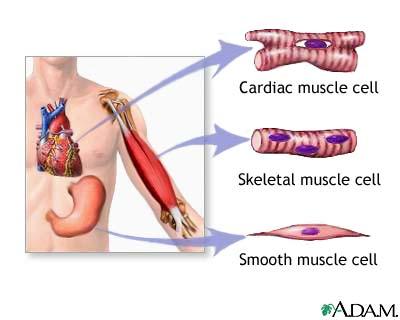
Muscle tissue is classified into three main types based on structure and function:
Skeletal (Striated/Voluntary) Muscle: Under conscious control; responsible for movement.
Smooth (Involuntary) Muscle: Not under conscious control; found in organs like the digestive tract.
Cardiac Muscle: Specialized involuntary muscle found only in the heart; contracts continuously and rhythmically.
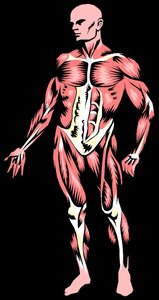
Skeletal Muscles
Skeletal muscles are attached to bones and are responsible for voluntary movements such as walking, running, and jumping. They are the most numerous muscle type in the body.
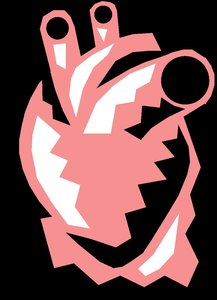
Cardiac Muscle
Cardiac muscle is unique to the heart. It contracts automatically, is highly resistant to fatigue, and is regulated by nervous and chemical signals.
Smooth Muscle
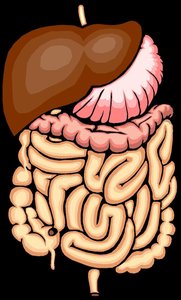
Smooth muscle is found in the walls of internal organs such as the digestive system. It operates involuntarily to move substances through organs.
Major Skeletal Muscles and Their Actions
Key Muscles and Functions
The body contains several major skeletal muscles, each with specific actions:
Muscle | Main Action(s) |
|---|---|
Deltoid | Raises arm sideways at the shoulder |
Biceps | Bends arm at the elbow |
Abdominals | Pull in abdomen; flex trunk forward |
Quadriceps | Straighten leg at knee; keep it straight when standing |
Pectorals | Raise arm at shoulder; draw across chest |
Latissimus dorsi | Pull arm down at shoulder; draw behind back |
Trapezius | Hold and rotate shoulders; move head back and sideways |
Triceps | Straighten arm at elbow |
Gluteals | Pull leg back at hip; raise sideways at hip |
Hamstrings | Bend leg at knee |
Gastrocnemius | Straighten ankle joint; stand on tiptoes |
Muscle Contraction Types
How Muscles Work
Muscles contract in different ways to produce movement and stability. The three main types of contraction are:
Isotonic Concentric: Muscle shortens as it contracts; ends move closer together (e.g., biceps during a pull-up).
Isotonic Eccentric: Muscle lengthens under tension; ends move further apart (e.g., biceps lowering from a pull-up).
Isometric: Muscle stays the same length; no movement occurs (e.g., shoulder muscles during tug of war).
Muscle Coordination and Roles
Muscle Pairs and Movement
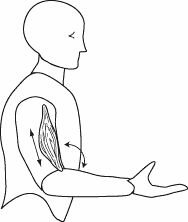
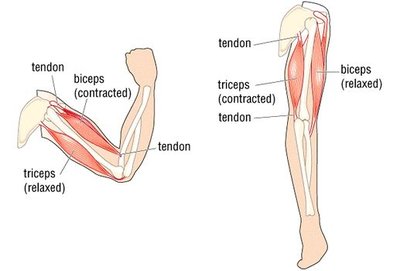
Muscles work in pairs to produce movement. When one muscle contracts, its pair relaxes to allow movement. This coordination is essential for even simple actions.
Flexors: Contract to bend joints.
Extensors: Contract to straighten joints.
Prime Movers (Agonists): Initiate movement.
Antagonists: Relax to allow movement.
Fixators: Stabilize the base for working muscles.
Synergists: Fine-tune and stabilize movement.
Muscle Attachment
Tendons and Ligaments
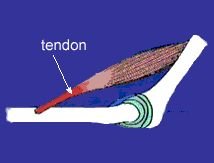
Muscles are attached to bones via tendons, which are strong, flexible cords. Tendons anchor muscles to bones, transmitting the force of contraction. Ligaments, in contrast, join bone to bone.
Tendons: Join muscle to bone.
Ligaments: Join bone to bone.
Muscle Fiber Types
Structure and Function of Muscle Fibers
Muscles are composed of bundles of muscle fibers, which contract to produce movement. The number of fibers contracting depends on the force required.
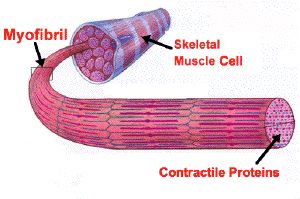
Fast-Twitch vs. Slow-Twitch Muscle Fibers
Skeletal muscles contain two main types of fibers:
Fast-Twitch Fibers: Contract quickly, tire rapidly, stronger, used in high-intensity, anaerobic activities.
Slow-Twitch Fibers: Contract slowly, resist fatigue, less strong, used in aerobic activities and endurance.
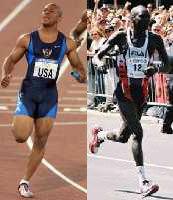
Each muscle contains a mixture of both fiber types, but the proportion varies by muscle and individual. For example, sprinters have more fast-twitch fibers, while endurance athletes have more slow-twitch fibers.
Muscle Changes and Exercise
Effects of Exercise on Muscles
Exercise induces several changes in muscles:
Increased blood flow to working muscles
Greater oxygen uptake
More frequent and rapid contractions
More muscle fibers contracting
Rise in muscle temperature
Depletion of ATP and Creatine Phosphate stores
Accumulation of waste products (CO2, lactic acid)
Muscle soreness and strains from overuse
Muscle hypertrophy refers to an increase in muscle size, while atrophy is a decrease in size.
Example: During a sprint, both fast-twitch and slow-twitch fibers are recruited, but fast-twitch fibers dominate. In endurance running, slow-twitch fibers are primarily used.
Additional info: Muscle fiber recruitment and adaptation are key concepts in exercise physiology, affecting athletic performance and health.
