 뒤로
뒤로Time Management Strategies for Personal Health and College Success
스터디 가이드 - 스마트 노트
 자료에 맞춘 맞춤형 노트, 핵심 정의, 예시, 맥락을 확장해 제공합니다.
Time Management and Personal Health
Introduction to Time Management
Effective time management is essential for college students, especially those balancing coursework, work, family, relationships, and personal health. It involves making intentional choices about how to use limited time and energy to support values and goals, rather than simply filling every minute with tasks.
Identifying Priorities
Priorities are not fixed; they shift depending on current needs and circumstances. While long-term goals guide overall direction, priorities help determine what requires immediate attention. Regularly ask yourself:
What needs my attention right now?
What can wait?
What should I begin now to avoid future crises?
Does my current use of time reflect my values and goals?
The Eisenhower Matrix: Prioritizing Tasks
The Eisenhower Matrix is a tool for categorizing tasks based on their urgency and importance. It helps students avoid unnecessary stress and focus on meaningful activities.
Quadrant I (Urgent & Important): Emergencies and crises that require immediate action.
Quadrant II (Not Urgent & Important): Planning, studying, exercise, and relationships—tasks that should be scheduled to prevent future crises.
Quadrant III (Urgent & Not Important): Interruptions and distractions that can often be delegated.
Quadrant IV (Not Urgent & Not Important): Time-wasters such as excessive web surfing or gaming, which should be minimized or eliminated.
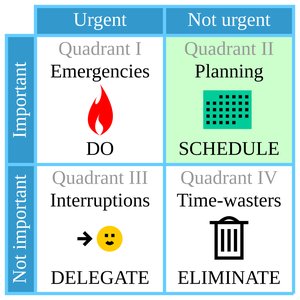
Example: Studying for an exam is Quadrant II if done ahead of time, but becomes Quadrant I if left until the last minute.
Overcoming Procrastination
Procrastination is the unnecessary delay of tasks, often due to boredom, confusion, overwhelm, or perfectionism. Understanding the cause helps in selecting the right strategy to overcome it.
Make the first step small: Start with a simple action, such as opening assignment instructions.
Break tasks into smaller pieces: Divide large assignments into manageable sections.
Schedule specific work times: Treat study sessions as appointments.
Remove distractions: Use Do Not Disturb, close unnecessary apps, and choose a productive environment.
Use accountability partners: Study with motivated classmates or share your goals with someone.
Make progress visible: Use checklists, planners, or progress trackers.
Build in rewards: Allow enjoyable breaks after focused work periods.
Clarify confusing tasks early: Ask questions before deadlines approach.
Create intermediate deadlines: Set milestones for large projects.
Pomodoro Technique
The Pomodoro Technique is a time management method that breaks work into intervals (typically 25 minutes), separated by short breaks. This helps prevent overwhelm and burnout.
Set a timer for 25 minutes and focus on a task.
Take a 5-minute break after each interval.
After four intervals, take a longer break (15–30 minutes).
Example: Use Pomodoro intervals to study for exams or complete assignments.
Assessing Your Use of Time
Tracking how you spend your time is crucial for identifying areas for improvement. Use a time log to record activities throughout the week and compare estimated versus actual hours.
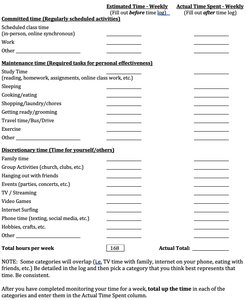
Categories: Committed time (class, work), maintenance time (studying, chores), discretionary time (social, hobbies).
Goal: Total hours should not exceed 168 per week; adjust estimates for realism.
Time Log: Tracking Daily Activities
A daily time log helps you monitor how you spend each hour, revealing patterns and opportunities for improvement.
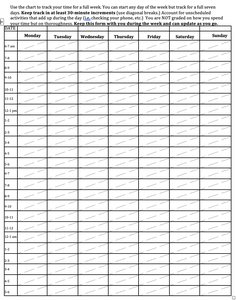
Record activities in 30-minute increments for a full week.
Identify time spent on productive versus non-productive tasks.
Establishing a Time Management System
College courses require significant time outside of class. Plan for 2–3 hours of study per hour of class. Build your schedule around fixed commitments, deadlines, study blocks, personal time, and flexibility.
Example: 12 hours of class per week + 24–36 hours of study = 36–48 hours total.
Accelerated and online courses may require more planning.
Weekly Planning Calendar
Creating a weekly calendar helps visualize and organize commitments, study time, and personal activities.
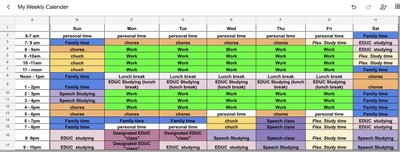
Include class, work, study, family, exercise, and flexible time.
Review for realism and adjust as needed.
Choosing and Using a Planner
Different types of planners (weekly, monthly, daily, electronic, wall calendars) have unique pros and cons. Select one that fits your preferences and habits.
Type | Pros | Cons |
|---|---|---|
Weekly Planner | Full-week view, room for details, portable | Repeating events must be rewritten, limited space, can be lost |
Monthly Planner | Month view, tracks major deadlines, portable | Limited detail, not ideal for study planning, can be lost |
Daily Planner | Detailed schedules, good for busy days | Harder to see week/month, requires daily planning |
Electronic Calendar | Easy to update, color coding, reminders, accessible | Can lead to distractions, small screens, errors |
Wall Calendar | Large visual view, reusable, easy to change | Not portable, limited detail, must be rewritten |
What Goes in Your Planner?
Priorities: Class, work, study time, assignment due dates, exams, appointments, birthdays.
Discretionary Time: Social events, exercise, club activities, reminders.
Review syllabi for each course to identify major deadlines and plan backward for big projects, breaking them into smaller steps with intermediate due dates.
Establishing a To-Do List
To-do lists help organize daily tasks and support your planner. Be specific, prioritize important items, and use the list consistently.
Use paper or electronic lists; many apps are available.
Cross off completed tasks for motivation.
Do not use the list to procrastinate.
Time Management Strategies
Prepare mentally: Visualize success and focus on positive outcomes.
Use your best time of day: Schedule demanding tasks when you are most alert.
Break up large projects: Schedule stages separately.
Do important tasks first: Prioritize crucial work.
Take breaks: Short breaks every hour help recharge.
Use unscheduled time: Work ahead during downtimes.
Reward yourself: Celebrate completed tasks.
Just say no: Communicate boundaries to reduce interruptions.
Have a life: Balance work, study, and personal time.
Managing Multiple Responsibilities
Balancing school, work, family, and other commitments requires realistic planning and flexibility. Communicate with those who share your time, protect study periods, and plan ahead for busy periods.
Build schedules around fixed responsibilities.
Use smaller blocks of time strategically.
Protect sleep and recovery.
Adjust schedules as needed throughout the semester.
Understanding Your Time Management Tendencies
Self-awareness is key to creating a system that works for you. Reflect on your habits, preferences, and responses to structure. Adjust strategies based on your tendencies and circumstances.
Begin assignments early or late?
Estimate time accurately?
Prefer detailed or flexible schedules?
Handle unexpected changes easily?
Concentrate best at certain times of day?
Procrastinate on specific tasks?
Distractions interfere with plans?
Key Takeaways
Your values shape your goals, and your goals shape your time management.
Identifying priorities is essential for effective time management.
Models like the Eisenhower Matrix help prioritize tasks.
Understand and address procrastination with proactive strategies.
Track your time to create an effective management system.
Choose planners and to-do lists that fit your habits and preferences.
Implement strategies to support your success and goals.
Adjust your system as your responsibilities and circumstances change.
