 뒤로
뒤로Physics with Algebra: Step-by-Step Study Guidance
스터디 가이드 - 스마트 노트
 자료에 맞춘 맞춤형 노트, 핵심 정의, 예시, 맥락을 확장해 제공합니다.
Q1. Speed, Mass and Distance of Satellite
Background
Topic: Orbital Mechanics (Circular Motion and Gravity)
This question tests your understanding of how the speed of a satellite in a circular orbit depends on its mass and orbital radius.
Key Terms and Formulas
Gravitational Force:
Centripetal Force:
For a satellite in circular orbit:
Step-by-Step Guidance
Write the equation for gravitational force providing the centripetal force for a satellite in circular orbit.
Notice that the mass of the satellite () appears on both sides of the equation.
Simplify the equation to solve for the orbital speed in terms of , , and .
Consider what happens to if the mass of the satellite changes, but and remain constant.
Try solving on your own before revealing the answer!
Final Answer: B) Equal to
The speed of a satellite in a given orbit does not depend on its mass, only on the mass of the central body and the orbital radius. Both satellites at the same height (same ) will have the same speed.
Q2. Displacement and velocity from Position vs Time
Background
Topic: Kinematics (Average Velocity)
This question asks you to calculate the average velocity over a specific time interval using a position vs. time graph or data.
Key Terms and Formulas
Average velocity:
= change in position, = change in time
Step-by-Step Guidance
Identify the position of the object at s and s from the graph or data.
Calculate the change in position: .
Calculate the change in time: .
Set up the formula for average velocity using your and values.
Try solving on your own before revealing the answer!
Final Answer: B) 5
Average velocity is the total displacement divided by the total time interval. Plug in the values from the graph or data to get the answer.
Q3. Acceleration from v-t Graph
Background
Topic: Kinematics (Graphs of Motion)
This question tests your understanding of how to determine acceleration from a velocity vs. time graph.
Key Terms and Formulas
Acceleration:
On a v-t graph, the slope represents acceleration.
Step-by-Step Guidance
Recall that the slope of a velocity vs. time graph gives the acceleration.
Consider what it means to find the slope: .
Think about what the area under the curve or reading the graph would represent instead.
Try solving on your own before revealing the answer!
Final Answer: A) by finding slope
The acceleration is the slope of the velocity vs. time graph, not the area under the curve.
Q4. a-t graph or F-t graph: Which best describes the motion if positive is East?
Background
Topic: Interpreting Acceleration-Time Graphs
This question asks you to interpret the motion of an object based on its acceleration-time graph, considering direction conventions.
Key Terms and Formulas
Acceleration: The rate of change of velocity.
Negative acceleration (when positive is East) means acceleration is toward the West.
Step-by-Step Guidance
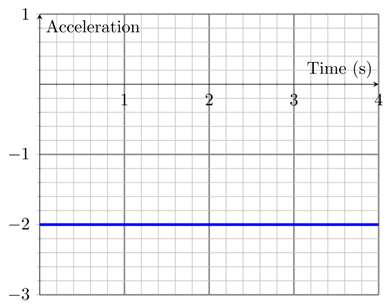
Observe the graph: the acceleration is constant and negative (e.g., -2 m/s²).
Recall that negative acceleration (when positive is East) means the acceleration is directed West.
Consider the possible scenarios: Is the object moving East or West, and is it speeding up or slowing down?
Think about how negative acceleration affects an object moving East versus one moving West.
Try solving on your own before revealing the answer!
Final Answer: A) Moving East and slowing down
Negative acceleration (when positive is East) means the object is either moving East and slowing down, or moving West and speeding up. The best match is "Moving East and slowing down."
Q5. Solving Kinematic Problems: How long does it take to hit the ground? Which Equation is best?
Background
Topic: Kinematics (Free Fall)
This question tests your ability to select the appropriate kinematic equation for an object in free fall, given displacement and acceleration.
Key Terms and Formulas
Displacement:
Initial velocity:
Acceleration: (usually m/s² for free fall)
Kinematic equation:
Step-by-Step Guidance
Identify what is given: initial velocity, displacement, and acceleration.
Determine which kinematic equation relates these variables to time.
Set up the equation with the known values, leaving as the unknown.
Try solving on your own before revealing the answer!
Final Answer: C)
This equation directly relates displacement, initial velocity, acceleration, and time, making it the best choice for solving for time in free fall problems.
Q6. Forces in Collision: Which exerts more force when they collide?
Background
Topic: Newton's Third Law (Action-Reaction)
This question tests your understanding of the forces two objects exert on each other during a collision.
Key Terms and Formulas
Newton's Third Law: For every action, there is an equal and opposite reaction.
Force during collision: Both objects exert equal and opposite forces on each other.
Step-by-Step Guidance
Recall Newton's Third Law and what it says about forces during interactions.
Consider whether the masses of the objects affect the magnitude of the force each exerts on the other during the collision.
Think about examples (e.g., a truck and a car colliding) and what happens to the forces involved.
Try solving on your own before revealing the answer!
Final Answer: C) both same
According to Newton's Third Law, the forces are equal in magnitude and opposite in direction, regardless of the masses.
Q7. Net force versus Velocity: A sailboat is being blown across the sea to the right at a constant velocity. What is the direction of the net force on the boat?
Background
Topic: Newton's First Law (Equilibrium)
This question tests your understanding of net force and motion at constant velocity.
Key Terms and Formulas
Net force: The vector sum of all forces acting on an object.
Constant velocity: Implies zero acceleration and thus zero net force.
Step-by-Step Guidance
Recall Newton's First Law: An object moving at constant velocity has no net force acting on it.
Think about what it means for the forces acting on the boat (wind, water resistance, etc.).
Consider the direction of the net force if the velocity is not changing.
Try solving on your own before revealing the answer!
Final Answer: C) Net force is zero
Constant velocity means the net force is zero; all forces are balanced.
Q8. Recognizing Forces: The sketch shows possible forces acting on an object sliding downhill. Which choice shows the correct forces?
Background
Topic: Forces on an Inclined Plane
This question tests your ability to identify the correct forces acting on an object sliding down a slope.
Key Terms and Formulas
Normal force: Perpendicular to the surface.
Friction: Opposes motion, parallel to the surface.
Weight: Acts vertically downward.
Step-by-Step Guidance
Recall the three main forces: gravity (weight), normal force, and friction.
Match each labeled force in the sketch to its correct physical force.
Eliminate choices that assign forces incorrectly (e.g., normal force not perpendicular, friction not parallel).
Try solving on your own before revealing the answer!
Final Answer: A) P = normal, Q = none, R = friction, S = none, T = weight
This matches the standard force diagram for an object sliding down an incline.
Q9. Breaking Vector into Components: What are the x and y components of F?
Background
Topic: Vectors and Components
This question tests your ability to resolve a vector into its x and y components using trigonometry.
Key Terms and Formulas
Component form: ,
Trigonometric relationships for right triangles.
Step-by-Step Guidance
Draw the vector at an angle from the x-axis.
Use the cosine function to find the x-component: .
Use the sine function to find the y-component: .
Check the sign of each component based on the direction of .
Try solving on your own before revealing the answer!
Final Answer: B) ,
These are the standard formulas for the x and y components of a vector at angle from the x-axis.
Q10. Example of Equilibrium Condition: A pendulum ball is at a position making an angle θ with the vertical. What forces are acting on the ball at this instant? Which equation best describes the equilibrium conditions along x and y directions?
Background
Topic: Equilibrium and Forces in Two Dimensions
This question tests your understanding of force components and equilibrium conditions for a pendulum at an angle.
Key Terms and Formulas
Tension: (acts along the string)
Weight: (acts vertically downward)
Equilibrium: Net force in each direction is zero.
Step-by-Step Guidance
Draw a free-body diagram showing all forces acting on the pendulum ball.
Resolve the tension into x and y components: (horizontal), (vertical).
Write the equilibrium equations for the x and y directions, setting the net force to zero in each direction.
Try solving on your own before revealing the answer!
Final Answer: D)
This equation represents equilibrium in the vertical (y) direction, where the upward component of tension balances the weight.
Q11. A 12 kg dog is having fun on a slide. The slide makes a 55° angle with the ground. If the coefficient of kinetic friction between the dog and slide is 0.45, what is the acceleration of the dog? Which equation describes the application of 2nd law of motion in x-direction?
Background
Topic: Newton's Second Law on an Inclined Plane with Friction
This question tests your ability to apply Newton's Second Law to an object sliding down an incline with friction.
Key Terms and Formulas
Newton's Second Law:
Forces along the incline: (down the incline), (friction, up the incline)
Kinetic friction:
Step-by-Step Guidance
Draw a free-body diagram for the dog on the slide, showing all forces.
Write the expression for the net force along the incline: .
Express friction in terms of the normal force: .
Set up Newton's Second Law: .

Try solving on your own before revealing the answer!
Final Answer: D)
This equation correctly applies Newton's Second Law along the x-direction (down the incline), accounting for gravity and friction.
Q12. Step 7: Writing the Equations. Value of the acceleration is...
Background
Topic: Centripetal Acceleration in Circular Motion
This question tests your ability to use the formula for centripetal acceleration in terms of velocity and radius, or angular velocity and radius.
Key Terms and Formulas
Centripetal acceleration:
Alternatively:
Step-by-Step Guidance
Identify the given quantities: velocity (), radius (), or angular velocity ().
Choose the appropriate formula for centripetal acceleration based on the given variables.
Set up the formula with the known values, but do not calculate the final value yet.
Try solving on your own before revealing the answer!
Final Answer: or
Use the formula that matches the variables provided in the problem to find the centripetal acceleration.
Q13. Direction of Acceleration: A car drives through the bottom of a round valley while speeding up. What is the direction of the acceleration of the car when it is at the bottom of the valley at the position shown by the x?
Background
Topic: Circular Motion and Acceleration Vectors
This question tests your understanding of the direction of acceleration for an object in circular motion, especially when the speed is changing.
Key Terms and Formulas
Centripetal acceleration: Always points toward the center of the circle.
Tangential acceleration: Points in the direction of increasing speed.
Total acceleration: Vector sum of centripetal and tangential accelerations.
Step-by-Step Guidance
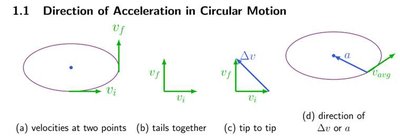
Draw the velocity vectors just before and just after the car passes the bottom of the valley.
Determine the direction of the centripetal acceleration (toward the center of the circle, i.e., upward at the bottom).
Consider the tangential acceleration (in the direction of motion, since the car is speeding up).
Combine the two acceleration vectors to find the total acceleration direction at the bottom.
Try solving on your own before revealing the answer!
Final Answer: The acceleration points upward and slightly forward (toward the center and in the direction of motion).
At the bottom of the valley, the acceleration has both a centripetal (upward) and tangential (forward) component.
Q14. Turning on Banked Roads: Neglecting friction, which equation below describes motion along radial direction (r)?
Background
Topic: Circular Motion on Banked Curves
This question tests your understanding of the forces acting on a vehicle turning on a banked road without friction.
Key Terms and Formulas
Normal force: (perpendicular to the surface)
Radial (centripetal) direction: Points toward the center of the curve
Centripetal force:
Step-by-Step Guidance
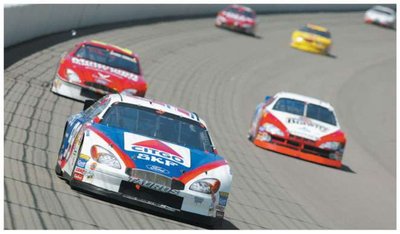
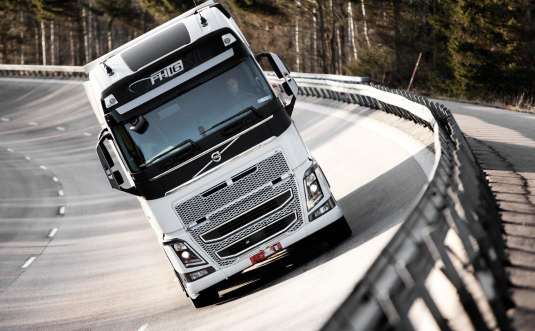
Draw a free-body diagram for the car on the banked curve, showing all forces.
Resolve the normal force into components: (vertical), (radial).
Set up the equation for the radial direction, equating the radial component of the normal force to the required centripetal force.
Try solving on your own before revealing the answer!
Final Answer: B)
The radial component of the normal force provides the centripetal force needed for circular motion on a frictionless banked curve.
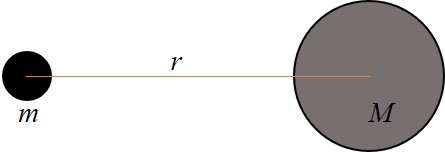
Q15. According to the law of gravity, what happens to the force when distance between two masses is reduced by half?
Background
Topic: Newton's Law of Universal Gravitation
This question tests your understanding of how gravitational force depends on the distance between two masses.
Key Terms and Formulas
Gravitational force:
If is reduced by half, changes by a factor of .
Step-by-Step Guidance
Write the formula for gravitational force between two masses.
Substitute for in the formula and simplify.
Compare the new force to the original force to see how it changes.
Try solving on your own before revealing the answer!
Final Answer: D) becomes four times larger compared to original
When the distance is halved, the gravitational force increases by a factor of four ().
