 뒤로
뒤로Unit 1: Units and Measurements – Foundations of Physics with Algebra
스터디 가이드 - 스마트 노트
 자료에 맞춘 맞춤형 노트, 핵심 정의, 예시, 맥락을 확장해 제공합니다.
Units and Measurements
Introduction to Physics and Its Scope
Physics is the study of the fundamental forces in nature and the behavior of both small and large systems. It seeks to understand the underlying principles that govern the universe, from the smallest particles to the largest structures.
Fundamental Forces: Gravity, Electricity & Magnetism, Strong Nuclear, and Weak Nuclear forces are the four fundamental interactions in nature.
Scope: Physics covers a wide range of systems, from subatomic particles to galaxies.

Subfields of Physics
Physics is divided into several subfields, each focusing on specific phenomena or applications:
Mechanics – motion and forces
Electromagnetism – electric and magnetic phenomena
Thermodynamics – heat and energy transfer
Optics – behavior of light
Quantum Physics – atomic and subatomic systems
Astrophysics, Acoustics, Fluid Dynamics, Nuclear Physics, Solid State Physics, Statistical Mechanics, and more
Applications of Physics in Medicine
Physics principles are widely used in medical imaging and diagnostics. Common examples include:
CAT Scan (Computed Axial Tomography): Uses X-rays to create cross-sectional images of the body.
X-Ray: Uses high-energy electromagnetic waves to view inside the body, especially bones.
Sonogram (Ultrasound): Uses sound waves to image soft tissues.
MRI (Magnetic Resonance Imaging): Uses magnetic fields and radio waves to produce detailed images of organs and tissues.



Measurement and Uncertainty
Uncertainty in Measurement
All measurements have some degree of uncertainty. In laboratory work, it is important to estimate and report this uncertainty.
Reporting Uncertainty: Expressed as X = 8.8 \pm 0.1 \text{ cm}, where 0.1 cm is the uncertainty.
Significant Figures: The number of reliably known digits in a measurement. For example, 8.8 cm has two significant figures.
Significant Figures
Significant figures reflect the precision of a measurement. The rules for significant figures depend on the operation performed:
Multiplication/Division: The result should have as many significant figures as the number with the least significant figures used in the calculation.
Addition/Subtraction: The result should have the same number of decimal places as the least precise number used.
Examples:
0.0034 has two significant figures
44.58 has four significant figures
800 has one significant figure; 8.00 \times 10^2 has three
23.66 \times 1.1 = 26.03 \approx 26 (two significant figures)
23.5 + 43.2 + 44 = 110.7 \approx 111 (rounded to the least precise digit)
Measurement Tools
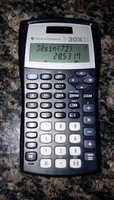
Common tools for measurement include rulers, scales, and scientific calculators. Accurate measurement and proper use of these tools are essential for reliable results.


Units, Standards, and the SI System
Base Units and Standards
Physics relies on standardized units for consistency and accuracy. The International System of Units (SI) is the most widely used system.
Length: 1 meter (m) is defined as the distance light travels in 1/299,792,458 of a second.
Mass: 1 kilogram (kg) is defined by a standard mass kept in France; each country has a copy.
Unified Atomic Mass Unit (u): 1 u = 1/12 the mass of a 12C atom; 1 u = 1.6605 \times 10^{-27} kg
Time: 1 second (s) is defined by the oscillations of a cesium clock.
Metric Prefixes
Metric prefixes are used to express multiples or fractions of units. Examples include kilo- (103), centi- (10-2), and milli- (10-3).
Mathematical Symbols in Physics
Common mathematical symbols used in physics include:
x > y: x is greater than y
y < x: y is less than x
y \leq x: y is less than or equal to x
y \ll x: y is much less than x
y = x: y is equal to x
y \approx x: y is approximately equal to x
y \equiv x: y is defined equal to x
\Delta x: change in x
Unit Conversions and Dimensional Analysis
Converting Units Using the “Magic of 1”
Unit conversions are performed by multiplying by conversion factors equal to 1. This method reduces errors and makes calculations easier to check.
Example: 1 inch = 2.54 cm. To convert 5.0 in \times 3.0 in to cm2:
Area = 5.0 \text{ in} \times 3.0 \text{ in} = 15.0 \text{ in}^2
Convert: 15.0 \text{ in}^2 \times \left(\frac{2.54 \text{ cm}}{1 \text{ in}}\right)^2 = 96.8 \text{ cm}^2
Order of Magnitude Estimates
Order of magnitude estimates are rough calculations used to check if a result is reasonable before performing detailed calculations.
Importance of Units in Answers
All answers in physics must include the correct units. Units help verify the correctness of calculations and ensure that only quantities with the same dimensions are added or subtracted.
Useful Rule: Only add or subtract quantities with the same dimensions (e.g., length with length).
Using Scientific Calculators
Familiarity with your scientific calculator is essential for success in physics. Learn to switch between degrees and radians, use scientific and engineering notation, and round answers to the correct number of significant figures.
Example: If your calculator displays 28.5317, round to 29 if only two significant figures are appropriate.
Summary Table: SI Base Units
Quantity | Unit Name | Unit Symbol | Definition |
|---|---|---|---|
Length | meter | m | Distance light travels in 1/299,792,458 s |
Mass | kilogram | kg | Standard mass cylinder |
Time | second | s | Cesium clock oscillations |
Amount of substance | mole | mol | 6.022 × 10²³ entities |
Electric current | ampere | A | Flow of electric charge |
Temperature | kelvin | K | 1/273.16 of water's triple point |
Luminous intensity | candela | cd | Standard candle |
Additional info: This summary table is inferred from standard SI definitions for completeness.
