 뒤로
뒤로Comprehensive Study Notes: Senior School Physics Core Concepts
스터디 가이드 - 스마트 노트
 자료에 맞춘 맞춤형 노트, 핵심 정의, 예시, 맥락을 확장해 제공합니다.
1. Mechanics and Thermal Physics
1.1 Introduction to Physics
Physics is the scientific study of matter, motion, energy, and forces, aiming to understand the fundamental laws of the universe. It forms the foundation for technological advancements and is deeply interconnected with other scientific disciplines.
Branches of Physics:
Mechanics: Study of motion and forces (e.g., cars, machines).
Electricity & Magnetism: Charges, currents, and magnets (e.g., generators, electronics).
Thermodynamics: Heat and energy (e.g., engines, refrigerators).
Geometrical Optics: Light and its behavior (e.g., lenses, mirrors).
Waves: Sound and light waves (e.g., music, communication).
Electronics: Circuits and devices (e.g., computers, phones).
Modern Physics: Quantum mechanics, relativity (e.g., atoms, space).
Astronomy: Celestial objects (e.g., stars, planets).
Importance of Physics: Drives technology, transportation, medicine, energy, and daily life applications.
Physics and Other Subjects: Closely linked with chemistry, biology, mathematics, engineering, and geography.

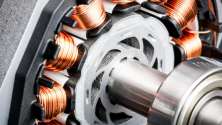
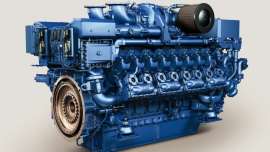
Summary Table: Physics and Related Disciplines
Discipline | Connection to Physics |
|---|---|
Mathematics | Language and modeling of physical laws |
Chemistry | Atomic structure, bonding, thermodynamics |
Biology | Biomechanics, medical imaging, biophysics |
Engineering | Design and analysis of machines, structures |
Astronomy | Astrophysics, celestial mechanics |
Geology | Geophysics, Earth's structure |
Computer Science | Simulations, quantum computing |
Career Opportunities
Engineering (Electrical, Mechanical, Civil, Telecommunications)
Technology (Computer Science, Renewable Energy)
Medicine (Medical Physics, Radiology)
Meteorology, Education, Research, Geophysics
1.2 Pressure
Pressure is a fundamental concept in fluid mechanics, describing the force exerted per unit area. It is crucial in understanding atmospheric phenomena, hydraulics, and various engineering applications.
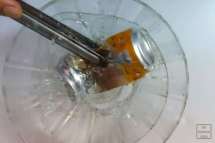
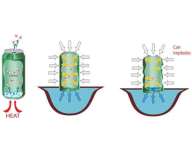
Atmospheric Pressure: The force per unit area exerted by the weight of air. It decreases with altitude and can be demonstrated by experiments such as the crushing can experiment.
Drinking Straw: Sucking reduces pressure inside the straw, and atmospheric pressure pushes the liquid up.
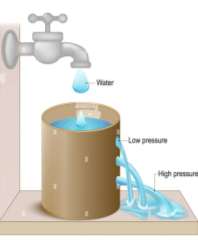
Factors Affecting Pressure in Liquids:
Depth (h): Pressure increases with depth.
Density (\( \rho \)): Denser fluids exert more pressure.
Gravity (g): Pressure is proportional to gravitational acceleration.
Pressure Formula:
Where = pressure (Pa), = density (kg/m³), = gravity (9.8 m/s²), = depth (m)
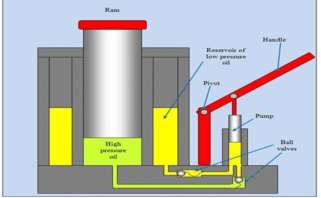
Pascal's Principle: Pressure applied to an enclosed fluid is transmitted undiminished throughout the fluid. Used in hydraulic machines.
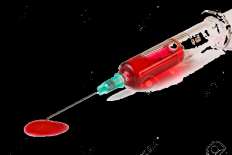
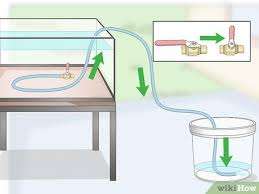
Applications: Syringes, siphons, hydraulic machines, bicycle pumps, water pumping mechanisms.


1.3 Mechanical Properties of Materials
Understanding the mechanical properties of materials is essential for selecting appropriate materials in engineering and construction.
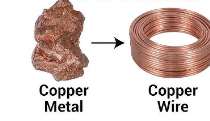
Ductility: Ability to be drawn into wires (e.g., copper).
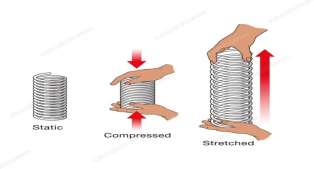
Elasticity: Ability to return to original shape after deformation (e.g., rubber bands, springs).

Brittleness: Tendency to break without significant deformation (e.g., glass).

Strength: Ability to withstand stress without breaking (e.g., steel beams).
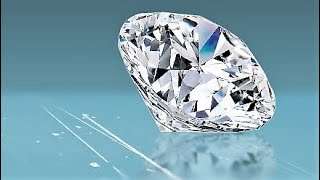
Hardness: Resistance to indentation or scratching (e.g., diamond).
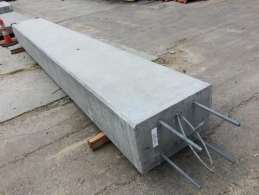
Stiffness: Resistance to deformation (e.g., concrete beam).
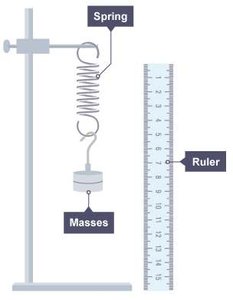
Hooke's Law: (Force is proportional to extension in elastic region).
Stress: (Force per unit area)
Strain: (Fractional change in length)
Young's Modulus: (Measure of stiffness)
1.4 Temperature and Thermal Expansion
Temperature measures the average kinetic energy of particles. Thermal expansion describes how materials change in size with temperature changes.
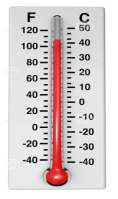
Units: Celsius (°C), Fahrenheit (°F), Kelvin (K). SI unit is Kelvin.
Thermal Expansion: (Linear expansion)
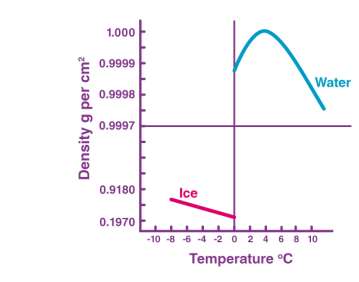
Unusual Expansion of Water: Water expands below 4°C, causing ice to float.
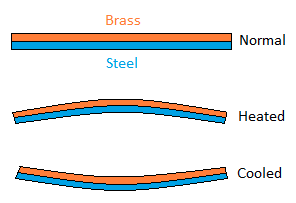
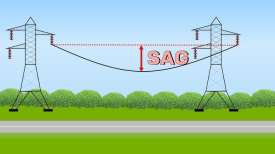
Applications: Bimetallic strips, expansion joints, power lines, fitting metal parts.

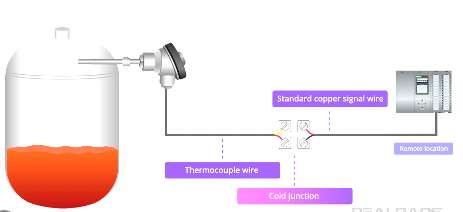
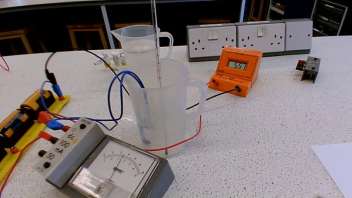
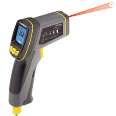
Temperature Measurement Devices: Thermometers, bimetallic devices, thermocouples, RTDs, infrared thermometers.
1.5 Moments and Equilibrium
Moments describe the turning effect of forces. Equilibrium occurs when all forces and moments are balanced.
Center of Gravity (C.O.G): Point where the entire weight acts.
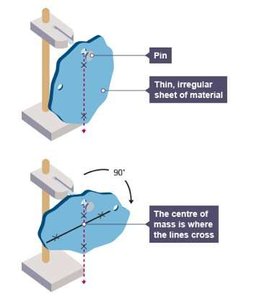
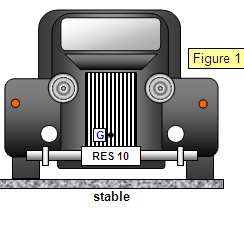
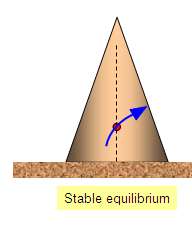
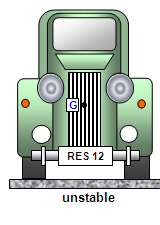
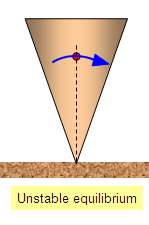
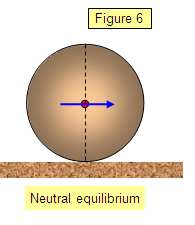
Stability: Ability to return to original position after disturbance. Types: stable, unstable, neutral equilibrium.
Moment of a Force:
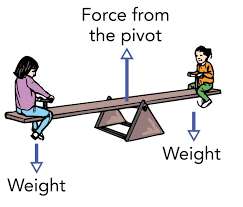
Principle of Moments: For equilibrium, sum of clockwise moments equals sum of counterclockwise moments.
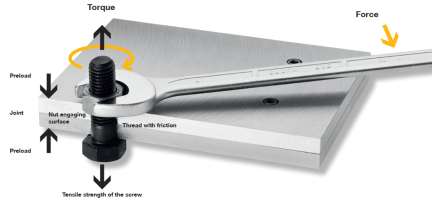
Torque: Rotational force causing rotation.
Couple: Pair of equal and opposite forces causing rotation without translation.
Moment About Supports: Important for analyzing beams and bridges.
Resolution of Forces: Breaking a force into horizontal and vertical components.
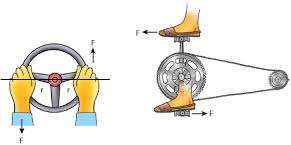
Applications: Levers, bridges, vehicles, buildings, cranes, balancing objects.
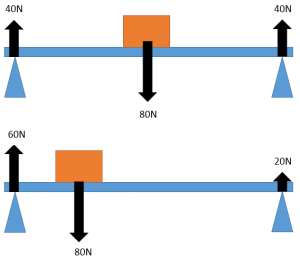
1.6 Energy, Work, Power, and Machines
Energy is the capacity to do work. Work is done when a force moves an object. Power is the rate of doing work. Machines make work easier by changing the magnitude or direction of a force.
Kinetic Energy:
Potential Energy: (gravitational), elastic potential energy in springs and bands.
Law of Conservation of Energy: Energy cannot be created or destroyed, only transformed.
Work:
Power:


Simple Machines: Levers, inclined planes, pulleys, wheel and axle, gears, hydraulic lifts, screws.
Mechanical Advantage (MA):
Velocity Ratio (VR):
Efficiency:
2. Waves and Optics
2.1 Properties of Waves
Waves are disturbances that transfer energy from one place to another. They exhibit properties such as rectilinear propagation, reflection, refraction, diffraction, and interference.
Rectilinear Propagation: Waves travel in straight lines in a uniform medium.
Reflection: Bouncing back of waves at a boundary (e.g., mirrors, echoes).
Refraction: Bending of waves as they pass from one medium to another (e.g., light entering water).
Dispersion: Separation of light into colors by a prism.
Diffraction: Spreading of waves through openings or around obstacles.
Interference: Superposition of waves resulting in constructive or destructive patterns.
3. Electricity and Magnetism
3.1 Electrostatics
Electrostatics deals with the study of stationary electric charges and their effects.
Origin of Charges: Atoms consist of protons, neutrons, and electrons. Rubbing transfers electrons, creating positive and negative charges.
Methods of Charging: Contact, induction, and separation.
Electroscope: Device to detect and compare charges.
Applications: Spray painting, photocopiers, electrostatic precipitators, lightning arrestors.
3.2 Current Electricity
Current electricity involves the flow of electric charge through conductors.
Current (I): Rate of flow of charge, measured in amperes (A).
Potential Difference (V): Work done per unit charge, measured in volts (V).
Ohm's Law:
Resistance (R): Opposition to current, measured in ohms (Ω).
Resistor Networks: Series and parallel combinations.
Power:
3.3 Introduction to Electronics
Electronics is the study of devices that control the flow of electrons using semiconductors, conductors, and insulators.
Energy Band Theory: Explains electrical properties of materials.
Types of Materials: Insulators (large band gap), conductors (overlapping bands), semiconductors (moderate band gap), superconductors (zero resistance at low temperatures).
Intrinsic and Extrinsic Semiconductors: Pure vs. doped semiconductors (n-type and p-type).
Applications: Wiring, diodes, transistors, integrated circuits, MRI machines.
4. Environmental and Space Physics
4.1 Greenhouse Effect and Climate Change
The greenhouse effect is the warming of Earth due to certain gases trapping heat. Climate change refers to long-term shifts in weather patterns and temperatures.
Greenhouse Gases: CO2, CH4, N2O, H2O.
Ozone Layer: Absorbs harmful UV radiation; depletion increases UV exposure.
Global Warming: Long-term increase in Earth's average temperature.
Mitigation: Reducing emissions, carbon sequestration, adaptation, international cooperation.
4.2 Introduction to Space Physics
Space physics explores the universe, its origin, and celestial bodies.
Big Bang Theory: Universe originated from a hot, dense state ~13.8 billion years ago.
Celestial Bodies: Stars, planets, moons, asteroids, comets, galaxies, nebulae.
Kepler's Laws: Describe planetary motion.
Telescopy: Observing distant objects using optical, radio, and space telescopes.
Careers: Astrophysicists, astronomers, aerospace engineers, astronauts, space scientists.
