 뒤로
뒤로Electric Charge and Electric Field – Study Notes (Physics for Scientists and Engineers, Ch. 21)
스터디 가이드 - 스마트 노트
 자료에 맞춘 맞춤형 노트, 핵심 정의, 예시, 맥락을 확장해 제공합니다.
Electric Charge and Electric Field
Static Electricity; Electric Charge and Its Conservation
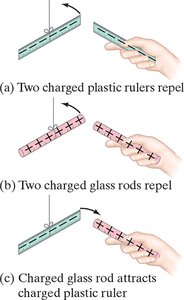
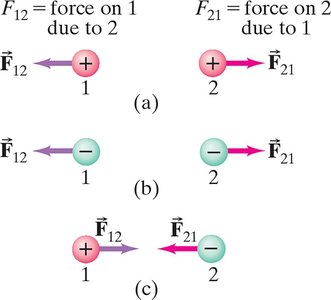
Electric charge is a fundamental property of matter responsible for electric phenomena. Objects can acquire charge through friction, conduction, or induction. There are two types of charge: positive and negative. Like charges repel, and unlike charges attract. The total electric charge in an isolated system is always conserved.
Conservation of Charge: The algebraic sum of all electric charges in any process remains constant.
Charging by Friction: Rubbing certain materials together can transfer electrons, resulting in one object becoming negatively charged and the other positively charged.
Electric Charge in the Atom
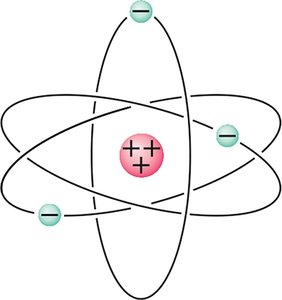
Atoms consist of a small, positively charged nucleus surrounded by a cloud of negatively charged electrons. The nucleus contains protons (positive) and neutrons (neutral). The overall charge of an atom is neutral unless electrons are added or removed.
Proton: Positive charge, located in the nucleus.
Electron: Negative charge, orbits the nucleus.
Neutron: No charge, located in the nucleus.
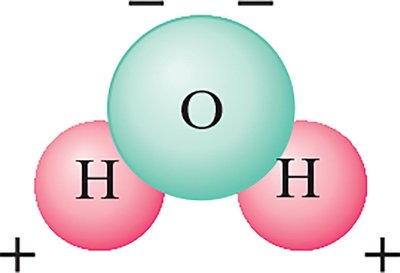
Polar Molecule: A molecule with an uneven distribution of charge, resulting in a dipole moment (e.g., water).
Insulators and Conductors
Materials are classified based on their ability to conduct electric charge:
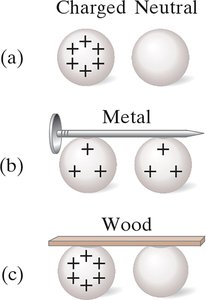
Conductors: Materials (e.g., metals) in which electric charge flows freely due to the presence of free electrons.
Insulators: Materials (e.g., glass, rubber) in which electric charge does not flow freely.
Semiconductors: Materials with conductivity between conductors and insulators.
Induced Charge; the Electroscope
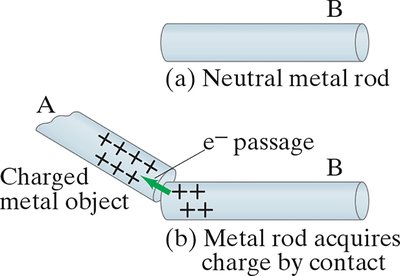
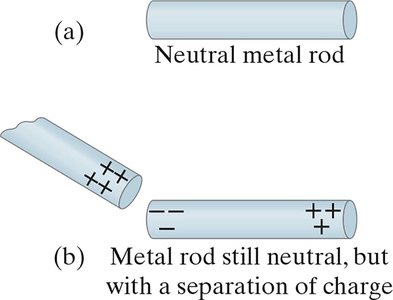
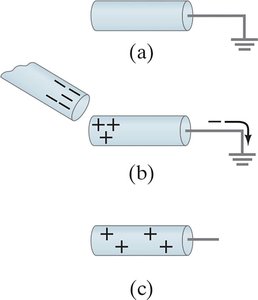
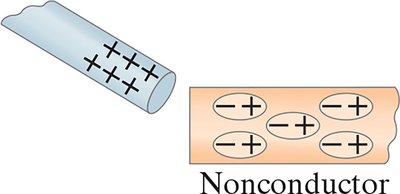
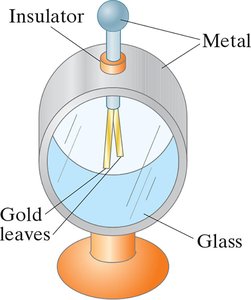
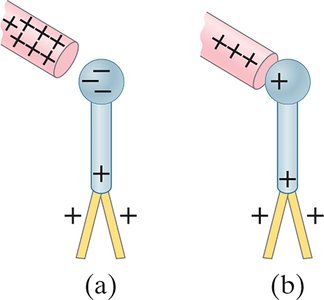
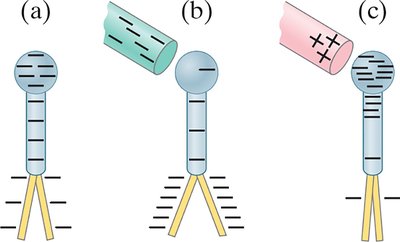
Charging can occur by conduction (direct contact) or induction (without contact). An electroscope is a device used to detect electric charge.
Charging by Conduction: Transfer of charge by direct contact.
Charging by Induction: Redistribution of charge in an object due to the presence of a nearby charged object, without direct contact.
Electroscope: Device that detects the presence and sign of electric charge.
Coulomb’s Law
Electric Force Between Point Charges
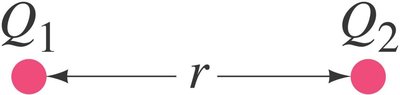
The electric force between two point charges is described by Coulomb’s Law:
The force is proportional to the product of the charges and inversely proportional to the square of the distance between them.
The force acts along the line joining the charges.
Mathematical Form:
where (Coulomb constant).
Unit of Charge: Coulomb (C).
Elementary Charge: C (magnitude of charge on a proton or electron).
Permittivity of Free Space:
Coulomb’s law can also be written as:
Examples and Applications
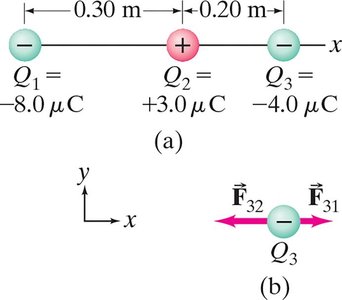
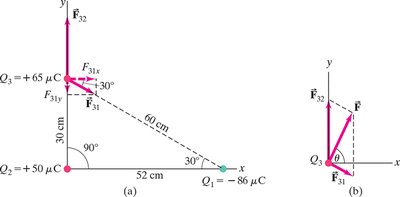
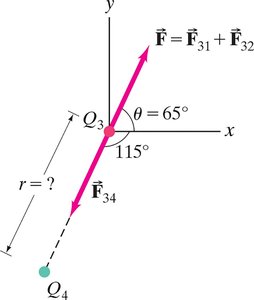
Forces between multiple charges are found by vector addition of individual forces (superposition principle).

The Electric Field
Definition and Properties
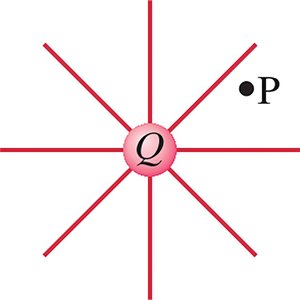
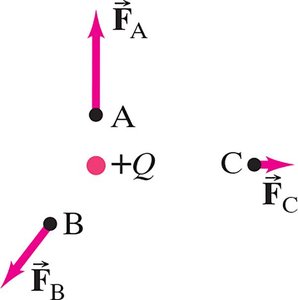
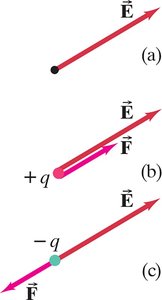
An electric field is a region of space around a charged object where other charges experience a force. The electric field at a point is defined as the force per unit charge:
Direction of is the direction of the force on a positive test charge.
For a point charge : or
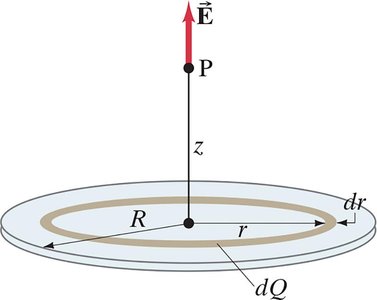
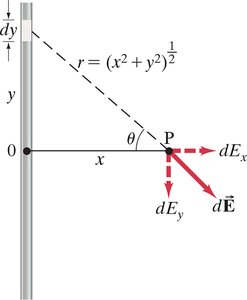
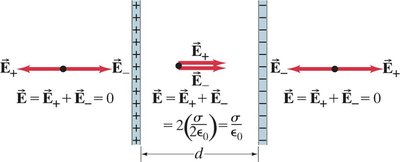
Electric Field Calculations for Continuous Charge Distributions
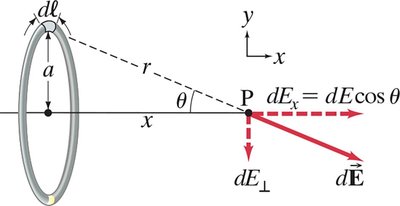
For objects with continuous charge distributions, the total electric field is found by integrating the contributions from each infinitesimal charge element:
Separate integrals are needed for each vector component.
Field Lines
Representation and Interpretation
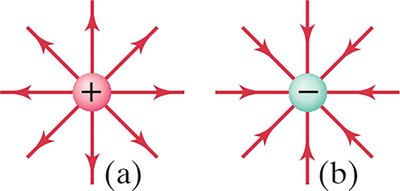
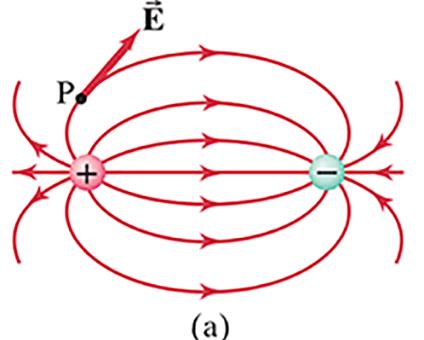
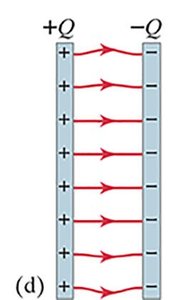
Electric field lines provide a visual representation of the electric field:
Lines start on positive charges and end on negative charges.
The density of lines indicates the strength of the field.
Field lines never cross.
Electric Fields and Conductors
Properties of Conductors in Electrostatic Equilibrium
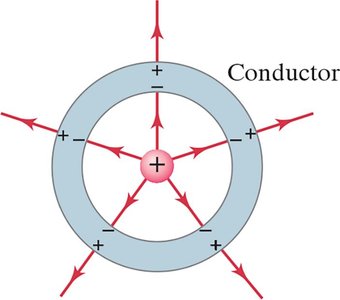
The electric field inside a conductor is zero in electrostatic equilibrium.
Any excess charge resides on the surface of the conductor.
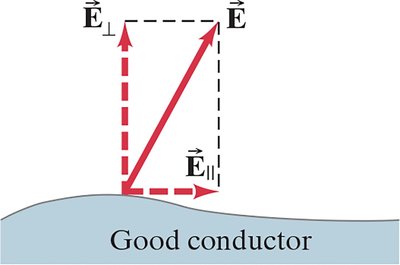
The electric field at the surface is perpendicular to the surface.
Motion of a Charged Particle in an Electric Field
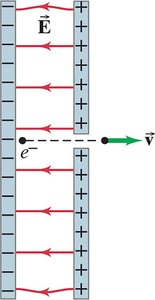
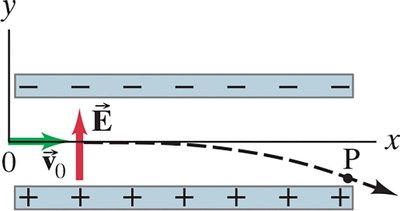
The force on a particle of charge in an electric field is . If the mass is known, the acceleration is . The motion can be analyzed using Newton's laws.
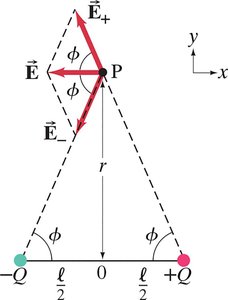
Electric Dipoles
Definition and Properties
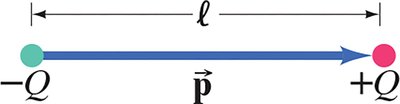
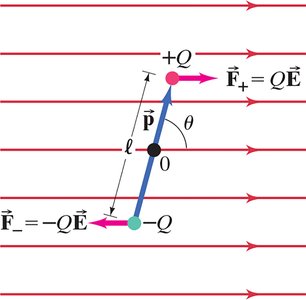
An electric dipole consists of two equal and opposite charges separated by a distance . The dipole moment is (points from negative to positive charge).
In a uniform electric field, a dipole experiences a torque but no net force.
The electric field of a dipole decreases as at distances much greater than .
Summary Table: Key Concepts in Electric Charge and Field
Concept | Definition/Formula | Notes |
|---|---|---|
Electric Charge | Quantized in units of | Conserved in all interactions |
Coulomb’s Law | Force between point charges | |
Electric Field | Force per unit charge | |
Field of Point Charge | Radially outward (positive), inward (negative) | |
Conductor | Charge resides on surface | |
Dipole Moment | Points from -Q to +Q |
Additional info:
Some examples and board work are referenced as homework and are not fully detailed here.
Section on electric forces in molecular biology (DNA) is for self-study and not examinable.
