 뒤로
뒤로Electric Charges and Forces: Study Notes for Physics College Students
스터디 가이드 - 스마트 노트
 자료에 맞춘 맞춤형 노트, 핵심 정의, 예시, 맥락을 확장해 제공합니다.
Electric Charges and Forces
Introduction to Electric Charge
Electric charge is a fundamental property of matter that underlies all electric phenomena. The study of electric charges and their interactions forms the basis for understanding electricity and magnetism in physics.
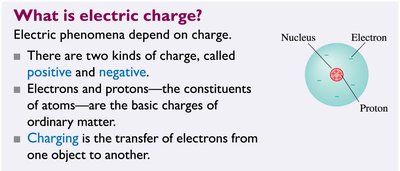
Electric phenomena depend on the presence and movement of electric charges.
There are two kinds of charge: positive and negative.
Electrons (negative) and protons (positive) are the basic charges of ordinary matter.
Charging is the process of transferring electrons from one object to another.
Behavior of Electric Charges
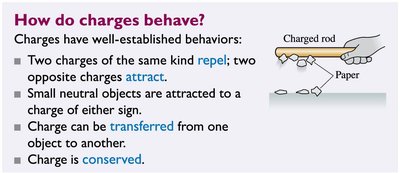
Charges exhibit predictable behaviors based on their type and interactions with other charges and materials.
Two charges of the same kind repel each other; two opposite charges attract.
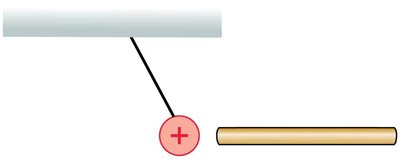
Small neutral objects are attracted to a charge of either sign.
Charge can be transferred from one object to another.
Charge is conserved in all interactions.
Conductors and Insulators
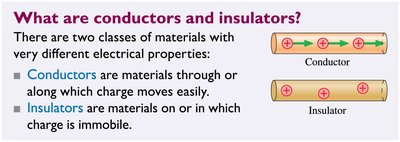
Materials are classified based on their ability to allow charge movement.
Conductors: Materials through or along which charge moves easily (e.g., metals).
Insulators: Materials on or in which charge is immobile (e.g., plastics, glass).
Coulomb's Law
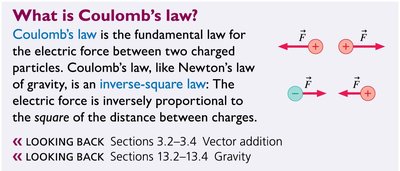
Coulomb's law describes the electric force between two point charges. It is a fundamental law analogous to Newton's law of gravity, but for electric charges.
The force is inversely proportional to the square of the distance between charges.
The force is directly proportional to the product of the charges.
Formula:
where
Electric Field
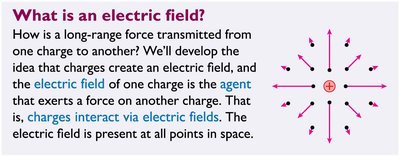
The concept of the electric field explains how a charge exerts a force on another charge at a distance. The electric field is a region around a charge where other charges experience a force.
The electric field of one charge is the agent that exerts a force on another charge.
Charges interact via electric fields, which are present at all points in space.
The direction of the electric field is the direction of the force on a positive test charge.
Formula:
Unit: N/C (newtons per coulomb)
Importance of Electric Charges
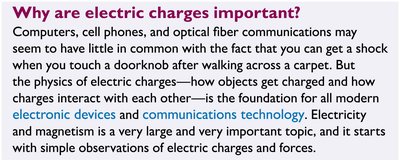
Electric charges are fundamental to the operation of modern electronic devices and communications technology. Understanding how objects get charged and how charges interact is essential for physics and engineering.
Electricity and magnetism are foundational topics in physics.
Observations of electric charges and forces lead to the development of electronic devices and communications technology.
Experimental Observations of Electric Charge
Neutral Objects and Charging by Friction
Experiments demonstrate the behavior of neutral and charged objects.
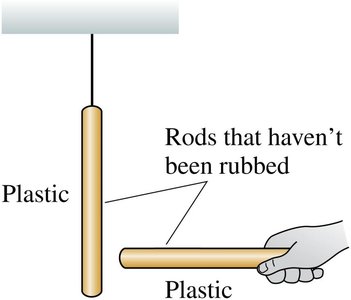
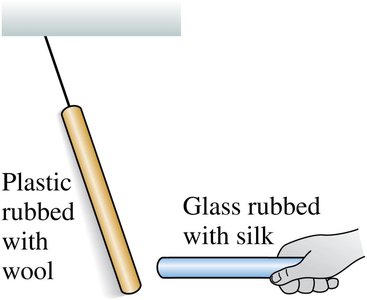
Undisturbed plastic rods show no force between them, indicating neutrality.
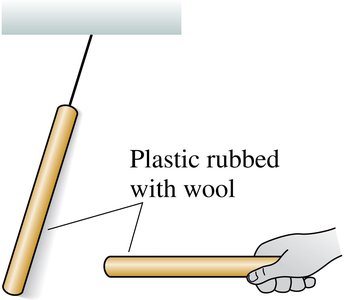
Rubbing plastic rods with wool imparts charge, causing repulsion between similarly charged rods.
Rubbing glass rods with silk imparts a different type of charge.
Distance and Force
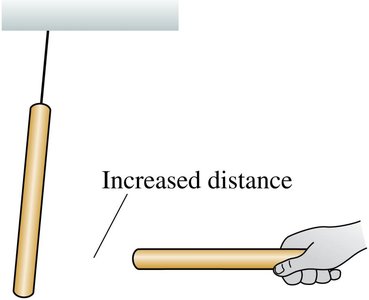
The strength of the force between charged objects decreases as the distance between them increases.
Force is a long-range interaction.
Increasing separation reduces the force.
Attraction of Neutral Objects
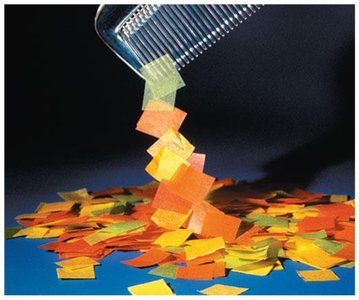
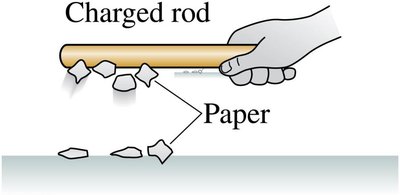
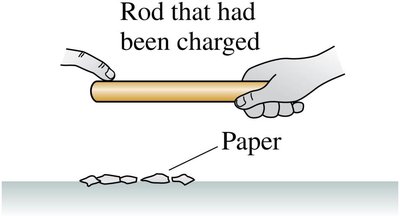
Charged objects can attract small pieces of paper or lint, demonstrating the interaction between charged and neutral objects.
Charged rods attract neutral paper pieces.
Neutral rods have no effect.
Charge Model
Charge Model, Part I
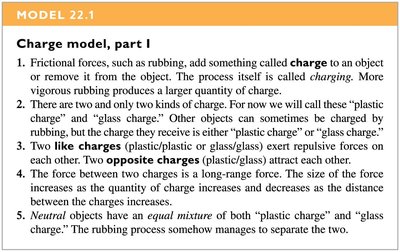
The charge model explains the behavior of charges based on experimental observations.
Frictional forces (rubbing) add or remove charge from objects.
There are only two kinds of charge: "plastic charge" and "glass charge" (historical terms for negative and positive).
Like charges repel; opposite charges attract.
Force increases with charge quantity and decreases with distance.
Neutral objects have an equal mixture of both types of charge.
Transferring Charge
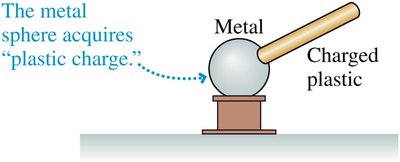
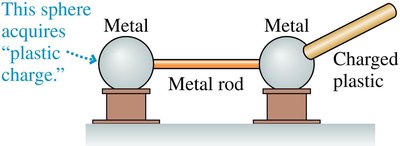
Charge can be transferred from one object to another by contact, especially when conductors are involved.
When a charged plastic rod touches a metal sphere, the sphere acquires "plastic charge".
Conductors allow charge to move freely; insulators do not.
Discharging
Touching a charged object can remove its charge, a process known as discharging.
After discharging, the object no longer attracts paper pieces.
Conductors vs. Insulators in Charge Transfer
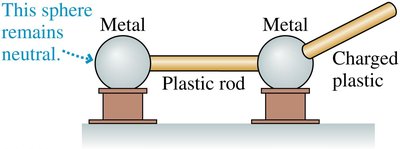
Charge transfer depends on the material properties.
Plastic rods connecting metal spheres do not transfer charge; metal rods do.
Conductors (metals) allow charge to move and be shared between objects.
Charge Model, Part II
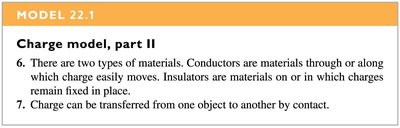
Further postulates of the charge model clarify material properties and charge transfer.
Conductors allow charge to move easily.
Insulators keep charge fixed in place.
Charge is transferred by contact.
Example: Transferring Charge
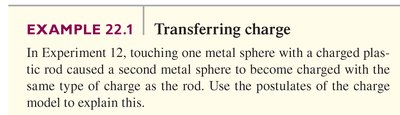
Touching one metal sphere with a charged rod causes a second sphere to become charged via a connecting metal rod.
Charge is transferred upon contact.
Metal is a conductor; charge moves through it.
Like charges repel, causing charge to spread.
Atomic Structure and Charge Quantization
Structure of the Atom
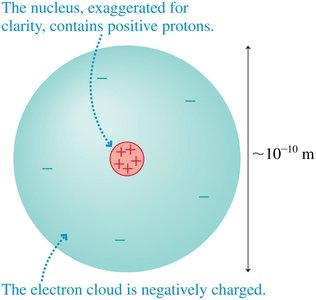
Atoms consist of a nucleus containing protons and neutrons, surrounded by electrons.
The nucleus is positively charged due to protons.
The electron cloud is negatively charged.
Protons and Electrons
Protons and electrons are the fundamental carriers of charge.
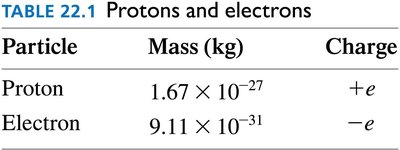
Particle | Mass (kg) | Charge |
|---|---|---|
Proton | 1.67 × 10⁻²⁷ | +e |
Electron | 9.11 × 10⁻³¹ | -e |
Ionization
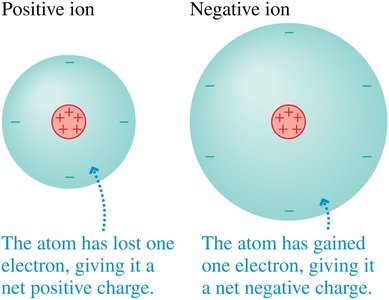
Atoms can become ions by gaining or losing electrons.
Loss of an electron creates a positive ion.
Gain of an electron creates a negative ion.
Molecular Ions and Charging by Friction
Friction can break molecular bonds, creating molecular ions and transferring charge.
One part of the molecule loses an electron (positive ion).
Another part gains an electron (negative ion).
Summary Table: Protons and Electrons
Particle | Mass (kg) | Charge |
|---|---|---|
Proton | 1.67 × 10⁻²⁷ | +e |
Electron | 9.11 × 10⁻³¹ | -e |
*Additional info: Table recreated from image_28 for clarity.*
Conclusion
Understanding electric charges, their behavior, and the laws governing their interactions is essential for further study in physics and engineering. The concepts of conductors, insulators, Coulomb's law, and electric fields provide the foundation for exploring more advanced topics in electricity and magnetism.
