 뒤로
뒤로Electromagnetic Induction and Faraday's Law: Study Notes
스터디 가이드 - 스마트 노트
 자료에 맞춘 맞춤형 노트, 핵심 정의, 예시, 맥락을 확장해 제공합니다.
Electromagnetic Induction and Faraday's Law
Introduction to Electromagnetic Induction
Electromagnetic induction is the process by which a changing magnetic field produces an electric current in a conductor. This principle is fundamental to many electrical devices and is described by Faraday's Law. - Key Point 1: A current in a wire produces a magnetic field, but a constant magnetic field does not induce a current in a circuit. - Key Point 2: Only a c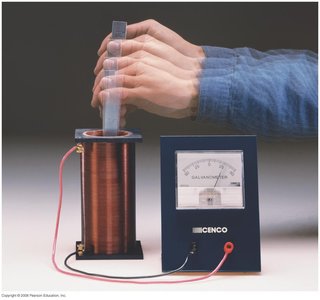 hanging magnetic field can induce a current, as demonstrated by Faraday's experiments.
Faraday's Experiment
Faraday showed that moving a magnet in or out of a coil induces a current, as measured by a galvanometer. The direction and magnitude of the induced current depend on the motion of the magnet and the change in magnetic flux. - Key Point 1: Moving a magnet towards a coil increases the magnetic flux and induces a current in one direction. - Key Point 2: Moving the magnet away decreases the flux and induces current in the opposite direction. - Example: No current is induced if the magnet is stationary relative to the coil. 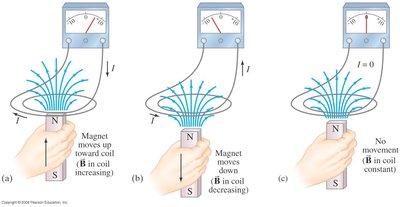
Magnetic Flux
Definition and Calculation
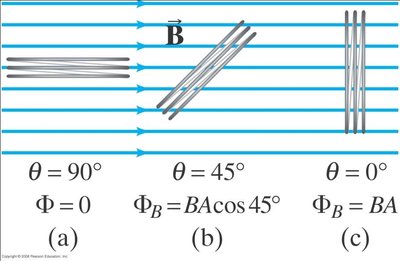
Magnetic flux quantifies the amount of magnetic field passing through a given area. It is a key concept in understanding electromagnetic induction. - Key Point 1: Magnetic flux () is defined as for a uniform field. - Key Point 2: For non-uniform fields, - Units: Tesla meter squared (T·m²) or Weber (Wb). 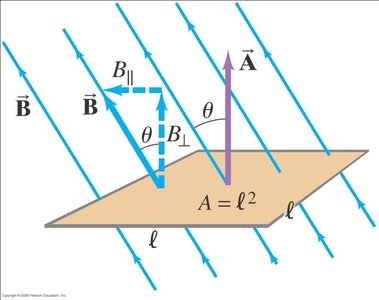
Faraday's Law of Induction
Statement and Mathematical Formulation
Faraday's Law states that the induced electromotive force (emf) in a circuit is proportional to the rate of change of magnetic flux through the circuit. - Key Point 1: - Key Point 2: The negative sign indicates that the induced emf opposes the change in flux (Lenz's Law). - Key Point 3: For a loop, 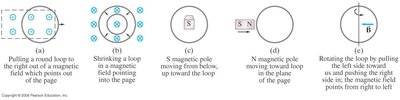
Lenz's Law
Lenz's Law describes the direction of the induced current: it always acts to oppose the change in magnetic flux that produced it. - Key Point 1: The induced magnetic field from the current opposes the original change in flux. - Example: If flux increases, the induced current creates a field opposing the increase. 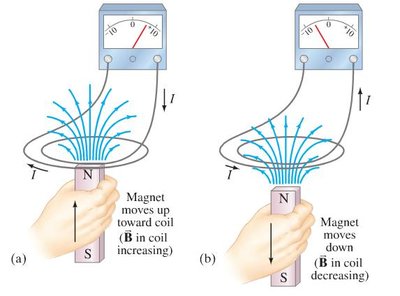
Induced Electric Fields
Non-Conservative Nature
A changing magnetic field produces an electric field, which is not conservative. This means the electric potential cannot be defined in the usual way. - Key Point 1: - Key Point 2: For a conservative field, , but for induced fields, this is not true. 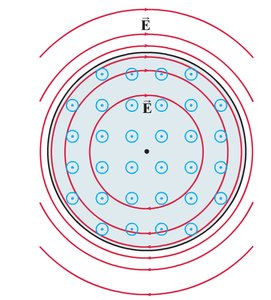
Applications: Electric Generators
Principle of Operation
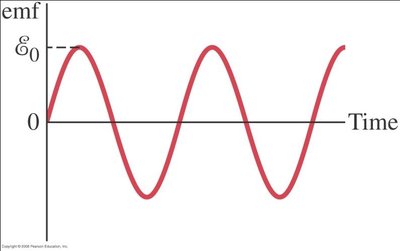
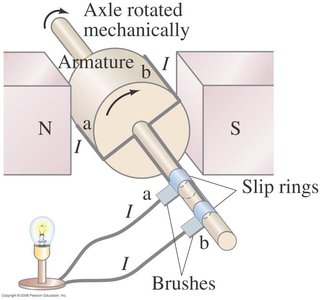
Electric generators convert mechanical energy into electrical energy using Faraday's Law. - Key Point 1: Rotating a coil in a magnetic field changes the flux and induces an emf. - Key Point 2: The output is alternating current (AC) due to the periodic change in flux. 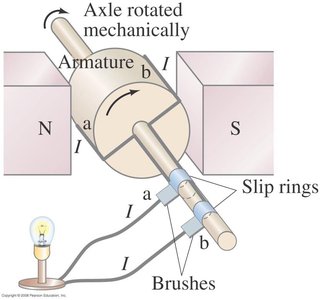
Generator Equations
- Key Point 1: For a coil rotating with angular velocity : - Key Point 2: For N coils: - Key Point 3: If connected to resistance R: 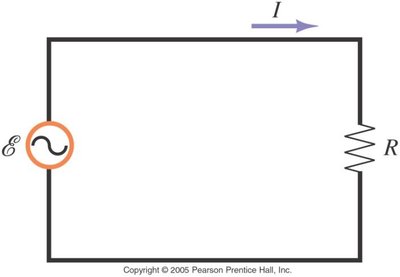
Electric Motors and Counter-EMF
Principle of Operation
Electric motors convert electrical energy into mechanical energy. As the motor operates, a counter-emf is induced, opposing the applied voltage. - Key Point 1: The counter-emf increases with speed, reducing net current. - Key Point 2: The motor's operation is based on the torque produced by the interaction of current and magnetic field. 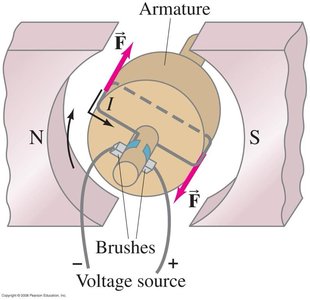
Motional EMF
Moving Conductors in Magnetic Fields
When a conductor moves through a magnetic field, an emf is induced due to the change in area swept by the conductor. - Key Point 1: for a rod of length l moving at velocity v perpendicular to B. - Key Point 2: The induced emf drives a current if the circuit is closed. 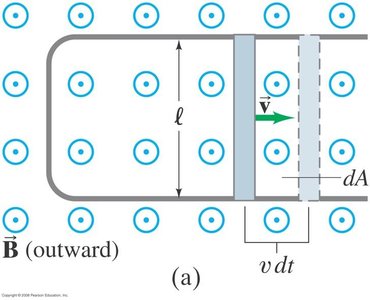
Eddy Currents
Formation and Applications
Eddy currents are loops of induced current in conductors exposed to changing magnetic fields. They can cause energy loss and are used in applications like metal detectors. - Key Point 1: Eddy currents oppose the change in magnetic field, causing drag or heating. - Key Point 2: Used in braking systems and metal detection. 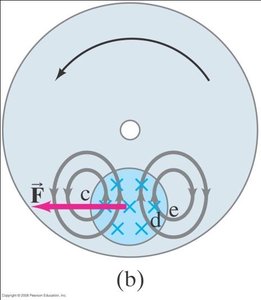

Faraday's Law in Differential Form
Stokes' Theorem and Maxwell's Equations
Faraday's Law can be expressed in differential form, relating the curl of the electric field to the time derivative of the magnetic field. - Key Point 1: - Key Point 2: This is one of Maxwell's equations, fundamental to electromagnetism.
Mutual Inductance
Induction Between Two Coils
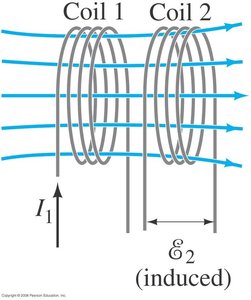
When the current in one coil changes, it induces an emf in a nearby coil. The mutual inductance M quantifies this effect. - Key Point 1: - Key Point 2: depends on coil geometry and relative position. 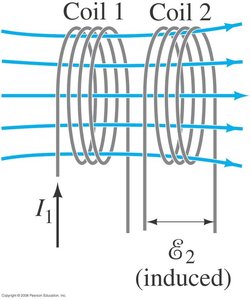
Self-Inductance
Definition and Calculation
A changing current in a coil induces an emf in the same coil, called self-inductance. - Key Point 1: - Key Point 2: For a solenoid: - Key Point 3: The induced emf opposes the change in current. 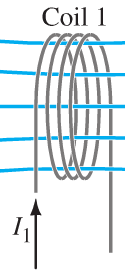
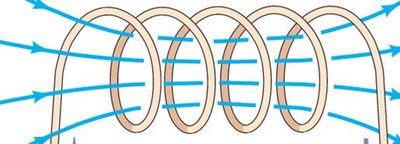
Energy in an Inductor
Energy Storage and Calculation
Inductors store energy in their magnetic fields. The energy is released when the current decreases. - Key Point 1: The work done to increase current is stored as magnetic energy. - Key Point 2: - Key Point 3: Energy density in the magnetic field: 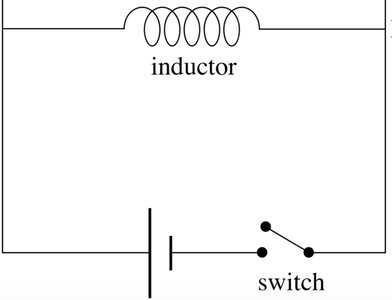
Transformers
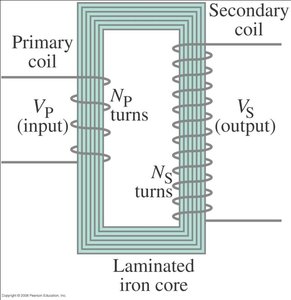
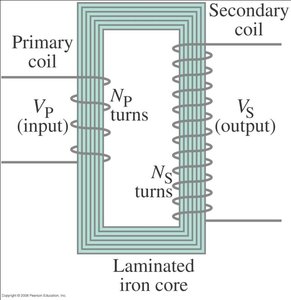
Principle and Equations
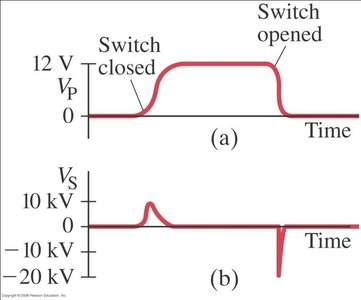
Transformers use mutual induction to change the voltage of alternating current. - Key Point 1: - Key Point 2: Power conservation: - Key Point 3: Only works with AC; DC produces no output unless the circuit is switched. 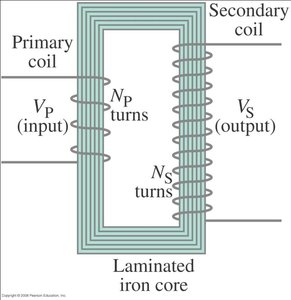
Power Transmission and Losses
Minimizing Power Loss
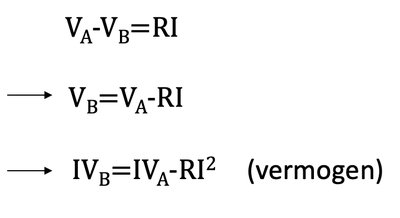
High-voltage transmission reduces power loss in electrical lines. - Key Point 1: Power loss: - Key Point 2: Increasing voltage reduces current, minimizing losses. 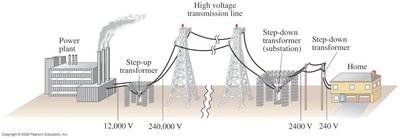
Applications
Everyday Uses of Induction
Electromagnetic induction is used in devices such as lamps, chargers, and metal detectors. - Key Point 1: Induction allows for efficient energy transfer and detection of metals. - Key Point 2: Chargers use transformers to provide safe, low voltage output.
Additional info:
The notes cover all major aspects of electromagnetic induction, including Faraday's Law, Lenz's Law, motional emf, eddy currents, mutual and self-inductance, energy storage in inductors, transformers, and power transmission. All equations are provided in LaTeX format, and only directly relevant images are included to reinforce the concepts.
