 뒤로
뒤로11 - Impulse and Momentum: Principles, Applications, and Problem-Solving
스터디 가이드 - 스마트 노트
 자료에 맞춘 맞춤형 노트, 핵심 정의, 예시, 맥락을 확장해 제공합니다.
Impulse and Momentum
Momentum
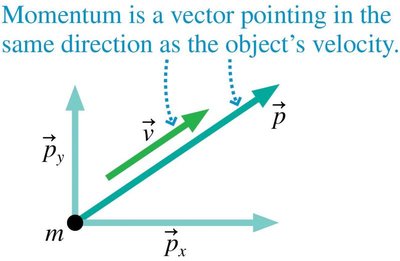
Momentum is a fundamental concept in physics that describes the quantity of motion an object possesses. It is defined as the product of an object's mass and velocity, making it a vector quantity that points in the same direction as the velocity.
Definition: The momentum p of an object is given by , where m is mass and v is velocity.
Units: Kilogram meter per second (kg·m/s).
Vector Nature: Momentum has both magnitude and direction, so attention must be paid to the signs and components.
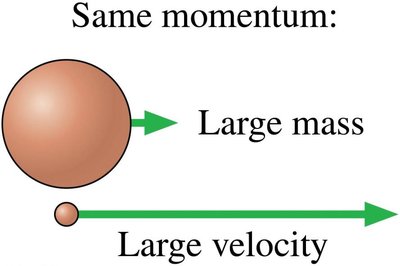
Large Momentum: An object can have a large momentum by having either a large mass or a large velocity.
Component Form: Momentum can be decomposed into x- and y-components for analysis in two dimensions.
Example: A truck (large mass, small velocity) and a bullet (small mass, large velocity) can have the same momentum.
Collisions
A collision is a short-duration interaction between two objects, during which they exert significant forces on each other. Collisions are not instantaneous and involve deformation and force over a finite time interval.
Example: The collision between a tennis ball and a racket involves compression and re-expansion of the ball.

Impulse
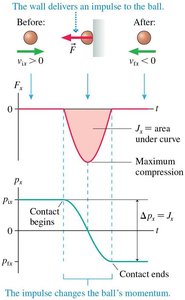
Impulse is the effect of a force acting over a short time interval. It quantifies the change in momentum resulting from a force applied over time.
Definition: The impulse delivered by a force over a time interval is .
Units: Newton-second (N·s), equivalent to kg·m/s.
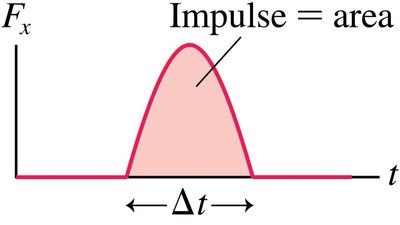
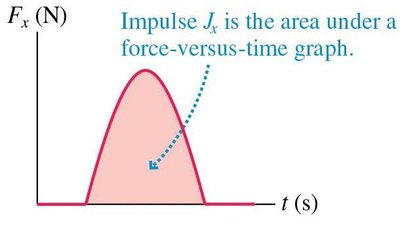
Graphical Interpretation: Impulse is the area under the force-versus-time graph.
Impulsive Force: A force of short duration that causes a significant change in momentum.
Impulse-Momentum Principle
The impulse-momentum principle states that the impulse delivered to an object is equal to the change in its momentum. This is an alternative formulation of Newton's second law.
Mathematical Form:
Component Form:
Application: Useful for analyzing collisions and other short-duration interactions.
Impulse vs. Work
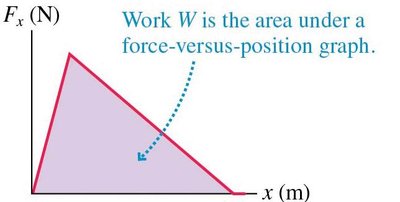
Impulse and work are both related to forces, but impulse is associated with force over time (change in momentum), while work is associated with force over distance (change in energy).
Impulse: Area under force-time graph ()
Work: Area under force-position graph ()
Average Force and Impulse
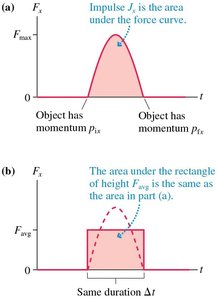
The average force during a collision can be defined such that the impulse is equal to the area under the actual force curve.
Average Force:
Graphical Representation: The area under the rectangle of height and width equals the area under the actual force curve.
Momentum Bar Charts
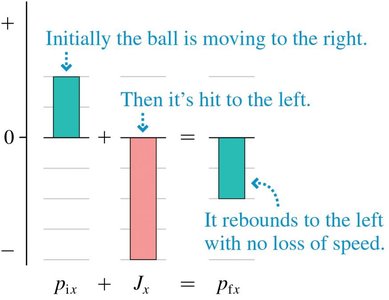
Momentum bar charts are a visual tool to represent the initial momentum, impulse, and final momentum of an object, aiding in the analysis of collisions.
Key Idea:
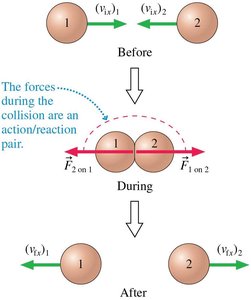
Conservation of Momentum
Law of Conservation of Momentum
The law of conservation of momentum states that the total momentum of an isolated system remains constant if no external forces act on it. This principle is fundamental in analyzing collisions and explosions.
Mathematical Statement:
Isolated System: A system with zero net external force ().
Component Conservation: Each component of momentum (x, y, z) is conserved independently.
Problem-Solving Strategy: Conservation of Momentum
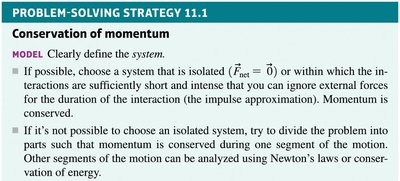
To solve momentum conservation problems, follow a systematic approach:
Model: Define the system and determine if it is isolated.
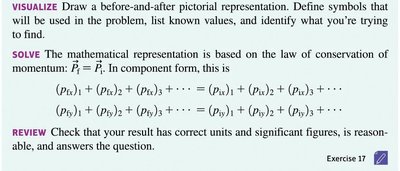
Visualize: Draw before-and-after diagrams, define symbols, and list knowns and unknowns.
Solve: Apply the conservation of momentum equation in component form.
Review: Check units, significant figures, and reasonableness of the result.
Types of Collisions
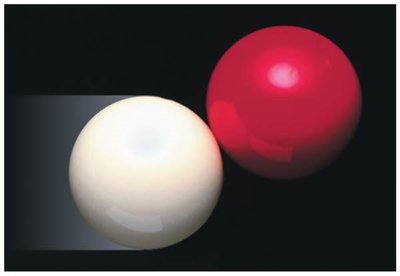
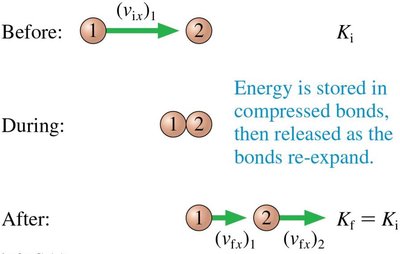
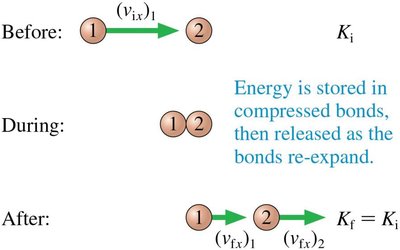
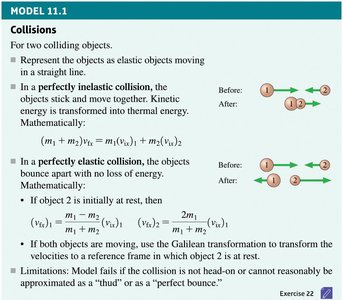
Elastic Collision: Both momentum and kinetic energy are conserved. Objects bounce apart after collision.
Inelastic Collision: Momentum is conserved, but kinetic energy is not. Objects may stick together (perfectly inelastic) or deform.
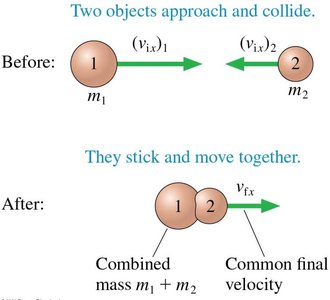
Perfectly Inelastic Collision: Objects stick together and move with a common velocity after collision.
Mathematical Analysis of Collisions
Perfectly Inelastic Collision:
Perfectly Elastic Collision (one object initially at rest):
Special Cases in Elastic Collisions
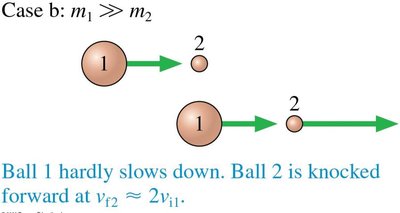
Case b: – The larger mass continues almost unaffected, the smaller mass rebounds with nearly twice the initial speed.
Case c: – The smaller mass rebounds with nearly the same speed in the opposite direction, the larger mass barely moves.
Explosions
An explosion is the reverse of a collision: objects initially together fly apart due to internal forces. If the system is isolated, total momentum is conserved.
Example: Fireworks, rocket propulsion.
Rocket and Jet Propulsion
Rocket propulsion is an application of conservation of momentum. As fuel is expelled backward, the rocket gains forward momentum, keeping the total system momentum constant.
Thrust: Product of exhaust speed and rate of fuel consumption.
Momentum in Two Dimensions
When analyzing collisions or explosions in two dimensions, momentum conservation must be applied separately to each component (x and y directions).
Component Equations: and
Summary Table: Types of Collisions
Type of Collision | Momentum Conserved? | Kinetic Energy Conserved? | Example |
|---|---|---|---|
Elastic | Yes | Yes | Billiard balls |
Inelastic | Yes | No | Car crash with deformation |
Perfectly Inelastic | Yes | No | Clay sticking to floor |
Key Equations
Momentum:
Impulse:
Impulse-Momentum Principle:
Conservation of Momentum:
Elastic Collision (one object at rest): ,
Perfectly Inelastic Collision:
Applications and Examples
Hitting a Baseball: The change in momentum (impulse) delivered by the bat determines the ball's final velocity.
Rolling Away: A person jumping onto a cart demonstrates conservation of momentum in a perfectly inelastic collision.
Explosions and Rockets: Conservation of momentum explains the recoil of a rocket or the motion of fragments after an explosion.
