 뒤로
뒤로Maxwell's Equations and Electromagnetic Waves: A Comprehensive Study Guide
스터디 가이드 - 스마트 노트
 자료에 맞춘 맞춤형 노트, 핵심 정의, 예시, 맥락을 확장해 제공합니다.
Maxwell's Equations and Electromagnetic Waves
Introduction to Maxwell's Equations
Maxwell's equations form the foundation of classical electromagnetism, describing how electric and magnetic fields are generated and altered by each other and by charges and currents. These equations unify the laws of Gauss, Ampère, and Faraday, and predict the existence of electromagnetic waves.
Gauss's Law for Electricity: The electric flux through a closed surface is proportional to the enclosed electric charge.
Gauss's Law for Magnetism: There are no magnetic monopoles; the net magnetic flux through a closed surface is zero.
Faraday's Law of Induction: A changing magnetic field induces an electric field.
Ampère-Maxwell Law: Magnetic fields are generated by electric currents and by changing electric fields.
Integral and Differential Forms of Maxwell's Equations
Maxwell's equations can be expressed in both integral and differential forms. The integral forms relate the fields to physical quantities over surfaces and paths, while the differential forms describe the local behavior of the fields.
Integral Forms:
Gauss's Law (Electric):
Gauss's Law (Magnetic):
Faraday's Law:
Ampère-Maxwell Law:
Differential Forms:
Gauss's Law (Electric):
Gauss's Law (Magnetic):
Faraday's Law:
Ampère-Maxwell Law:
Ambiguity in Ampère's Law and Maxwell's Displacement Current
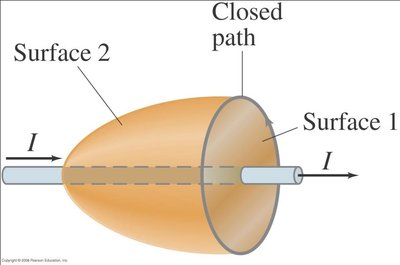
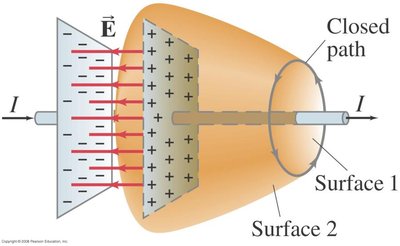
Maxwell identified a limitation in Ampère's Law when applied to time-varying currents, such as in a charging or discharging capacitor. The original law did not account for the changing electric field between the capacitor plates, leading to inconsistencies depending on the chosen surface for the integral.
Displacement Current: Maxwell introduced the concept of displacement current, , to resolve this ambiguity. This term allows the law to be consistent for both surfaces enclosing conduction current and those passing between capacitor plates.
Physical Interpretation: A changing electric field produces a magnetic field, even in regions where no physical current flows.
Gauss's Law for Magnetism
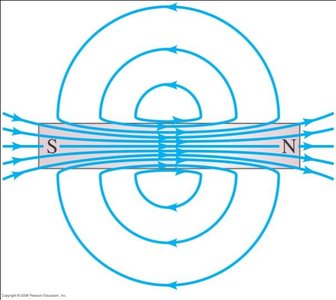
Gauss's Law for magnetism states that the net magnetic flux through any closed surface is zero, reflecting the absence of magnetic monopoles. Magnetic field lines always form closed loops, entering and exiting any closed surface equally.
Equation:
Physical Meaning: Magnetic field lines do not begin or end at any point; they always loop back on themselves.
Electromagnetic Wave Generation
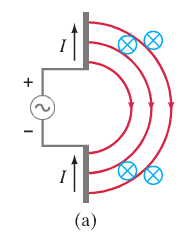
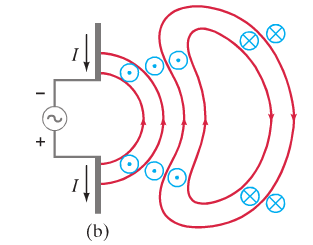
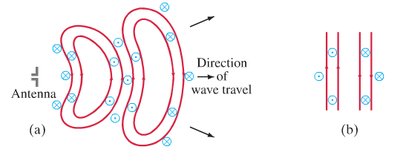
Electromagnetic waves are generated by oscillating or accelerating electric charges. A changing electric field produces a changing magnetic field, and vice versa, allowing the wave to propagate through space independently of the source.
Antennas: Conducting rods connected to an alternating voltage source act as antennas, emitting electromagnetic waves as the direction of the electric and magnetic fields oscillates.
Self-Sustaining Waves: The mutual induction of electric and magnetic fields allows the wave to travel through space.
Wave Equations for Electromagnetic Fields
In free space, Maxwell's equations reduce to wave equations for both the electric and magnetic fields. These equations show that both fields propagate as waves at the speed of light, .
Wave Equation for E and B:
Speed of Light: m/s
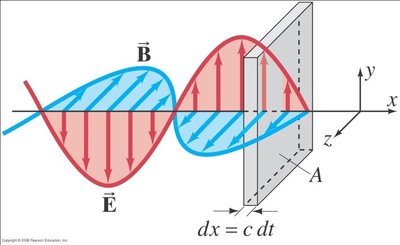
Transverse Nature: The electric and magnetic fields are perpendicular to each other and to the direction of propagation.
Properties of Electromagnetic Waves
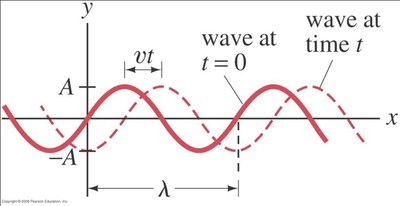
Electromagnetic waves are transverse waves, with the electric field () and magnetic field () oscillating perpendicular to the direction of propagation. The general solution for a plane wave traveling in the x-direction is:
Relationship: (where is wavelength, is frequency)
The Electromagnetic Spectrum
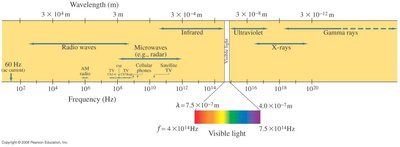
The electromagnetic spectrum encompasses all possible frequencies of electromagnetic radiation, from radio waves to gamma rays. Visible light is only a small part of this spectrum.
Regions: Radio, Microwave, Infrared, Visible, Ultraviolet, X-rays, Gamma rays
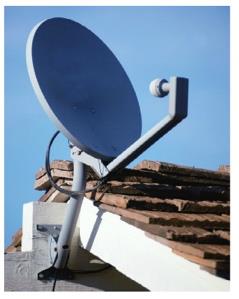
Applications: Communication (radio, TV, cell phones), medical imaging (X-rays), and more.

Energy Transport: The Poynting Vector
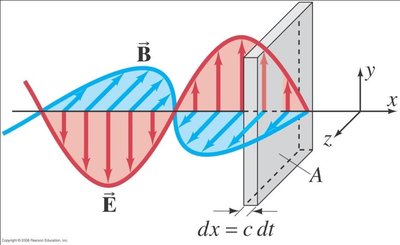
Electromagnetic waves transport energy through space. The energy density () in the wave is the sum of the energy densities of the electric and magnetic fields. The rate of energy transfer per unit area is given by the Poynting vector ().
Energy Density:
Poynting Vector:
Direction: The Poynting vector points in the direction of wave propagation, indicating the flow of energy.
Summary Table: Maxwell's Equations
Law | Integral Form | Differential Form | Physical Meaning |
|---|---|---|---|
Gauss (Electric) | Electric charges produce electric fields | ||
Gauss (Magnetic) | No magnetic monopoles exist | ||
Faraday | Changing magnetic fields induce electric fields | ||
Ampère-Maxwell | Currents and changing electric fields produce magnetic fields |
