 뒤로
뒤로Rotational Motion: Concepts, Equations, and Applications
스터디 가이드 - 스마트 노트
 자료에 맞춘 맞춤형 노트, 핵심 정의, 예시, 맥락을 확장해 제공합니다.
Rotational Motion of Rigid Bodies
Introduction to Rotational Motion
Rotational motion describes the movement of objects around a fixed axis. Unlike point particles, rigid bodies have a definite size and shape, and every point in the body moves in a circle about the axis of rotation. Examples include spinning wheels, rotating discs, and wind turbines.
Rigid Body: An object with fixed size and shape that cannot be stretched, twisted, or squeezed.
Axis of Rotation: The straight line around which all points in the body move in circles.
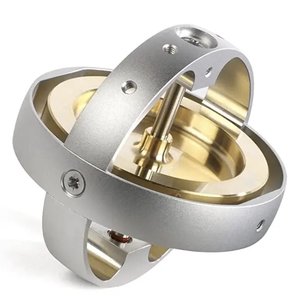
Applications: Wind turbines, gyroscopes, and playground merry-go-rounds are common examples of rotational motion in everyday life.


Measuring Angles and Angular Position
Angle Measurement and Radians
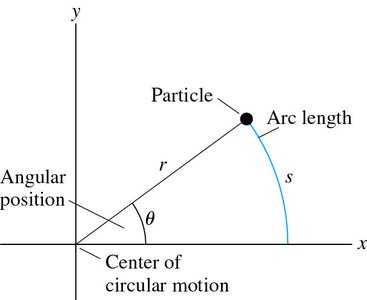
Angles in rotational motion are measured in radians, which relate the arc length to the radius of the circle. This unit is essential for expressing angular displacement and velocity.
Radian (rad): The angle subtended by an arc length equal to the radius of the circle.
Formula: where is the arc length and is the radius.
Conversion: radians, so .
Direction: Angles measured counterclockwise from the positive x-axis are positive.
Angular Displacement
Definition and Calculation
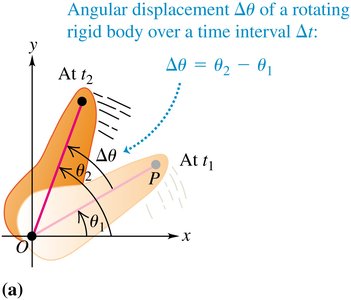
Angular displacement is the change in the angular position of a rotating body over a time interval. It is measured in radians and can be positive or negative depending on the direction of rotation.
Formula:
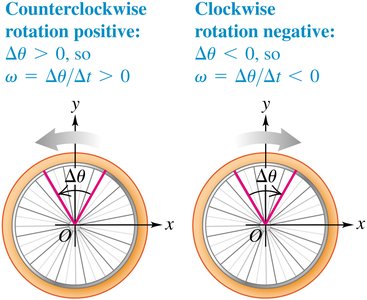
Sign Convention: Counterclockwise rotation is positive; clockwise is negative.
Angular Velocity
Average and Instantaneous Angular Velocity
Angular velocity describes how fast an object rotates or revolves relative to another point, typically the axis of rotation. It is the rate of change of angular displacement with respect to time.
Average Angular Velocity:
Instantaneous Angular Velocity:
Units: rad/s (radians per second)
Other Units: 1 rev/s = rad/s; 1 rpm = rad/s
Direction: Positive for counterclockwise, negative for clockwise rotation.

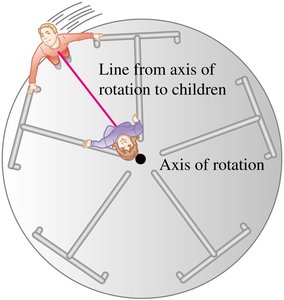
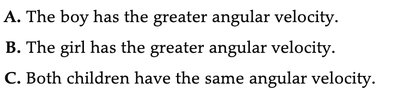
Example: Both a boy at the edge and a girl near the axis of a merry-go-round have the same angular velocity, as they complete each revolution in the same time.
Angular Acceleration
Definition and Calculation
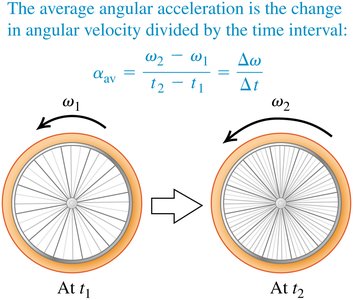
Angular acceleration is the rate at which angular velocity changes with time. It is a vector quantity, measured in radians per second squared (rad/s2).
Average Angular Acceleration:
Instantaneous Angular Acceleration:
Units: rad/s2
Rotation with Constant Angular Acceleration
Kinematic Equations for Rotational Motion
When angular acceleration is constant, the equations of rotational motion closely resemble those for linear motion with constant acceleration. These equations are essential for solving problems involving rotating objects.
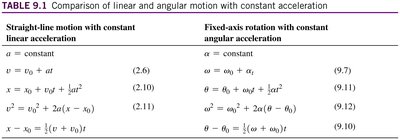
Comparison: The equations for linear and angular motion are analogous, with displacement () replaced by angular displacement (), velocity () by angular velocity (), and acceleration () by angular acceleration ().
Worked Example: Rotation of a Compact Disc
Application of Rotational Kinematics
Consider a CD with radius cm spinning at $7200$ rev/min. We can calculate its angular velocity, the time to rotate through a certain angle, and its average angular acceleration if it starts from rest.
Angular Velocity:
Time for 90° Rotation: ;
Average Angular Acceleration:

Quick Concept Checks
Understanding Rotational Motion
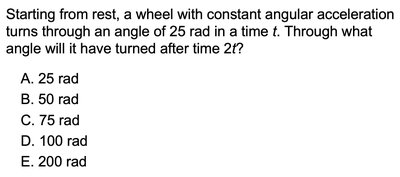
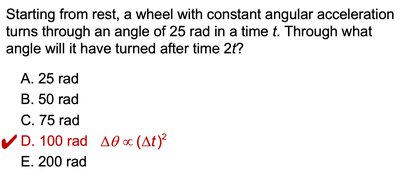
Angular Displacement and Time: For constant angular acceleration, .
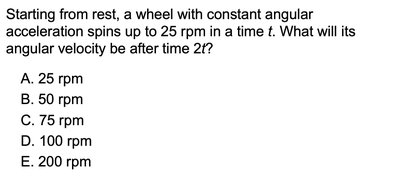
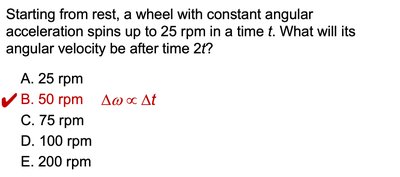
Angular Velocity and Time: For constant angular acceleration, .
Direction of and : If an object is slowing down, and have opposite signs.
Summary Table: Linear vs. Angular Motion
Comparison of Kinematic Equations
The following table summarizes the analogy between linear and angular motion under constant acceleration:
Straight-line motion with constant linear acceleration | Fixed-axis rotation with constant angular acceleration |
|---|---|
Additional info: These equations are foundational for analyzing rotational dynamics and are directly analogous to the equations for linear motion, making it easier to transition between the two types of problems.
