Ch 42: Molecules and Condensed Matter
Young & Freedman Calc - University Physics 14th Edition
Young & Freedman Calc14th EditionUniversity PhysicsISBN: 9780321973610당신이 사용하는 게 아니라요?교과서 변경
42장, 문제 28a

Suppose a piece of very pure germanium is to be used as a light detector by observing, through the absorption of photons, the increase in conductivity resulting from generation of electron–hole pairs. If each pair requires 0.670.67 eV of energy, what is the maximum wavelength that can be detected? In what portion of the spectrum does it lie?

검증된 단계별 안내
1
Step 1: Understand the relationship between energy and wavelength. The energy of a photon is given by the equation: E=hc/λ, where E is the energy of the photon, h is Planck's constant (6.626×1034 J·s), c is the speed of light (3.00×10 m/s), and λ is the wavelength of the photon.
Step 2: Convert the energy required to generate an electron-hole pair from electron volts (eV) to joules (J). Use the conversion factor: 1 eV=1.602×10¹⁹ J. Multiply 0.67 eV by this factor to find the energy in joules.
Step 3: Rearrange the photon energy equation to solve for wavelength: λ=hc/E. Substitute the values for h, c, and the energy (in joules) into this equation.
Step 4: Perform the calculation to determine the maximum wavelength λ. Ensure that the units are consistent (meters for wavelength).
Step 5: Identify the portion of the electromagnetic spectrum corresponding to the calculated wavelength. Compare the wavelength to the ranges of the spectrum (e.g., ultraviolet, visible, infrared) to determine where it lies.

비슷한 문제에 대한 검증된 영상 답변:

이 영상 해법은 위 문제에 도움이 된다고 튜터들이 추천한 것입니다.
영상 길이:
2m
도움이 되었나요?

주요 개념

질문에 올바르게 답하기 위해 반드시 이해해야 하는 핵심 개념들은 다음과 같습니다.

Photon Energy and Wavelength Relationship

The energy of a photon is inversely related to its wavelength, described by the equation E = hc/λ, where E is energy, h is Planck's constant, c is the speed of light, and λ is the wavelength. This relationship indicates that shorter wavelengths correspond to higher energy photons, which is crucial for determining the maximum wavelength that can generate electron-hole pairs in germanium.
추천 영상:
가이드 코스
03:43
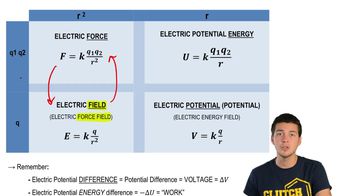
Relationships Between Force, Field, Energy, Potential

Electron-Hole Pair Generation

In semiconductors like germanium, when a photon with sufficient energy is absorbed, it can excite an electron from the valence band to the conduction band, creating an electron-hole pair. This process is fundamental to the operation of light detectors, as the generation of these pairs leads to increased conductivity, allowing the detection of light.
추천 영상:

Energy Bands in Semiconductors

Semiconductors have distinct energy bands: the valence band, filled with electrons, and the conduction band, where electrons can move freely. The energy gap between these bands determines the minimum energy required to generate electron-hole pairs. For germanium, this gap is approximately 0.67 eV, which is essential for calculating the maximum detectable wavelength of light.
추천 영상:
가이드 코스
04:10
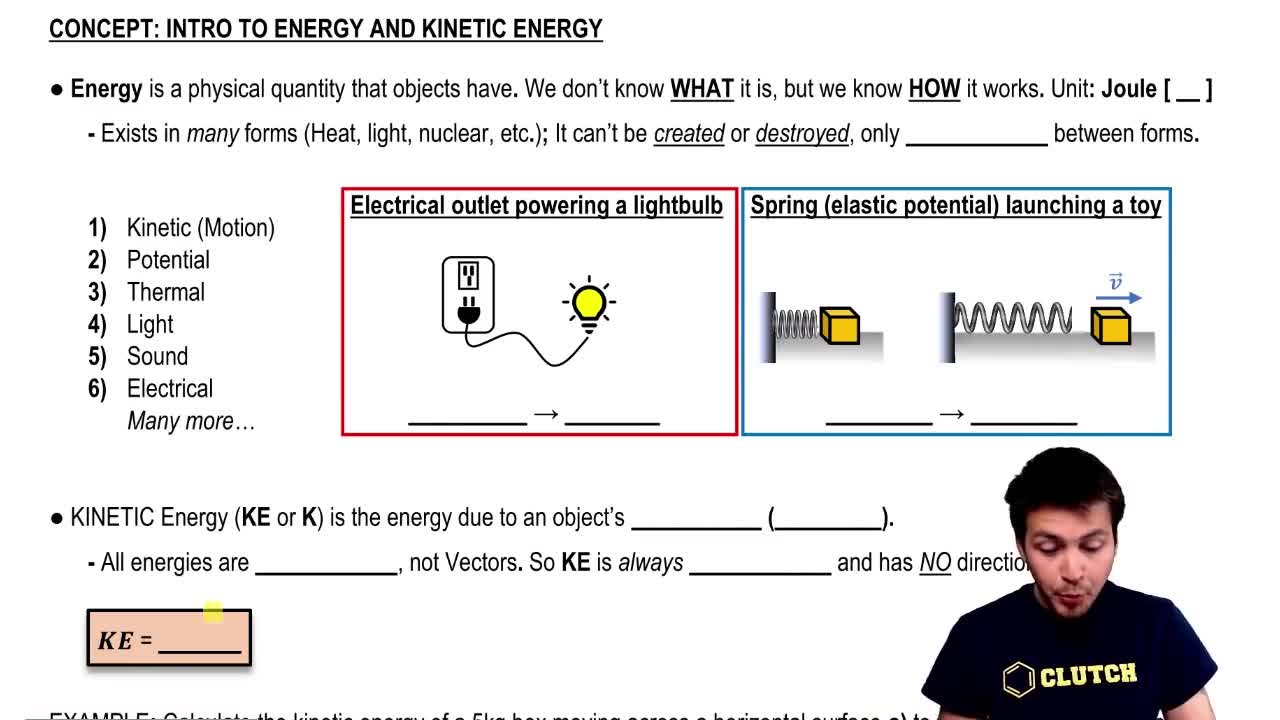
Intro to Energy & Types of Energy