 뒤로
뒤로Biological Psychology and the Biopsychosocial Model: Foundations for Understanding Behaviour
스터디 가이드 - 스마트 노트
 자료에 맞춘 맞춤형 노트, 핵심 정의, 예시, 맥락을 확장해 제공합니다.
The Biopsychosocial Model
Multiple Perspectives in Psychology
Psychologists analyze human behaviour through biological, psychological, and sociocultural lenses. A comprehensive understanding of behaviour requires integrating these perspectives, each focusing on different determinants and mechanisms.
Biological Perspective: Examines genetics, brain anatomy, and physiological processes.
Psychological Perspectiv
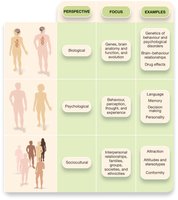 e: Focuses on behaviour, perception, thought, and experience.
Sociocultural Perspective: Considers interpersonal relationships, social groups, and cultural influences.
Perspective | Focus | Examples |
|---|---|---|
Biological | Genes, brain anatomy and function, evolution | Genetics of disorders, brain-behaviour relationships, drug effects |
Psychological | Behaviour, perception, thought, experience | Language, memory, decision making, personality |
Sociocultural | Interpersonal relationships, families, groups, societies, ethnicities | Attraction, attitudes, stereotypes, conformity |
Ethics in Psychological Research
Importance of Ethics
Ethical considerations are fundamental in psychological research to protect participants' rights, ensure informed consent, and maintain scientific integrity. Researchers must balance the pursuit of knowledge with respect for human dignity and welfare.
Biological Psychology
Genetics and Behaviour
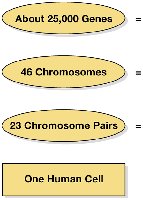
Biological psychology explores how genetic and physiological processes influence behaviour. At conception, humans inherit approximately 25,000 genes organized into 46 chromosomes (23 pairs) within each cell. These genes direct the synthesis of proteins, which in turn affect traits, hormones, and neurochemicals that shape behaviour.
Genotype: The genetic makeup of an individual.
Phenotype: Observable characteristics resulting from gene expression and environmental influences.
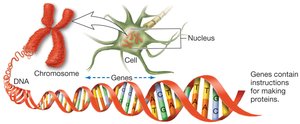
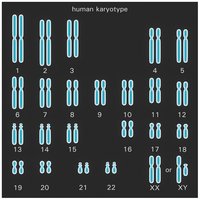
Human Chromosomes
Human DNA is distributed across 23 pairs of chromosomes. Chromosomes 1-22 are autosomes, while the 23rd pair determines biological sex (XX for females, XY for males).
Genetic Inheritance
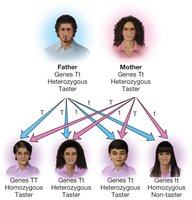
Traits are inherited according to Mendelian principles. For example, the ability to taste the bitter compound PTC depends on which gene variants (alleles) are inherited from each parent. Heterozygous parents can produce children with different combinations of these alleles, leading to varying phenotypes.
Gene Expression and Epigenetics
Gene expression refers to the process by which information from a gene is used to synthesize functional gene products (proteins). Epigenetics studies how environmental factors can alter gene expression without changing the DNA sequence, influencing behaviour across the lifespan.
Altering Genes: CRISPR-Cas9
CRISPR-Cas9 is a revolutionary gene-editing technology that allows scientists to add, remove, or alter genetic material at specific locations in the genome. This technique is used to study and potentially treat genetic disorders, but raises significant ethical questions regarding its application, especially in humans.
Neural Communication
Structure of the Neuron
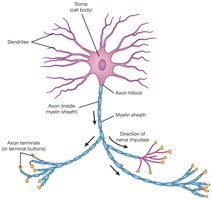
Neurons are specialized cells responsible for transmitting information throughout the nervous system. Each neuron consists of dendrites (receiving input), a soma (cell body), an axon (transmitting output), and axon terminals (communicating with other cells). Myelin sheaths insulate axons, increasing the speed of neural transmission.
Sensory and Motor Neurons
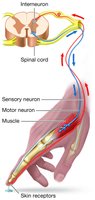
Sensory neurons carry information from sensory receptors to the brain and spinal cord, while motor neurons transmit commands from the brain to muscles. Interneurons connect sensory and motor neurons, facilitating reflexes and complex behaviours.
Glial Cells and Myelin
Glial cells support neurons by providing nutrients, removing waste, and producing myelin. Myelin is essential for efficient neural communication. Diseases like multiple sclerosis involve the immune system attacking myelin, impairing nervous system function.
Neurogenesis and Stem Cells
Neurogenesis is the formation of new neurons, which can occur in certain brain regions even in adulthood. Stem cells are undifferentiated cells capable of developing into various cell types, influenced by their chemical environment.
Neurotransmitters and Hormones
The Lock-and-Key Model
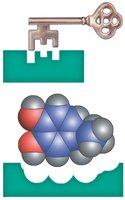
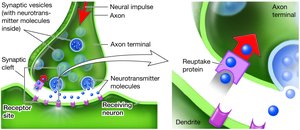
Neurotransmitters are chemical messengers that transmit signals across synapses. Each neurotransmitter binds to specific receptors on the postsynaptic neuron, similar to a key fitting a lock.
Synaptic Transmission
When an action potential reaches the axon terminal, neurotransmitters are released into the synaptic cleft. They bind to receptors on the receiving neuron, and excess neurotransmitters are reabsorbed through reuptake or broken down by enzymes.
Drug Effects on Neurotransmission
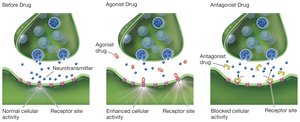
Drugs can act as agonists (enhancing neurotransmitter effects) or antagonists (blocking neurotransmitter effects) at synapses, influencing behaviour and psychological states.
Organization of the Nervous System
Divisions of the Nervous System
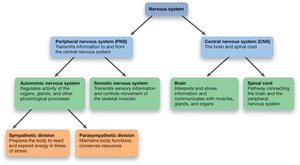
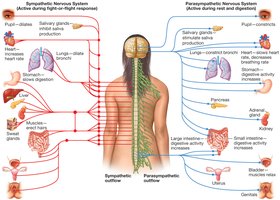
The nervous system is divided into the central nervous system (CNS: brain and spinal cord) and the peripheral nervous system (PNS: all other neural elements). The PNS includes the somatic (voluntary control of muscles) and autonomic (involuntary control of organs) systems. The autonomic system is further divided into sympathetic (arousal, fight-or-flight) and parasympathetic (rest and digest) branches.
Major Brain Structures and Functions
The Hindbrain and Midbrain
The hindbrain controls basic life-sustaining functions (e.g., breathing, heart rate), while the midbrain is involved in sensory processing and voluntary movement.
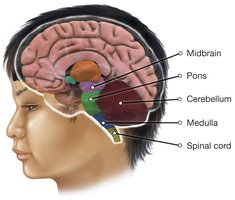
The Forebrain: Emotion, Memory, and Thought
The forebrain includes structures such as the cerebral cortex, basal ganglia, and limbic system, which are involved in higher cognitive functions, emotion, and memory. The cerebral ventricles contain cerebrospinal fluid, providing nutrition and cushioning for the brain.
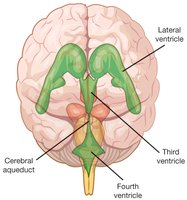
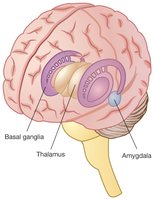
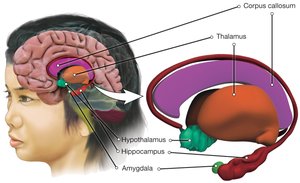
The Cerebral Cortex and Its Lobes
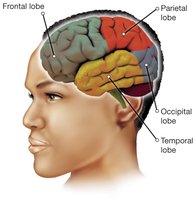
The cerebral cortex is divided into four lobes, each with specialized functions:
Frontal lobe: Planning, impulse control, language, voluntary movement
Parietal lobe: Touch, bodily awareness, visuospatial tasks
Occipital lobe: Visual processing
Temporal lobe: Hearing, language, object recognition
Hemispheric Specialization and Split-Brain Research
Left and Right Brain Functions
The two hemispheres of the brain specialize in different functions. The left hemisphere is dominant for language and math, while the right hemisphere excels in visual-spatial and musical processing. Broca’s area (left frontal lobe) is crucial for speech production, and Wernicke’s area (left temporal/parietal lobe) is essential for language comprehension.
The Corpus Callosum and Split-Brain Studies
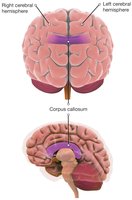
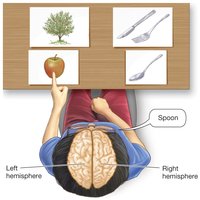
The corpus callosum is a thick band of axons connecting the two hemispheres. In split-brain patients (those who have had the corpus callosum severed to treat epilepsy), each hemisphere processes information independently, revealing the distinct roles of each side in cognition and behaviour.
Neuroplasticity
Brain Adaptation and Recovery
Neuroplasticity is the brain’s ability to reorganize and form new neural connections in response to experience or injury. While new neurons can form in certain regions, the brain’s capacity for repair is limited, especially in adults. Rehabilitation techniques, such as Melodic Intonation Therapy for stroke patients, leverage neuroplasticity to restore lost functions.
Measuring and Observing Brain Activity
Structural Neuroimaging
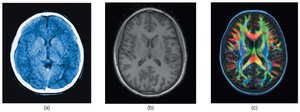
Structural imaging techniques provide detailed images of brain anatomy:
CT scan: Uses X-rays to visualize brain structure.
MRI: Uses magnetic fields to produce high-resolution images.
DTI: Maps white-matter pathways in the brain.
Functional Neuroimaging
Functional imaging techniques measure brain activity:
fMRI: Detects changes in blood oxygenation to map active brain regions during tasks.
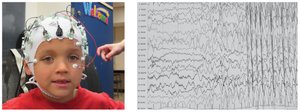
EEG: Records electrical activity via electrodes on the scalp, useful for studying sleep, cognition, and epilepsy.
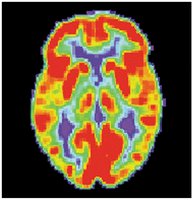
PET: Tracks radioactive glucose to identify active brain areas during specific tasks.
Neuromodulation
Therapeutic Brain Stimulation
Neuromodulation involves altering nerve activity through targeted electrical, magnetic, or chemical stimulation. Common applications include:
Spinal Cord Stimulation (SCS): Chronic pain management
Deep Brain Stimulation (DBS): Treatment for movement disorders (e.g., Parkinson’s disease)
Transcranial Magnetic Stimulation (TMS): Non-invasive treatment for depression and stroke recovery
Treatments are adjustable, reversible, and can be tested before permanent placement, similar to a cardiac pacemaker.
