 뒤로
뒤로Foundations and History of Psychology: Science, Critical Thinking, and Major Perspectives
스터디 가이드 - 스마트 노트
 자료에 맞춘 맞춤형 노트, 핵심 정의, 예시, 맥락을 확장해 제공합니다.
Psychology as a Science
Introduction to Psychology
Psychology is the scientific study of behavior and mental processes. It seeks to understand individuals and groups by establishing general principles and researching specific cases. The field distinguishes itself from philosophy and biology through rigorous scientific methods.
Behavior: Observable actions of individuals.
Mental Processes: Internal experiences such as thoughts, emotions, and memories.
History of Psychology
Early Philosophical Roots
The origins of psychology trace back to ancient philosophers who debated the nature of mind and behavior.
Plato: Believed emotions and knowledge are innate, present from birth.
Aristotle: Argued that emotions and knowledge depend on experience and exposure.
Descartes: Supported the concept of innate knowledge.
Locke: Proposed the idea of tabula rasa (blank slate), suggesting people are shaped by their experiences.
Biological Foundations
Phineas Gage: Suffered a brain injury that altered his personality, demonstrating that personality is linked to brain structures.
Broca: Identified the region of the brain responsible for speech production.
Gall: Developed phrenology, theorizing that bumps and divots on the skull reflect personality traits (now discredited).
Establishment of Psychology as a Science
Wundt: Opened the first experimental psychology lab, emphasizing scientific rigor and distinguishing psychology from philosophy.
Major Schools of Thought
Structuralism
Structuralism aimed to identify the basic components of the mind, focusing on sensations and conscious experience.
Titchener: Developed structuralism, building on Wundt's work.
Key Method: Introspection—examining one's own conscious thoughts and feelings.
Functionalism
Functionalism explored the functions of mental processes and how they aid adaptation and survival.
James: Founded functionalism, emphasizing the purpose of thoughts and emotions.
Focus: Stream of consciousness and practical applications.
Psychoanalysis
Psychoanalysis investigates the unconscious mind and its influence on behavior.
Freud: Developed psychoanalysis, using conversation to uncover unconscious motives.
Key Concept: Unconscious processes shape behavior and mental health.
Behaviorism
Behaviorism emphasizes observable and measurable behavior, rejecting introspection.
Pavlov: Demonstrated classical conditioning with dogs (bell and salivation).
Skinner: Studied operant conditioning using rats and reinforcement.
Key Principle: Only observable behavior is scientifically valid.
Humanism
Humanism focuses on individual growth, potential, and self-actualization.
Carl Rogers: Advocated for unconditional positive regard and supportive environments.
Key Principle: People have inherent potential for growth.
Cognitive Psychology
Cognitive psychology studies how the mind processes, stores, and retrieves information.
Focus: Mental processes such as memory, perception, and problem-solving.
Contemporary Psychology
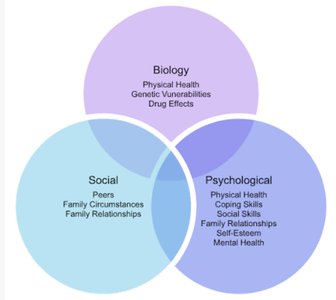
Bio-Psycho-Social Model
Modern psychology integrates biological, psychological, and social factors to understand behavior and mental processes. This model recognizes the complex interplay between genetics, mental health, and social environment.
Biological: Physical health, genetic vulnerabilities, drug effects.
Psychological: Coping skills, social skills, self-esteem, mental health.
Social: Peers, family circumstances, relationships.
Critical Thinking and Scientific Method in Psychology
Shortcuts to Critical Thinking
Humans often rely on cognitive shortcuts that can lead to errors in judgment.
Hindsight Bias: Believing events were predictable after they occur.
Overconfidence: Overestimating one's knowledge or abilities.
Patterns in Randomness: Seeing patterns where none exist.
Truth Decay: Difficulty accepting factual information.
False News: Sensationalism, repetition, powerful examples, and group identity can distort perception.
Importance of Science and Research
Scientific methods are essential for accurately understanding and predicting psychological phenomena. Conclusions are only as reliable as the methods used to collect and analyze data.
Characteristics of Science
Skepticism: Questioning claims and seeking evidence.
Empiricism: Relying on data and observation.
Falsifiability: The ability to prove a theory wrong.
Replicability: Consistency of results across studies.
Peer Review: Evaluation by experts in the field.
Occam's Razor: Preferring simpler explanations.
Goals of Psychology Research
Psychological research aims to:
Describe: What is happening?
Explain: Why is it happening?
Predict: When does it happen?
Change: How can it be different?
Women in Psychology
Mary Whiton Calkins
Mary Whiton Calkins made significant contributions to psychology despite facing institutional barriers.
Admitted to Harvard by William James, faced opposition from faculty and students.
Completed all Ph.D. requirements but was denied a Harvard degree.
Declined a Radcliffe diploma and became the first female president of the American Psychological Association.
Conducted influential research on memory.
Summary Table: Major Schools of Thought in Psychology
School | Key Focus | Major Figures |
|---|---|---|
Structuralism | Basic components of mind, introspection | Titchener, Wundt |
Functionalism | Functions of mental processes, adaptation | James |
Psychoanalysis | Unconscious mind, internal conflicts | Freud |
Behaviorism | Observable behavior, conditioning | Pavlov, Skinner |
Humanism | Personal growth, self-actualization | Rogers |
Cognitive | Mental processes, information processing | Various |
