 뒤로
뒤로History and Major Perspectives of Psychology: Structured Study Notes
스터디 가이드 - 스마트 노트
 자료에 맞춘 맞춤형 노트, 핵심 정의, 예시, 맥락을 확장해 제공합니다.
History of Psychology and Its Multi-Perspective Nature
Introduction to Psychology
Psychology is the scientific study of mind and behavior. It seeks to understand mental processes, emotions, and actions through empirical research and theoretical frameworks. The purpose of psychology is to describe, explain, predict, and control behavior and mental processes, contributing to both scientific knowledge and practical applications.
Definition: Psychology is the science of behavior and mental processes.
Purpose: To understand how humans think, feel, and act.
Fields: Includes areas such as clinical, counseling, developmental, educational, experimental, cognitive, industrial/organizational, psychobiology, evolutionary, and social psychology.
The Origins and Early History of Psychology
The roots of psychology trace back to ancient Greek, Indian, and Chinese philosophers. Early speculations often confused the mind with the soul or spirit, and mental illness was attributed to supernatural causes. Over time, natural explanations emerged, and psychology began to diverge from philosophy.
Ancient Speculations: Early cultures performed trephination (drilling holes in the skull) to treat mental illness, believing in possession by evil spirits.
Edwin Smith Papyrus (c. 1500 BCE): Early descriptions of the brain and its association with mental functions.

Philosophical Foundations: Greeks and Romans
Greek philosophers such as Pythagoras, Plato, and Aristotle challenged supernatural explanations and laid the groundwork for empirical study of the mind. Hippocrates proposed the humoral theory, linking mental illness to bodily imbalances rather than demonic possession.
Hippocrates: Father of Medicine; proposed four humors (black bile, yellow bile, blood, phlegm) as determinants of health and mental state.
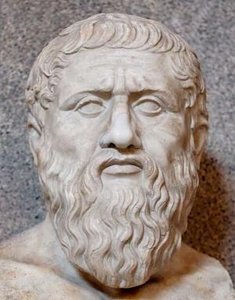
Plato: Suggested the brain as the seat of the mind; early dualism (mind and body as separate but interacting).
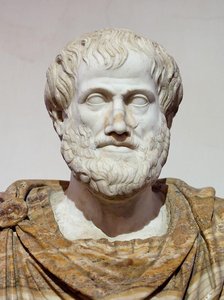
Aristotle: Considered the heart as the seat of the mind; emphasized empirical observation and experience as sources of knowledge.

Transition to Modern Psychology
Modern psychology emerged during the scientific revolution and enlightenment, moving away from metaphysics and theology. Philosopher-psychologists like Descartes and Kant studied the mind, and psychology began to develop as a distinct scientific discipline.
Descartes: Advocated dualism and mutual interaction between mind and body.
Kant: Explored the nature of thought and perception.
The Dark and Middle Ages
Scientific progress in psychology was limited during the Dark Ages due to socio-political instability. However, some philosophers and theologians made important observations about the mind, laying foundations for later developments.
St. Augustine, Thomas Aquinas, Roger Bacon: Contributed to understanding the mind and inner workings.
Medieval Experiments: Lin Xie’s distraction test, Ibn al-Haytham’s studies on perception, Ibn-Sina’s work on mental illness.
The Renaissance and Scientific Revolution
The Renaissance marked a shift to human-centered thinking and empirical investigation. Scholars challenged traditional views and laid the groundwork for the scientific study of the mind.
Human-Centered Approach: Truth seen from multiple perspectives.
Empiricism: Emphasis on observation and experimentation.
Development of Experimental Psychology
Experimental psychology developed through discoveries about the nervous system and brain functions. Wilhelm Wundt established the first laboratory dedicated to psychological research, institutionalizing psychology as a science.
Charles Bell & François Magendie: Distinguished sensory and motor nerves.
Pierre Paul Broca & Carl Wernicke: Identified brain areas for language.
Wilhelm Wundt: Founded the first psychology laboratory (University of Leipzig, 1879); considered the "Father of Experimental Psychology".

Major Schools of Thought in Psychology
Several schools of thought shaped psychology, each with distinct approaches and methods.
Structuralism: Focused on the structure of the mind; used introspection to analyze conscious experience. Founded by Wilhelm Wundt and continued by Edward Titchener.
Functionalism: Studied the functions and purpose of consciousness; emphasized adaptation and interaction with the environment. Proposed by William James.
Psychoanalysis: Founded by Sigmund Freud; centered on the unconscious mind, instincts, and psychosexual stages.
Gestalt Psychology: Emphasized studying human experience as a whole; "the whole is greater than the sum of its parts".
Behaviorism: Focused on observable behavior; rejected introspection and mental processes as scientific subjects.
Humanistic Psychology: Emphasized conscious experience, free will, and self-determination; founders include Carl Rogers and Abraham Maslow.





Contemporary Perspectives in Psychology
Modern psychology is characterized by a diversity of perspectives, each examining behavior and mental processes from different angles. Eclecticism prevails, with psychologists drawing from multiple theories and methods.
Behavioral Perspective: Focuses on overt behavior.
Cognitive Perspective: Focuses on cognitive processes such as memory, thinking, reasoning, and language.
Biological Perspective: Examines biological events and processes underlying behavior.
Evolutionary Perspective: Considers evolved psychological mechanisms and tendencies shaped by evolution.
Major Subfields of Psychology
Psychology encompasses a wide range of subfields, each specializing in different aspects of human behavior and mental processes.
Subfield | Description |
|---|---|
Clinical Psychology | Diagnosis, causes, and treatment of mental disorders |
Counseling Psychology | Assists individuals with personal problems not involving psychological disorders |
Developmental Psychology | Studies physical, cognitive, and social changes over the lifespan |
Educational Psychology | Studies all aspects of the educational process |
Experimental Psychology | Studies basic psychological processes (perception, learning, motivation) |
Cognitive Psychology | Investigates cognition (memory, thinking, reasoning, language, decision making) |
Industrial/Organizational Psychology | Studies behavior in work settings |
Psychobiology & Evolutionary Psychology | Investigates biological bases of behavior and evolution's role |
Social Psychology | Studies social behavior and thought (interaction with others) |
Summary and Key Takeaways
Psychology has evolved from philosophical speculation to a rigorous scientific discipline.
Major schools of thought include structuralism, functionalism, psychoanalysis, behaviorism, Gestalt, and humanistic psychology.
Contemporary psychology is diverse and eclectic, with multiple perspectives and subfields.
Empirical research and scientific methods are central to modern psychology.
Additional info: Expanded explanations and context were added to ensure completeness and academic quality. Images included are only those directly relevant to the historical figures, methods, and concepts discussed.
