 뒤로
뒤로Introduction to Psychological Science: Foundations, Perspectives, and Methods
스터디 가이드 - 스마트 노트
 자료에 맞춘 맞춤형 노트, 핵심 정의, 예시, 맥락을 확장해 제공합니다.
Introducing Psychological Science
What is Psychology?
Psychology is the scientific study of mind and behaviour. The term originates from the Greek words psyche (life) and logos (explanation). Psychologists investigate both human and non-human animals to understand mental processes and behaviours. The field is broad, encompassing research, clinical practice, education, and industry.
Research psychologists use scientific methods to generate new knowledge about behaviour.
Psychologist-practitioners apply existing research to improve everyday life.
Psychologists work in diverse settings: laboratories, hospitals, schools, businesses, and more.
Psychology as a Science
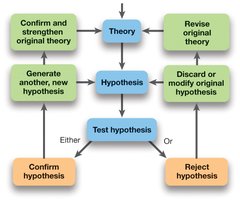
Psychology relies on the scientific method to objectively collect, analyze, and interpret evidence. This approach distinguishes facts from values and ensures that findings are based on empirical data rather than intuition or personal beliefs.
Empirical methods involve systematic observation, measurement, and experimentation.
Scientific method: A structured process for investigating phenomena, forming hypotheses, and testing predictions.
Facts vs. Values
Scientific research distinguishes between:
Values: Personal statements or beliefs (e.g., "It is important to study psychology").
Facts: Objective statements verified through empirical research (e.g., "There were more than 21,000 homicides in Canada in 2009").
Levels of Explanation in Psychology
Psychological phenomena are explained at multiple levels, from biological to social and cultural. Behaviour is often multiply determined, meaning it results from several interacting factors.
Individual differences and unconscious influences complicate predictions of behaviour.

Key Takeaways
Psychology is a scientific discipline focused on mind and behaviour.
Scientific methods help distinguish facts from values and reduce bias.
Human behaviour is complex, influenced by multiple, interacting factors.
The Evolution of Psychology: History and Approaches
From Philosophy to Science
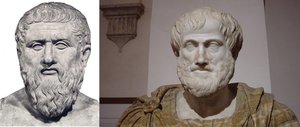
Psychology originated in philosophy, with early thinkers like Plato and Aristotle debating the nature of knowledge and behaviour. The field became more empirical with the development of scientific methods in the 19th century.
Plato: Advocated for innate knowledge.
Aristotle: Emphasized learning and experience.
Major Questions in Psychology
Nature vs. Nurture
Free Will vs. Determinism
Conscious vs. Unconscious Processing
Differences vs. Similarities
Structuralism
Structuralism (Wilhelm Wundt): Sought to identify the basic elements of consciousness using introspection. Considered reductionist, aiming to break down mental processes into their simplest components.
Functionalism
Functionalism (William James): Focused on the purpose of psychological processes, influenced by Darwin’s theory of natural selection. Led to the development of evolutionary psychology, which examines how behaviours enhance fitness and survival.
Major Perspectives in Psychology
Biological Perspective: Studies the brain, genetics, and physiological processes underlying behaviour.
Psychodynamic Perspective: Focuses on unconscious drives and early experiences (Freud, Jung).
Behaviourist Perspective: Emphasizes observable behaviour and the effects of learning (Watson, Skinner).
Humanistic, Cognitive, and Evolutionary Perspectives: Explore meaning, cognition, and adaptation.
Biological Psychology
Overview
Biological psychology applies principles of biology to the study of mental processes and behaviour. It includes subfields such as behavioural neuroscience, cognitive neuroscience, and neuropsychology.
Focuses on the structure and function of the brain and nervous system.
Measures biological, physiological, and genetic variables in relation to behaviour.
Brain Structure and Function
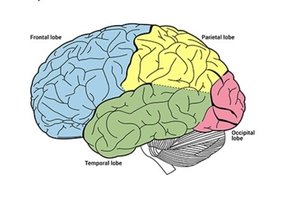
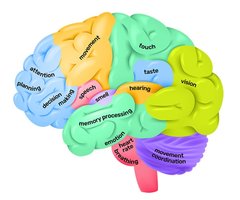
The brain is divided into four main lobes, each with specialized functions:
Frontal lobe: Motor skills, higher cognition, expressive language.
Occipital lobe: Visual processing.
Parietal lobe: Sensory processing (touch, pain, pressure).
Temporal lobe: Auditory processing, language.
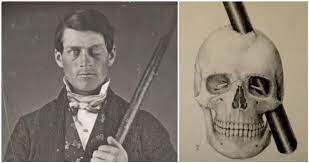
Case Study: Phineas Gage
Phineas Gage’s accident (1848) demonstrated the relationship between brain injury and changes in personality and behaviour. His case provided early evidence for the localization of brain function.
Psychodynamic Psychology
Freud’s Theory
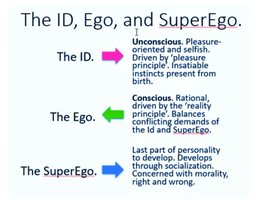
Psychodynamic psychology emphasizes unconscious processes and early experiences. Freud divided consciousness into three levels: conscious, preconscious, and unconscious, corresponding to the id, ego, and superego.
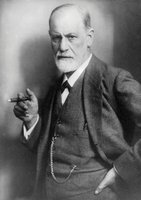
Psychoanalysis: A therapeutic approach using talk therapy and dream analysis to explore unconscious drives.
Dreams have both manifest (surface) and latent (hidden) content.
Activation-synthesis theory: Dreams result from the brain’s attempt to make sense of neural activity.
Carl Jung’s Contributions
Archetypes: Universal symbolic images in the collective unconscious.
Introversion/Extraversion: Basic personality attitudes.
Four functions: Thinking, feeling, sensing, intuiting.
Behaviourism
Principles and Experiments
Behaviourism focuses on observable behaviour, arguing that internal mental states are not necessary for understanding actions. Key figures include John B. Watson and B.F. Skinner.
Pavlov’s Dog: Classical conditioning—learning through association.
Little Albert: Demonstrated conditioned emotional responses.
Skinner Box: Operant conditioning—learning through reinforcement.
The Cognitive Revolution and Humanistic Psychology
Gestalt Psychology
Gestalt psychologists emphasized that humans perceive whole forms rather than isolated parts. "The whole is greater than the sum of its parts."

Humanistic Psychology
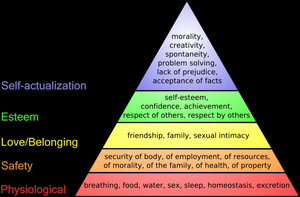
Humanistic psychology, led by Carl Rogers and Abraham Maslow, focuses on individual experience, personal growth, and positive aspects of humanity.
Emerging Themes in Psychology
Psychology of Women and Cross-Cultural Psychology
Examines gender roles, cultural differences, and intergenerational trauma.
The Neuroimaging Explosion
Techniques like fMRI have advanced our understanding of brain function.
Positive Psychology
Focuses on strengths, well-being, and coping with stress.
Applied Psychology
Industrial/Organizational Psychology, Human Factors Psychology, and other real-world applications.
Building Scientific Literacy
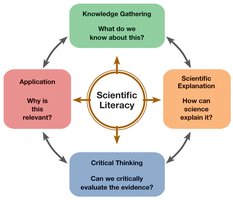
Scientific literacy involves gathering knowledge, explaining phenomena, critically evaluating evidence, and applying information to real-world problems.
The Biopsychosocial Model
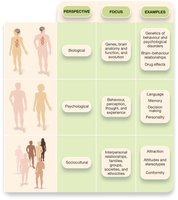
The biopsychosocial model integrates biological, psychological, and sociocultural factors to provide a comprehensive understanding of behaviour.
Social-Cultural Psychology
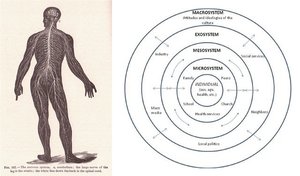
This perspective examines how social situations, cultural norms, and societal structures influence behaviour. Psychology struggles to find a unifying paradigm due to the complexity and diversity of human experience.
Key Terms
Behaviourism: Study of observable behaviour.
Cognitive psychology: Study of mental processes.
Empirical methods: Systematic observation and experimentation.
Evolutionary psychology: Application of evolutionary theory to behaviour.
Introspection: Self-examination of conscious experience.
Neuroimaging: Brain scanning techniques.
Psychoanalysis: Freud’s method for exploring the unconscious.
Scientific method: Structured approach to research.
Social-cultural psychology: Study of how society and culture affect behaviour.
Structuralism: Analysis of the basic elements of consciousness.
