 뒤로
뒤로Perception: Foundations, Mechanisms, and Theories in Psychology
스터디 가이드 - 스마트 노트
 자료에 맞춘 맞춤형 노트, 핵심 정의, 예시, 맥락을 확장해 제공합니다.
Perception: Foundations and Overview
What is Perception?
Perception is the process by which the brain organizes, interprets, and gives meaning to sensory information received from the environment. It enables us to recognize objects, navigate our surroundings, and respond appropriately to stimuli. Perception involves multiple senses, including vision, hearing, touch, taste, and smell, and is essential for survival and adaptation.
Sensation refers to the initial detection of environmental stimuli by sensory receptors.
Perception involves the selection, organization, and interpretation of sensory input, influenced by learning, memory, emotion, and expectations.
Example: Sensation is the eye detecting light; perception is recognizing a friend in a crowd.
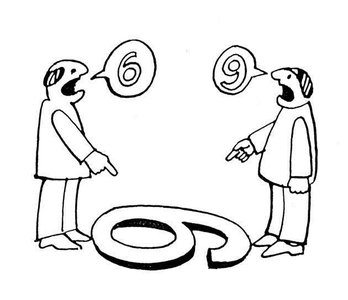
Sensory Information and Survival
Sensory systems provide critical information for interacting with the environment, finding resources, maintaining relationships, and avoiding danger. However, the brain filters and selects only a fraction of the available sensory input for conscious awareness, preventing overload.

Types of Perception
Visual: Color, shape, movement
Auditory: Pitch, rhythm, sound
Touch: Pressure, temperature, texture
Taste: Sweet, sour, salty, bitter
Smell: Olfactory cues (e.g., food, perfume)
Visual Perception: The Eye and Visual Processing
Anatomy of the Eye
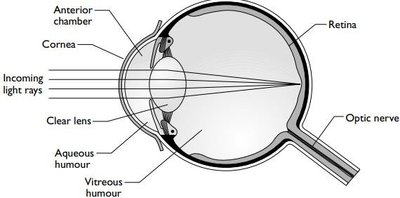
Light enters the eye through the cornea, passes through the anterior chamber (containing aqueous humour), then through the lens into the vitreous humour, and is focused onto the retina at the back of the eye. The retina contains receptor cells that detect light and initiate the process of vision.
Rods, Cones, and the Visual Signal
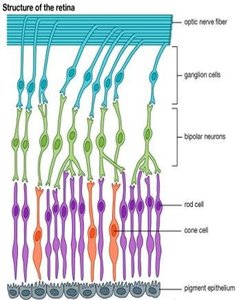
The retina contains two main types of photoreceptor cells:
Rods: Sensitive to low light, support night vision, do not detect color.
Cones: Responsible for color vision and fine detail, function best in bright light.
Signals from rods and cones are transmitted via the optic nerve to the brain, where they are processed into meaningful images.
Perceptual Illusions
Understanding Illusions
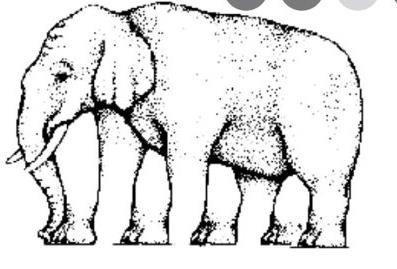
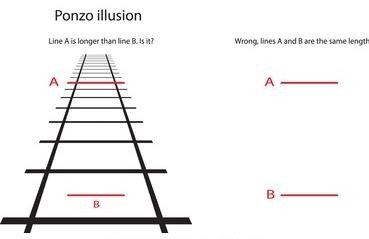
Perceptual illusions occur when the brain's interpretation of sensory input leads to a misperception of reality. Studying illusions helps psychologists understand normal perceptual processes and the brain's interpretive mechanisms.
We may fail to perceive what exists, perceive what does not exist, or perceive what cannot exist.
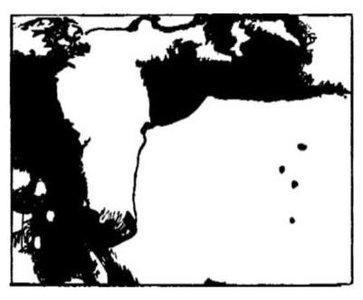
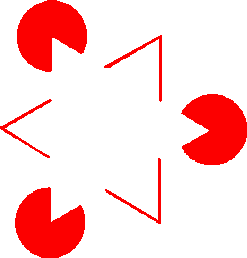
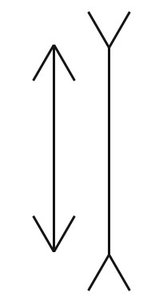
Müller-Lyer and Kanizsa Illusions
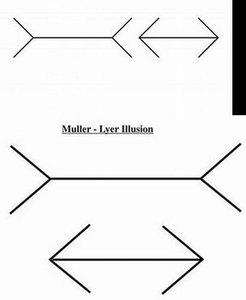
Müller-Lyer Illusion: Two lines of equal length appear different due to the orientation of arrowheads at their ends.
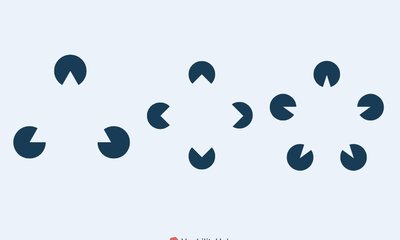
Kanizsa Illusion: The brain perceives shapes (e.g., a square) where none exist, due to the arrangement of incomplete figures.

Depth Perception and Perceptual Constancies
Depth Perception
Depth perception allows us to see the world in three dimensions and judge the distance and size of objects, even though the retina receives a two-dimensional image. The brain uses various cues to infer depth.

Monocular and Binocular Depth Cues
Monocular cues: Require only one eye; include relative size, texture gradient, linear perspective, interposition (overlap), and motion parallax.
Binocular cues: Require both eyes; include binocular disparity (stereopsis) and convergence.
Monocular Cues
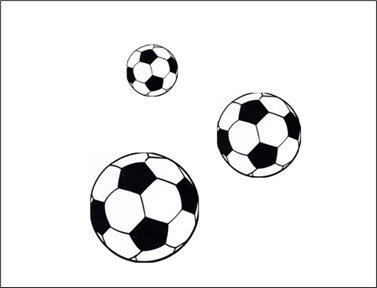
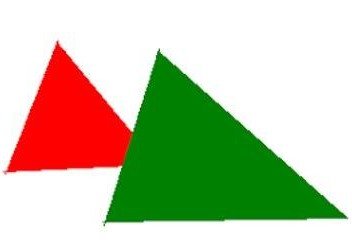
Relative Size: Larger retinal images are perceived as closer if objects are known to be similar in size.
Texture Gradient: Finer texture signals greater distance.
Linear Perspective: Parallel lines appear to converge in the distance.
Interposition: Overlapping objects; the covered object is perceived as farther away.
Motion Parallax: Nearby objects move faster across the visual field than distant objects as we move.



Binocular Cues
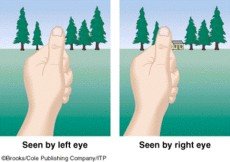
Binocular Disparity (Stereopsis): The brain compares images from both eyes to judge depth.
Convergence: The degree to which the eyes turn inward to focus on a nearby object provides distance information.

Perceptual Constancies
Perceptual constancy refers to the brain's ability to maintain a stable perception of an object's size, shape, or color despite changes in the retinal image due to perspective, distance, or lighting.
Size Constancy: Objects are perceived as having a constant size even when their distance from us changes.
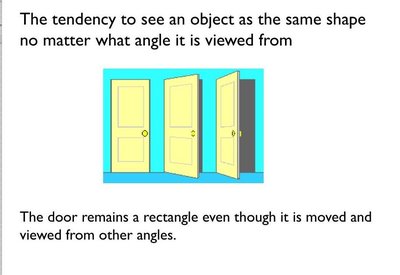
Shape Constancy: Objects are perceived as having a constant shape even when viewed from different angles.
Gestalt Principles and Perceptual Organization
Gestalt Psychology
Gestalt psychology emphasizes that the mind perceives objects as organized wholes rather than as separate components. The famous phrase "the whole is different from the sum of its parts" captures this idea.
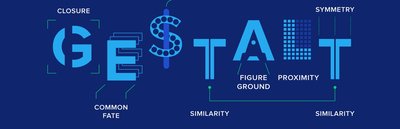
Gestalt Laws of Perceptual Organization
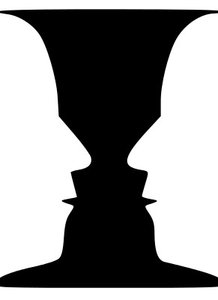
Figure-Ground: Distinguishing an object (figure) from its background (ground).
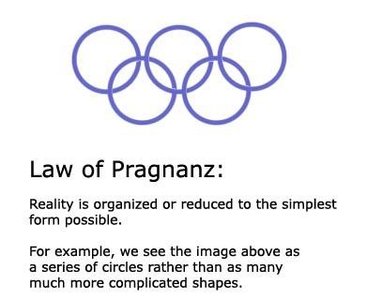
Prägnanz (Simplicity): The mind prefers the simplest, most stable organization.
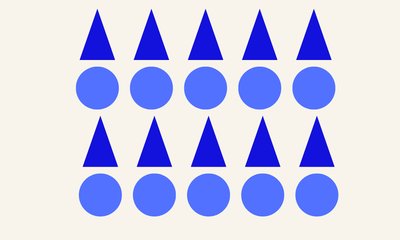
Proximity: Objects close together are grouped together.
Similarity: Objects that are similar are grouped together.
Continuity: The mind follows smooth, continuous patterns.
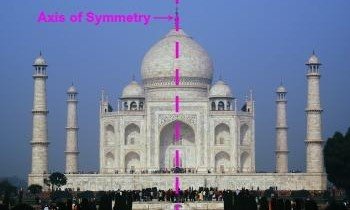
Symmetry: Symmetrical elements are perceived as a group.
Closure: The mind fills in missing information to perceive a complete object.
Figure-Ground and Prägnanz
Proximity and Similarity

Continuity, Symmetry, and Closure

Theories of Perception
Bottom-Up and Top-Down Processing
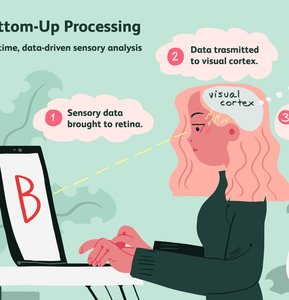
Bottom-Up Processing: Perception starts with sensory input, building up to a final representation without influence from prior knowledge. It is data-driven.
Top-Down Processing: Perception is guided by prior knowledge, expectations, and experiences, which influence how sensory information is interpreted.
Bottom-Up Theories
Direct Perception (Gibson): All necessary information for perception is present in the sensory input; no need for higher cognitive processes.
Template Theories: The mind stores templates for patterns and matches incoming stimuli to these templates.
Feature-Matching Theories: Recognition occurs by matching features of a stimulus to features stored in memory. Feature detectors are neurons that respond to specific visual features such as lines or angles.
Top-Down Theories
Constructive Perception: Perception is an active process where the brain forms and tests hypotheses based on sensory data, memory, and expectations.
Perceptual Deficits
Agnosia: Difficulty Perceiving the 'What'
Agnosia is a perceptual deficit where individuals cannot recognize objects despite having intact sensory abilities. It often results from brain damage near the temporal-occipital border. For example, a person may see an object but cannot identify it as a pair of glasses.
Optic Ataxia: Difficulty Knowing the 'How'
Optic ataxia is a deficit in visually guided movement, often due to damage in the posterior parietal cortex. Individuals may have trouble reaching for objects accurately, even though they can see them clearly.
Summary: Perception as an Integrated Process
Sensory Input: Light, sound, touch, taste, smell
Organization: Depth cues, constancies, Gestalt laws
Interpretation: Bottom-up data and top-down knowledge
Action: Recognition and visually guided movement
