 뒤로
뒤로PSY 120: Biological and Cognitive Bases of Psychology – Syllabus and Foundations
스터디 가이드 - 스마트 노트
 자료에 맞춘 맞춤형 노트, 핵심 정의, 예시, 맥락을 확장해 제공합니다.
Course Overview
This course, Biological and Cognitive Bases of Psychology (PSY 120), introduces students to the scientific theories and research related to the major biological and cognitive areas of psychology. Emphasis is placed on advances in neuroscience, sensation and consciousness, memory, learning, language, personality, motivation, and emotion. The course also explores how sociocultural interactions impact thinking, choices, and actions.
Instructor and Contact Information
Instructor: Dr. Sarah Sukhay (she/her)
Email: sarah.sukhay@usask.ca
Office Hours: By appointment

Course Description
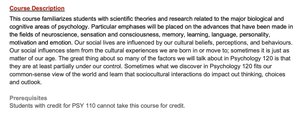
This course familiarizes students with scientific theories and research related to the major biological and cognitive areas of psychology. Key topics include:
Neuroscience
Sensation and consciousness
Memory
Learning
Language
Personality
Motivation and emotion
Students will learn how social influences, cultural experiences, and sociocultural interactions impact our beliefs, perceptions, and behaviors. The course aims to provide a comprehensive view of psychology and its relevance to everyday life.
Required Resources
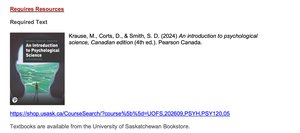
Textbook: Krause, M., Corts, D., & Smith, S. D. (2024). An Introduction to Psychological Science (Canadian edition, 4th ed.). Pearson Canada.
APA Manual: American Psychological Association (APA). (2019). Publication Manual of the American Psychological Association (7th Ed.).
Learning Outcomes
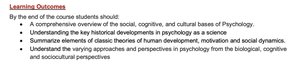
By the end of the course, students should be able to:
Provide a comprehensive overview of the social, cognitive, and cultural bases of psychology.
Understand key historical developments in psychology as a science.
Summarize elements of classic theories of human development, motivation, and social dynamics.
Understand varying approaches and perspectives in psychology from biological, cognitive, and sociocultural perspectives.
Explain the interrelationships between stress, health, and mental health, and distinguish key features of different mental illnesses.
Reflect on learning and growth, and appreciate how psychological theories impact thinking, feeling, being, and doing.

Assessment Overview
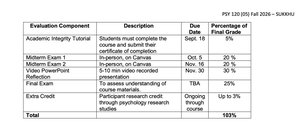
Assessment in this course includes exams, assignments, and opportunities for extra credit. All components must be completed to pass the course.
Evaluation Component | Description | Due Date | Percentage of Final Grade |
|---|---|---|---|
Academic Integrity Tutorial | Certificate of completion required | Sept. 18 | 5% |
Midterm Exam 1 | In-person, on Canvas | Oct. 5 | 20% |
Midterm Exam 2 | In-person, on Canvas | Nov. 16 | 20% |
Video PowerPoint Reflection | 6-10 min video recorded presentation | Nov. 30 | 30% |
Final Exam | Comprehensive, remote | TBA | 25% |
Extra Credit | Research participation | Ongoing | Up to 3% |
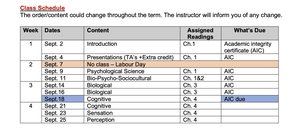
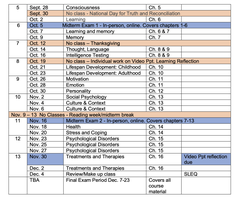
Class Schedule
The course schedule covers foundational topics in psychology, including:
Introduction to Psychological Science
Biological, Cognitive, and Sociocultural Bases
Sensation, Perception, and Consciousness
Learning, Memory, and Intelligence
Development, Motivation, and Emotion
Personality, Social Psychology, Health, and Psychological Disorders
Therapies and Treatments
Bronfenbrenner’s Ecological Model
Systems Theory in Psychology
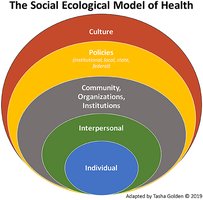
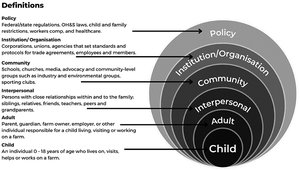
Bronfenbrenner’s Ecological Model explains how different environmental systems influence human development and behavior. Developed by Urie Bronfenbrenner in the 1970s, the model identifies five systems that interact to shape individual experiences:
Microsystem: Immediate environments (e.g., family, school, peers)
Mesosystem: Interconnections between microsystems (e.g., relationships between family and teachers)
Exosystem: Indirect environments (e.g., parent’s workplace)
Macrosystem: Broader cultural and societal influences (e.g., laws, customs, culture)
Chronosystem: Changes over time (e.g., life transitions, historical events)
This model highlights the complexity of human development and the importance of considering multiple levels of influence.
Reflection and Application
Students are encouraged to reflect on how changes in their lives are influenced by factors at the macro, meso, and micro levels. This reflection helps in understanding the interconnectedness of individual experiences and broader societal forces.
Academic Integrity and Course Policies
All assignments must be independently completed and submitted on time via Canvas.
Late assignments incur a penalty unless there are exceptional circumstances.
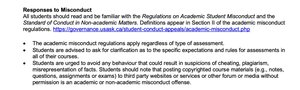
Academic misconduct, including plagiarism and unauthorized collaboration, is strictly prohibited.
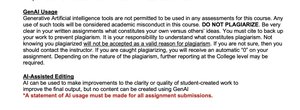
Generative AI tools are not permitted for assessments; AI-assisted editing must be disclosed.
Attendance and Student Feedback
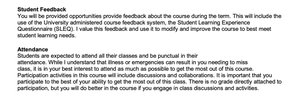
Regular attendance and participation are expected for success in the course.
Student feedback is valued and used to improve the course.
Additional Info
Students should familiarize themselves with assignment due dates, purchase the required textbook, and complete the Academic Integrity Certificate as initial tasks.
All course resources are available on Canvas.
