 뒤로
뒤로Space and Society: Foundations of Human Geography and Sociological Inquiry
스터디 가이드 - 스마트 노트
 자료에 맞춘 맞춤형 노트, 핵심 정의, 예시, 맥락을 확장해 제공합니다.
Introduction to Human Geography and Sociology
Overview and Course Objectives
This course introduces students to the foundational concepts, issues, and debates in human geography, with a strong emphasis on the relationship between space and society. It explores how spatial patterns influence social phenomena such as poverty, housing, crime, and inequality, particularly in the South African context. The course also aims to develop students' analytical skills for evaluating and synthesizing information relevant to both geography and sociology.
Key Concepts: Space, society, spatial patterns, social issues, inequality
Learning Outcomes: Understanding spatial patterns of advantage/disadvantage, applying spatial concepts to social issues, and using theoretical approaches to analyze urbanization and social change.
Key Concepts in Human Geography
Definition and Scope
Geography is the scientific and systematic study of both the physical and cultural features of the earth’s surface, focusing on spatial patterns and distributions. Human geography, a subfield, examines the spatial organization of human activity and its impact on society.
Physical Geography: Studies the lithosphere, atmosphere, hydrosphere, and biosphere.
Human (Cultural) Geography: Focuses on the spatial differentiation and organization of human activities.
Approaches to Geography
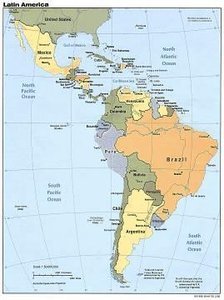
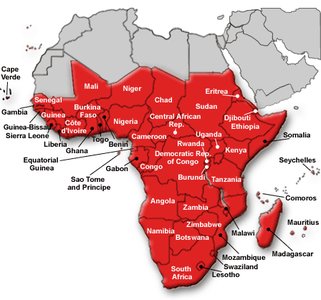
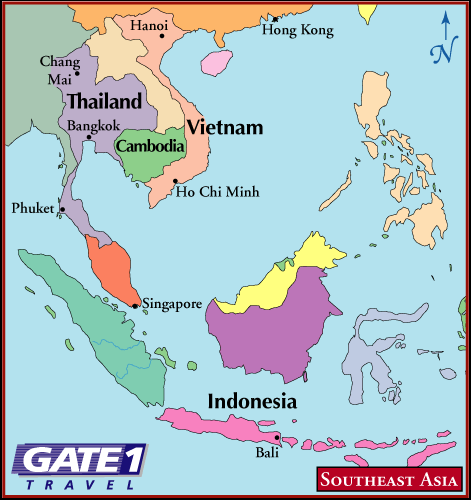
Regional Approach: Examines specific world regions (e.g., Latin America, Sub-Saharan Africa, Southeast Asia).
Systematic Approach: Focuses on thematic areas such as human, physical, and historical geography.
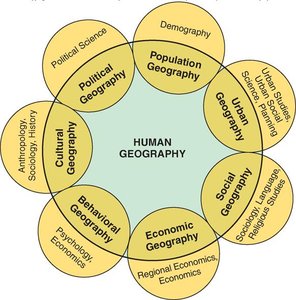
Disciplines within Human Geography
Historical Geography
Demography and Population Geography
Political Geography
Urban Geography
Economic Geography
Social Geography
Environmental Geography
Imperialism, Colonialism, and Their Social Impacts
Definitions and Key Attributes
Imperialism is the extension of state authority over the political and economic life of other territories. Colonialism is a form of imperialism involving the formal establishment and maintenance of rule by a sovereign power over a foreign population, often through settlement and exploitation.
Political and Legal Domination: Imposition of foreign governance structures.
Economic Dependence: Exploitation of resources and labor for the benefit of the colonizer.
Racial and Cultural Inequality: Suppression of indigenous cultures and assertion of superiority.
Internal Colonialism: Domination within a single nation based on ethnic or regional differences.
Globalization and Social Change
Concepts and Perspectives
Globalization refers to processes that increase interactions, deepen relationships, and heighten interdependence across borders. It has both positive and negative social impacts, including economic integration, cultural exchange, and new forms of inequality.
Hyperglobalization View: Open markets and free trade benefit all in the long run.
Skeptical View: Globalization is overstated; regionalization remains strong.
Transformationalist View: Globalization is a powerful, transformative force with uncertain effects on nation-states.
Core Geographic Concepts
Location
Location refers to a position on the earth’s surface and can be described as:
Absolute Location: Exact coordinates (latitude and longitude).
Relative Location: Position in relation to other places.
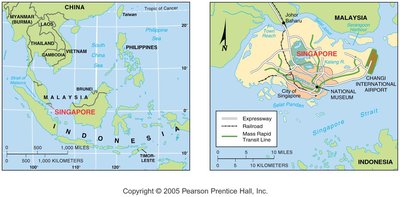
Place
Place refers to specific geographic settings with distinctive physical, social, and cultural attributes. Concepts include:
Sense of Place: Emotional attachment to a location.
Perception of Place: Beliefs or understandings about a place, often shaped by media or stories.
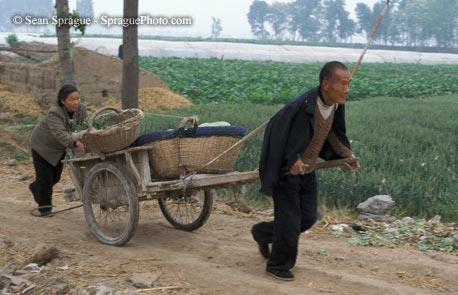
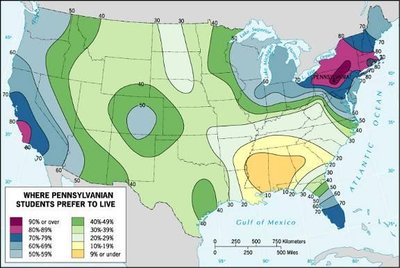
Cultural Landscape and Sequent Occupance
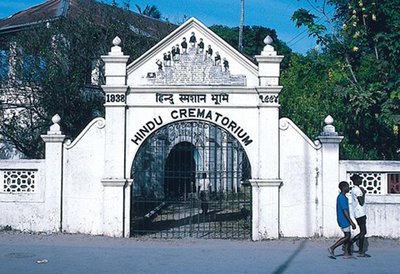
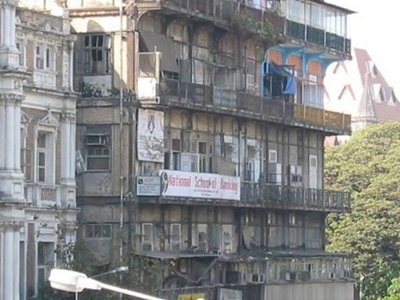
The cultural landscape is the visible imprint of human activity on the natural environment. Sequent occupance describes the layered impacts of different cultural groups over time in a single location.
Movement and Spatial Interaction
Movement examines how people, goods, and ideas travel across space. Key concepts include:
Distance Decay: Interaction decreases as distance increases.
Friction of Distance: The inhibiting effect of distance on human activity.
Accessibility: The ease of reaching a location.
Connectivity: The degree of linkage between places.
Four Basic Concepts of Spatial Interaction
Concept | Description |
|---|---|
Complementarity | Matching supply and demand between places |
Transferability | Ability and cost of moving items between places |
Intervening Opportunity | Alternative origins/destinations that affect movement |
Spatial Diffusion | Spread of phenomena over space and time |
Culture and Diffusion
Key Terms
Culture: The total way of life, including values, beliefs, and practices.
Cultural Trait: A single attribute of a culture (e.g., language, religion).
Cultural Complex: A group of related cultural traits.
Cultural Hearth: The origin area of a culture.
Types of Diffusion
Expansion Diffusion: Idea spreads outward from the hearth.
Contagious Diffusion: Spreads adjacently.
Hierarchical Diffusion: Spreads to most linked people/places first.
Stimulus Diffusion: Idea promotes local adaptation.
Relocation Diffusion: Individuals move and carry ideas with them.
Geographic Inquiry and Methods
Geographic Questions
Geographers ask questions about the spatial arrangement of phenomena, such as "Where are things located?", "Why there?", and "So what?" These questions guide research into patterns and processes shaping human societies.
Maps and Geographic Tools
Reference Maps: Show locations and geographic features.
Thematic Maps: Illustrate patterns, distributions, or movements.
Mental Maps: Personal, internal representations of places.
Geographic Information Systems (GIS): Computer systems for spatial data analysis.
Remote Sensing: Collecting data from a distance (e.g., satellites).
Scale and Regions
Scale: The territorial extent of something (local, regional, national, global).
Formal Region: Defined by a shared characteristic.
Functional Region: Defined by activities or interactions.
Perceptual Region: Defined by people's beliefs or perceptions.
Human-Environment Interaction
Key Approaches
Environmental Determinism: The (now rejected) idea that the environment determines human activities.
Possibilism: The environment sets limits, but culture determines choices.
Cultural Ecology: Study of human adaptation to the environment.
Political Ecology: Examines the influence of politics and economics on environmental issues.
Course Structure and Assessment
Weekly Schedule and Activities
The course is structured over seven weeks, with lectures, tutorials, and practical sessions each week. Assessment includes tutorial assignments, a research poster, and two class tests.
Assessment Breakdown
Activity | Percentage of Block 3 Mark |
|---|---|
Weekly tutorial assignments | 30% |
Research poster | 30% |
Class Test 1 | 20% |
Class Test 2 | 20% |
Total | 100% |
Research Topics (Examples)
Urban development and social inequality
Urban revitalization and cultural impacts
Technology, urban planning, and social disparities
Migration and urban transformation
Globalization and social structures
Environmental challenges and marginalized communities
Conclusion
This course provides a comprehensive introduction to the spatial dimensions of social life, equipping students with the conceptual tools to analyze the interplay between space, society, and environment. The integration of human geography and sociological inquiry prepares students for advanced study and research in both fields.
