 뒤로
뒤로Introduction to Statistics: Collecting Data and Experimental Design
스터디 가이드 - 스마트 노트
 자료에 맞춘 맞춤형 노트, 핵심 정의, 예시, 맥락을 확장해 제공합니다.
Introduction to Statistics
Statistical and Critical Thinking
Statistics is the science of collecting, analyzing, presenting, and interpreting data. Critical thinking is essential in statistics to ensure that data are collected and analyzed appropriately, as poor data collection can render results meaningless.
Key Point: The method used to collect sample data directly influences the quality of statistical analysis.
Simple Random Sample: Of particular importance is the simple random sample, which ensures fairness and representativeness in data collection.
Types of Data and Data Collection
Basics of Collecting Data
Statistical methods rely on the data collected. Data can be obtained from two main sources: observational studies and experiments.
Observational Study: Involves observing and measuring specific characteristics without attempting to modify the subjects.
Experiment: Involves applying a treatment and observing its effects on the subjects (also called experimental units or subjects).
Observational Studies vs. Experiments
Observational Study Example: Observing past data may lead to incorrect conclusions if lurking variables are not considered (e.g., associating ice cream sales with drownings without considering temperature as a lurking variable).
Experiment Example: Conducting an experiment with treatment and control groups can reveal the true effect of a variable (e.g., ice cream consumption does not cause drownings).
Conclusion: Experiments are generally more reliable than observational studies for establishing causality.
Design of Experiments
Key Principles
Replication: Repeating an experiment on multiple individuals to ensure results are reliable and not due to chance. Larger sample sizes improve the ability to detect treatment effects.
Blinding: Subjects do not know whether they receive the treatment or a placebo, reducing bias from the placebo effect.
Double-Blind: Both the subject and the experimenter do not know who receives the treatment or placebo, further reducing bias.
Randomization: Assigning subjects to groups by random selection to ensure groups are similar and results are not biased.
Sampling Methods
Simple Random Sample
A sample of n subjects is selected so that every possible sample of the same size has the same chance of being chosen. This is the gold standard for sampling.
Systematic Sampling
Involves selecting a starting point and then choosing every kth element in the population.

Convenience Sampling
Uses data that are easy to obtain, but may not be representative of the population.

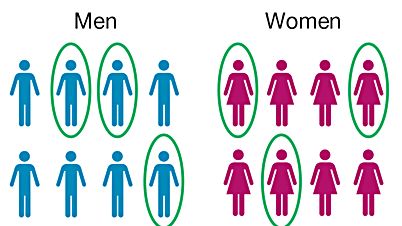
Stratified Sampling
The population is divided into subgroups (strata) that share similar characteristics, and a sample is drawn from each subgroup.
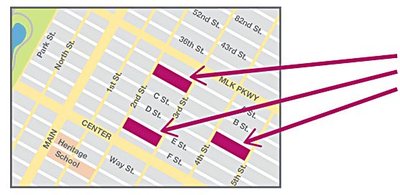
Cluster Sampling
The population area is divided into sections (clusters), some clusters are randomly selected, and all members from those clusters are chosen.
Multistage Sampling
Combines several sampling methods, selecting samples in stages, possibly using different methods at each stage.
Types of Observational Studies
Cross-sectional Study: Data are collected at one point in time.
Retrospective (Case-Control) Study: Data are collected from past records or interviews.
Prospective (Cohort) Study: Data are collected in the future from groups sharing common factors.
Confounding and Experimental Design
Confounding
Confounding occurs when the effects of different factors cannot be distinguished from each other. Proper experimental design aims to minimize confounding.
Controlling Effects of Variables
Completely Randomized Experimental Design: Subjects are assigned to treatment groups by random selection.
Randomized Block Design: Subjects are grouped into blocks that are similar, and treatments are randomly assigned within each block.
Rigorously Controlled Design: Subjects are carefully assigned to groups so that each group is similar in important ways.
Matched Pairs Design: Subjects are paired based on similarity, and each pair receives different treatments for comparison.
Sampling Errors
Sampling Error (Random Sampling Error): The discrepancy between a sample result and the true population result due to chance fluctuations, even when random methods are used.
Nonrandom Sampling Error: Results from using nonrandom sampling methods, such as convenience or voluntary response samples.
Nonsampling Error: Results from human errors, such as incorrect data entry, biased questions, or inappropriate statistical methods.
