 뒤로
뒤로Introductory Probability Concepts and Counting Principles
스터디 가이드 - 스마트 노트
 자료에 맞춘 맞춤형 노트, 핵심 정의, 예시, 맥락을 확장해 제공합니다.
Probability: Basic Concepts
Introduction to Probability
Probability is a measure of how likely an event is to occur. It is denoted as P(event) and can be calculated in several ways depending on the context:
Theoretical Probability: Calculated based on known possible outcomes, before any experiment is performed.
Empirical (Experimental) Probability: Calculated after an experiment, based on observed outcomes.
Sample space refers to the set of all possible outcomes of an experiment, such as flipping a coin or rolling a die.
Key Formulas:
Theoretical Probability:

Empirical Probability:

Example: When rolling a six-sided die, the probability of rolling a number greater than 3 is calculated by counting the favorable outcomes (4, 5, 6) and dividing by the total number of outcomes (6).
Complementary Events
Definition and Calculation
The complement of an event A, denoted as A', consists of all outcomes where A does not occur. The sum of the probabilities of an event and its complement is always 1:
Example: If the probability of rain tomorrow is 0.1, the probability that it will not rain is 0.9
Addition Rule for Probability
Mutually Exclusive Events
Mutually exclusive events cannot occur at the same time. The probability of either event A or event B occurring is:
Example: Getting heads or tails on a coin flip are mutually exclusive events.
Non-Mutually Exclusive Events
Non-mutually exclusive events can occur together. The probability of A or B is:
Example: Rolling a number greater than 3 or an even number on a die. Some numbers satisfy both conditions, so their probability must be subtracted to avoid double-counting.


Multiplication Rule for Probability
Independent Events
Events are independent if the outcome of one does not affect the other. The probability of both A and B occurring is:
Example: Getting heads on two consecutive coin flips.

Dependent Events
Events are dependent if the outcome of one affects the probability of the other. The probability of both A and B occurring is:
Example: Drawing and keeping a blue marble from a bag, then drawing a red marble.

Conditional Probability
Definition and Formula
Conditional probability is the probability of event B occurring given that event A has occurred:
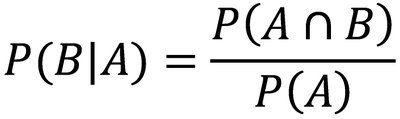
Example: Probability that a student has a math major given they have a science major.
Bayes' Theorem
Definition and Application
Bayes' Theorem allows calculation of conditional probabilities when direct probabilities are unknown:
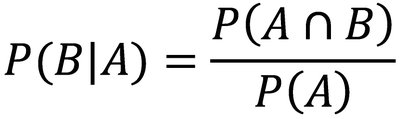
Example: Calculating the probability that a person has a disease given a positive test result.
Counting Principles
Fundamental Counting Principle
The Fundamental Counting Principle states that if there are m ways to do one thing and n ways to do another, there are m × n ways to do both.
Example: If you have 4 appetizers and 6 entrees, there are 24 possible meal combinations.

Permutations
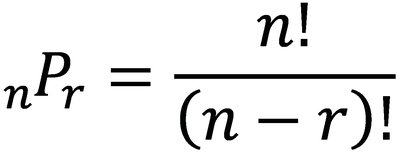
Permutations are arrangements of objects where order matters. The formula for the number of permutations of r objects from n is:

Example: Arranging 5 shirts for 5 days.
Permutations of Non-Distinct Objects
When objects are not all distinct, the formula is:
Example: Arranging the letters in the word BANANA.
Combinations
Combinations are selections of objects where order does not matter. The formula is:
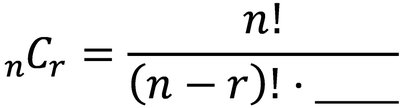
Example: Selecting 2 flavors from 32 at an ice cream shop.
Summary Table: Probability and Counting Formulas
Concept | Formula | Order Matters? |
|---|---|---|
Theoretical Probability | No | |
Empirical Probability | No | |
Permutation | Yes | |
Combination | No | |
Conditional Probability | No | |
Bayes' Theorem | No |
