 뒤로
뒤로Introductory Statistics: Probability and Counting Techniques Study Guide
스터디 가이드 - 스마트 노트
 자료에 맞춘 맞춤형 노트, 핵심 정의, 예시, 맥락을 확장해 제공합니다.
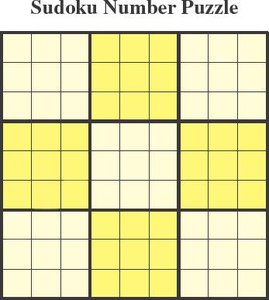
Q1. How many different ways can the first row of a blank 9 x 9 Sudoku grid be filled?
Background
Topic: Permutations
This question tests your understanding of how to count the number of ordered arrangements (permutations) of distinct objects.
Key formula:
Where:
= number of distinct objects (here, 9 digits)
= n factorial, the product of all positive integers up to n
Step-by-Step Guidance
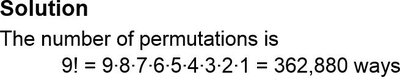
Identify the number of distinct digits to fill the row: .
Since each digit must appear exactly once, calculate the number of ways to arrange 9 distinct digits.
Set up the factorial expression: .
Multiply out the factorial: .
Try solving on your own before revealing the answer!
Final Answer: 362,880 ways
There are 362,880 different ways to fill the first row of a blank Sudoku grid with the digits 1 to 9, each used exactly once.
Q2. Find the number of ways of forming four-digit codes in which no digit is repeated.
Background
Topic: Permutations of n objects taken r at a time
This question tests your ability to count the number of ordered arrangements when selecting a subset of objects without repetition.
Key formula:
Where:
= total number of digits (here, 10: 0-9)
= number of digits in the code (here, 4)
Step-by-Step Guidance
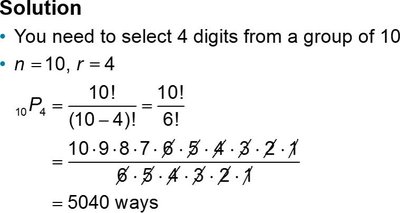
Identify and .
Set up the permutation formula: .
Calculate .
Write out and to prepare for division.
Try solving on your own before revealing the answer!
Final Answer: 5,040 ways
There are 5,040 ways to form a four-digit code with no repeated digits from 10 possible digits.
Q3. Forty-three race cars started the 2007 Daytona 500. How many ways can the cars finish first, second, and third?
Background
Topic: Permutations of n objects taken r at a time
This question tests your ability to count the number of ordered arrangements for selecting a subset of objects (race cars) for specific positions.
Key formula:
Where:
= total number of cars (43)
= number of positions (3: first, second, third)
Step-by-Step Guidance
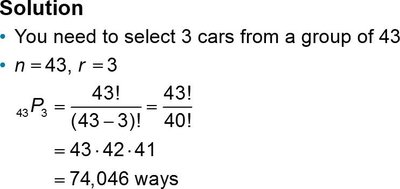
Identify and .
Set up the permutation formula: .
Calculate .
Write out and to prepare for division.
Try solving on your own before revealing the answer!
Final Answer: 74,046 ways
There are 74,046 ways the cars can finish first, second, and third.
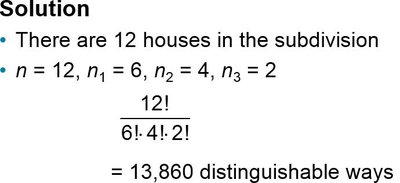
Q4. In how many distinguishable ways can 6 one-story houses, 4 two-story houses, and 2 split-level houses be arranged?
Background
Topic: Distinguishable Permutations
This question tests your ability to count the number of distinguishable arrangements when some objects are identical.
Key formula:
Where:
= total number of houses (12)
= number of one-story houses (6)
= number of two-story houses (4)
= number of split-level houses (2)
Step-by-Step Guidance
Identify , , , .
Set up the distinguishable permutation formula: .
Calculate , , , and separately.
Prepare to divide by the product .
Try solving on your own before revealing the answer!
Final Answer: 13,860 distinguishable ways
There are 13,860 distinguishable ways to arrange the houses, accounting for identical types.
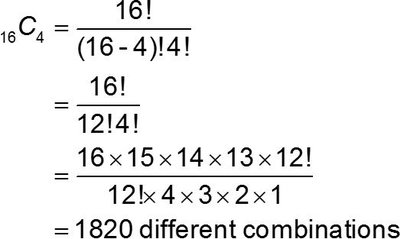
Q5. How many different combinations of four companies can be selected from 16 bidding companies?
Background
Topic: Combinations
This question tests your ability to count the number of ways to select a subset of objects without regard to order.
Key formula:
Where:
= total number of companies (16)
= number of companies to select (4)
Step-by-Step Guidance
Identify and .
Set up the combination formula: .
Calculate , , and separately.
Prepare to divide by the product .
Try solving on your own before revealing the answer!
Final Answer: 1,820 different combinations
There are 1,820 ways to select four companies from sixteen, regardless of order.
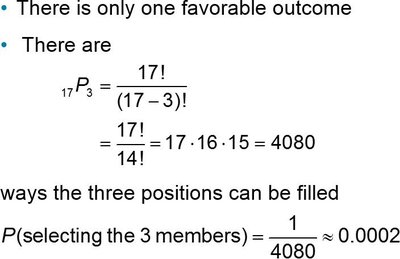
Q6. A student advisory board consists of 17 members. Three members serve as the board’s chair, secretary, and webmaster. What is the probability of selecting at random the three members that hold each position?
Background
Topic: Probability using Counting Techniques (Permutations)
This question tests your ability to calculate probabilities by counting the number of favorable and possible outcomes using permutations.
Key formula:
Where:
= total number of members (17)
= number of positions (3)
Step-by-Step Guidance
Identify and .
Set up the permutation formula: .
Calculate the total number of ways to assign the positions.
Since there is only one favorable outcome (the specific three members), set up the probability formula.
Try solving on your own before revealing the answer!
Final Answer:
There is only one way to select the specific three members, out of 4,080 possible arrangements.
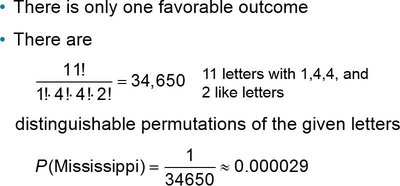
Q7. You have 11 letters consisting of one M, four Is, four Ss, and two Ps. If the letters are randomly arranged in order, what is the probability that the arrangement spells the word Mississippi?
Background
Topic: Probability using Distinguishable Permutations
This question tests your ability to calculate probabilities by counting distinguishable arrangements when some objects are identical.
Key formula:
Where:
= total number of letters (11)
= number of M's (1)
= number of I's (4)
= number of S's (4)
= number of P's (2)
Step-by-Step Guidance
Identify the counts for each letter: , , , , .
Set up the distinguishable permutation formula: .
Calculate the total number of distinguishable arrangements.
Since only one arrangement spells "Mississippi," set up the probability formula.
Try solving on your own before revealing the answer!
Final Answer:
There is only one way to spell "Mississippi" out of 34,650 possible distinguishable arrangements.
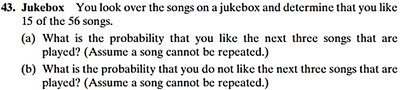
Q8. Jukebox: You look over the songs on a jukebox and determine that you like 15 of the 56 songs. (a) What is the probability that you like the next three songs that are played? (Assume a song cannot be repeated.) (b) What is the probability that you do not like the next three songs that are played? (Assume a song cannot be repeated.)
Background
Topic: Probability using Counting Techniques (Permutations)
This question tests your ability to calculate probabilities for sequential events without replacement, using permutations.
Key formula:
Where:
= total number of songs (56)
= number of songs played (3)
For part (a): favorable outcomes = ways to play 3 liked songs in order
For part (b): favorable outcomes = ways to play 3 not-liked songs in order
Step-by-Step Guidance
For part (a): Calculate the number of ways to play 3 liked songs in order: .
For part (b): Calculate the number of ways to play 3 not-liked songs in order: (since ).
Calculate the total number of ways to play any 3 songs in order: .
Set up the probability formulas for each part: .
Try solving on your own before revealing the answer!
Final Answer:
(a)
(b)
These fractions represent the probabilities for each scenario. Plug in the values to get the final answers.
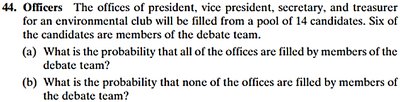
Q9. Officers: The offices of president, vice president, secretary, and treasurer for an environmental club will be filled from a pool of 14 candidates. Six of the candidates are members of the debate team. (a) What is the probability that all of the offices are filled by members of the debate team? (b) What is the probability that none of the offices are filled by members of the debate team?
Background
Topic: Probability using Counting Techniques (Permutations)
This question tests your ability to calculate probabilities for selecting specific groups for ordered positions.
Key formula:
Where:
= total candidates (14)
= number of offices (4)
For part (a): favorable outcomes =
For part (b): favorable outcomes = (since )
Step-by-Step Guidance
For part (a): Calculate the number of ways to fill offices with debate team members: .
For part (b): Calculate the number of ways to fill offices with non-debate team members: .
Calculate the total number of ways to fill offices from all candidates: .
Set up the probability formulas for each part: .
Try solving on your own before revealing the answer!
Final Answer:
(a)
(b)
These fractions represent the probabilities for each scenario. Plug in the values to get the final answers.
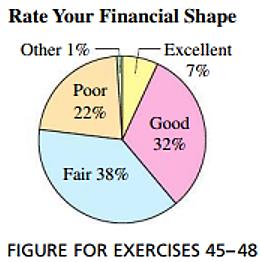
Q10. You choose 4 people at random from a group of 1200. What is the probability that all four would rate their financial shape as excellent? (Use the pie chart for reference.)
Background
Topic: Probability using Counting Techniques (Combinations)
This question tests your ability to calculate probabilities based on proportions from a population, using combinations.
Key formula:
Where:
= total people (1200)
= number chosen (4)
"Excellent" proportion = 7% (from pie chart)
Number of "Excellent" people =
Step-by-Step Guidance
Calculate the number of "Excellent" people: $84$.
Calculate the number of ways to choose 4 "Excellent" people: .
Calculate the total number of ways to choose any 4 people: .
Set up the probability formula: .
Try solving on your own before revealing the answer!
Final Answer:
This fraction represents the probability that all four randomly chosen people rate their financial shape as excellent. Plug in the values to get the final answer.

Q11. Soil Contamination: An environmental agency is analyzing soil samples from 50 farms for lead contamination. Eight of the farms have dangerously high levels of lead. Ten farms are randomly selected from the sample. How many ways could two contaminated farms and eight noncontaminated farms be chosen?
Background
Topic: Counting Techniques (Combinations)
This question tests your ability to count the number of ways to select groups from two categories using combinations.
Key formula:
Where:
= contaminated farms (8)
= noncontaminated farms (42)
Choose 2 contaminated:
Choose 8 noncontaminated:
Step-by-Step Guidance
Calculate the number of ways to choose 2 contaminated farms: .
Calculate the number of ways to choose 8 noncontaminated farms: .
Multiply the two results to get the total number of ways.
Try solving on your own before revealing the answer!
Final Answer:
Total ways =
This product gives the number of ways to select two contaminated and eight noncontaminated farms from the sample.

Q12. Find the probability of choosing six first-shift workers from a warehouse with 24 first-shift and 17 second-shift workers, when eight workers are chosen at random.
Background
Topic: Probability using Counting Techniques (Combinations)
This question tests your ability to calculate probabilities for selecting a specific number from two categories using combinations.
Key formula:
Where:
= first-shift workers (24)
= second-shift workers (17)
Choose 6 first-shift:
Choose 2 second-shift:
Total ways to choose 8 workers:
Step-by-Step Guidance
Calculate the number of ways to choose 6 first-shift workers: .
Calculate the number of ways to choose 2 second-shift workers: .
Multiply the two results to get the number of favorable outcomes.
Calculate the total number of ways to choose any 8 workers: .
Set up the probability formula: .
Try solving on your own before revealing the answer!
Final Answer:
This fraction represents the probability of choosing six first-shift workers when eight are chosen at random. Plug in the values to get the final answer.

