 뒤로
뒤로Probability: The Addition Rule and Mutually Exclusive Events
스터디 가이드 - 스마트 노트
 자료에 맞춘 맞춤형 노트, 핵심 정의, 예시, 맥락을 확장해 제공합니다.
Section 3.3: The Addition Rule
Basic Concepts of Probability
Probability is a fundamental concept in statistics that quantifies the likelihood of events occurring. In this section, we focus on the Addition Rule, which is used to find the probability that at least one of several events occurs.
Mutually Exclusive Events
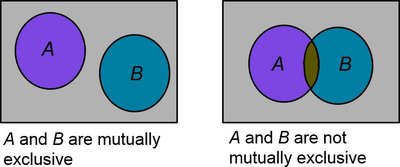
Two events are mutually exclusive if they cannot occur at the same time. This means that the occurrence of one event excludes the possibility of the other event happening.
Definition: Events A and B are mutually exclusive if .
Example: Rolling a 3 or a 4 on a die are mutually exclusive events, since you cannot roll both numbers at once.

Non-Mutually Exclusive Events
Events are not mutually exclusive if they can occur at the same time. For example, a student can be both a male and a nursing major.
Definition: Events A and B are not mutually exclusive if .
Example: Randomly selecting a male student and randomly selecting a nursing major are not mutually exclusive, as a student can be both.

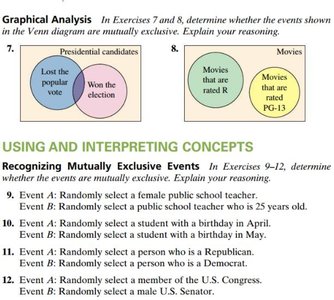
Recognizing Mutually Exclusive Events
Mutually exclusive events can be identified using Venn diagrams or by analyzing the event definitions. Exercises often ask students to determine whether events are mutually exclusive.
The Addition Rule for Probability
The Addition Rule is used to find the probability that at least one of two events occurs. The rule differs depending on whether the events are mutually exclusive.
General Addition Rule:
Mutually Exclusive Events:
Example: Selecting a Card
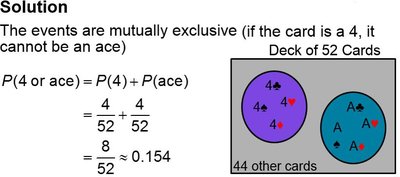
Suppose you select a card from a standard deck. Find the probability that the card is a 4 or an ace. These events are mutually exclusive.

Example: Rolling a Die (Non-Mutually Exclusive Events)
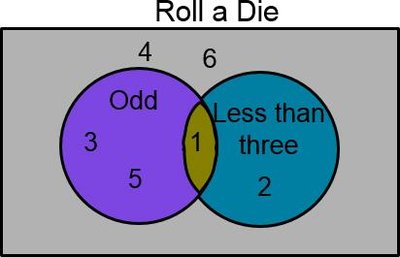
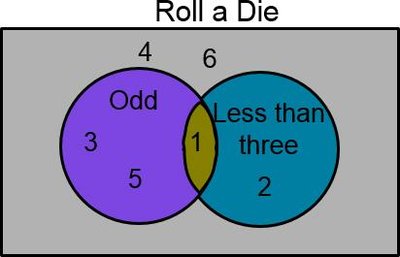
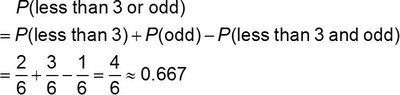
Find the probability of rolling a number less than 3 or rolling an odd number. These events are not mutually exclusive, as the outcome '1' is included in both events.
Practice Problems: Addition Rule
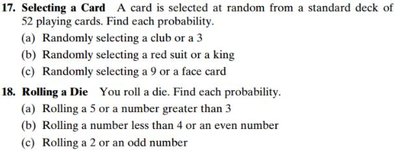
Students are often asked to apply the addition rule to various scenarios, such as selecting cards or rolling dice.
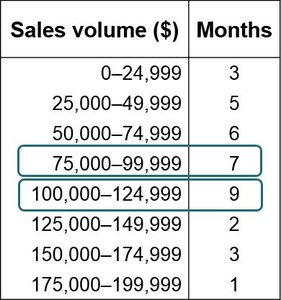
Example: Sales Volume Probability
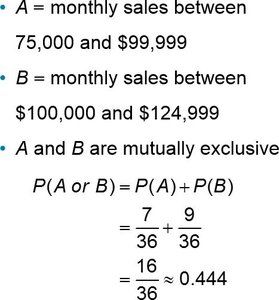
Given a frequency distribution of sales volumes, find the probability that a sales representative will sell between $75,000 and $124,999 next month. The events are mutually exclusive.
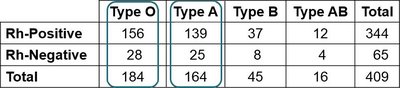
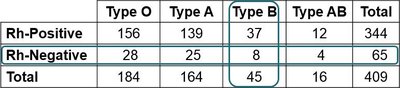
Example: Blood Type Probability
A blood bank catalogs the types of blood given by donors. Find the probability that a randomly selected donor has type O or type A blood. These events are mutually exclusive.
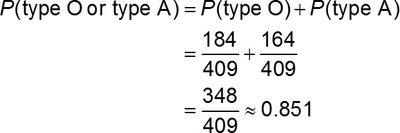
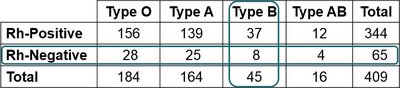
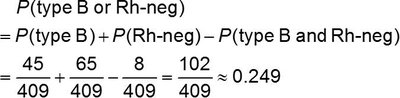
Example: Blood Type and Rh-Negative Probability (Non-Mutually Exclusive)
Find the probability that a donor has type B blood or is Rh-negative. These events are not mutually exclusive, as a donor can have both characteristics.
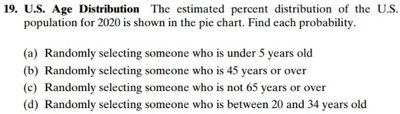
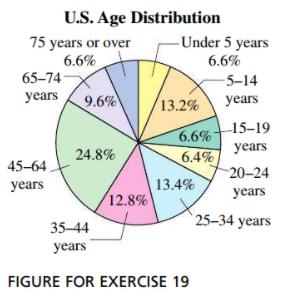
Practice Problems: Age Distribution
Probability can also be applied to demographic data, such as age distributions. Students may be asked to find probabilities for various age groups based on a pie chart.
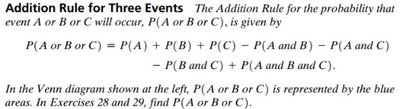
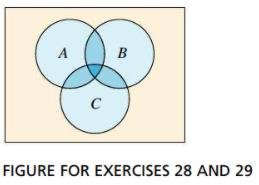
Addition Rule for Three Events
The Addition Rule can be extended to three events. The formula accounts for overlapping probabilities among all three events.
Section Summary
Determined if two events are mutually exclusive
Used the Addition Rule to find the probability of two or more events
Additional info:
The Addition Rule is a foundational concept for understanding probability in statistics, and is essential for analyzing real-world scenarios involving overlapping or mutually exclusive events.
