 뒤로
뒤로Syllabus Overview: Quantitative Methods 1 (QM1) – Statistics and Mathematics Foundations
스터디 가이드 - 스마트 노트
 자료에 맞춘 맞춤형 노트, 핵심 정의, 예시, 맥락을 확장해 제공합니다.
Course Introduction and Organisation
Overview of Quantitative Methods 1 (QM1)
Quantitative Methods 1 (QM1) is a foundational course for Business and Economics students at Maastricht University, focusing on essential topics in mathematics, statistics, and data analysis. The course is designed to develop both theoretical understanding and practical application skills, preparing students for advanced quantitative coursework and real-world problem-solving.
Course Structure: Delivered by two lecturers (mathematics and statistics) and supported by student tutors.
Support: Students are encouraged to consult tutors for course-related questions and coordinators for broader issues.
Course Content and Learning Goals
Statistics Topics Covered
The statistics component of QM1 covers the following key areas, closely aligned with standard introductory statistics curricula:
Data Collection Methods and Types of Data
Descriptive Statistics: Summarizing populations and samples using numerical measures
Probability Theory: Including discrete and continuous random variables
Probability Distributions: Binomial, geometric, and normal distributions
Inferential Statistics: Sampling distributions, confidence intervals, and hypothesis testing
Additional info: These topics correspond to chapters 1–9 in a typical introductory statistics textbook, including data collection, descriptive statistics, probability, distributions, and inferential methods.
Mathematics Topics Covered
The mathematics portion reinforces and extends high-school level algebra and calculus, focusing on:
Functions and Equations: Translating real-world problems into mathematical models
Optimization: Finding maxima and minima for functions of one and two variables (using derivatives and partial derivatives)
Systems of Equations: Especially linear systems
Course Materials
QM1 Tutorial Handbook: Weekly learning goals, readings, and exercises
Math Reader: Weekly mathematics readings and exercises
Statistics Uncharted Textbook: Main statistics resource (required)
Online Platforms: Statistics Uncharted companion website and Sowiso for extra practice
Weekly Structure and Study Recommendations
Weekly Activities
Lectures: Introduction to new topics (statistics and mathematics)
Tutorials: Group meetings to discuss and solve exercises
Intro to Data Analysis (IDA): Training in Excel and JASP for data analysis skills
Self-Study: Students are expected to read assigned chapters, prepare exercises, and practice regularly using online platforms.
Assessment and Examination
Grading Components
Midterm Quiz: Bonus points opportunity (mathematics and statistics)
Final Written Test: 14 mathematics and 14 statistics questions (closed format, including multiple-choice and fill-in-the-blank)
IDA Training: Pass/fail based on attendance and assignment completion
Participation: Minimum attendance and active engagement required
Passing Criteria: Minimum scores in both mathematics and statistics, overall grade threshold, and fulfillment of participation requirements.
Academic Integrity and Code of Conduct
Expectations and Values
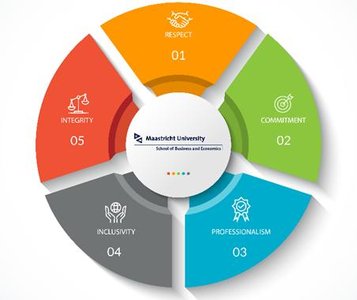
Students are expected to adhere to high standards of academic integrity, including independent work, proper citation, and honest participation in assessments. The School of Business and Economics emphasizes the following core values:
Respect
Commitment
Professionalism
Inclusivity
Integrity
Global Citizenship Education
Competency Framework
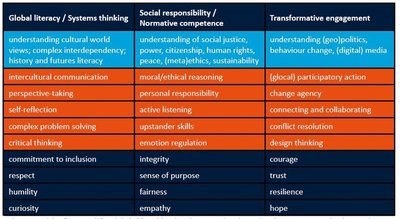
The curriculum integrates global citizenship education, aiming to develop students' knowledge, skills, and attitudes for responsible and effective engagement in a complex world. The framework is structured around three pillars:
Global Literacy / Systems Thinking
Social Responsibility / Normative Competence
Transformative Engagement
Each pillar encompasses specific competencies such as intercultural communication, ethical reasoning, participatory action, and more.
Support and Well-being
Student Support Services
Students are encouraged to seek support for academic, personal, or mental health challenges. Resources include student and career counselling, university psychologists, and confidential advisors. Tutors and course coordinators are available for course-related concerns.
Device-Free Tutorials
Policy and Rationale
QM1 implements device-free tutorials to foster engagement, focus, and collaborative learning. Students are expected to prepare handwritten or printed notes and participate actively without electronic devices during tutorials.
