Ch. 6 - Confidence Intervals
Larson - Elementary Statistics: Picturing the World 8th Edition
Larson8th EditionElementary Statistics: Picturing the WorldISBN: 9780137493470당신이 사용하는 게 아니라요?교과서 변경
6장, 문제 6.1.30

In Exercises 29–32, determine the minimum sample size n needed to estimate for the values of c, σ, and E.
c = 0.95, σ = 2.5, E = 1.

검증된 단계별 안내
1
Identify the formula for determining the minimum sample size n for estimating a population mean: n = (zcσE)2, where zc is the critical z-value, σ is the population standard deviation, and E is the margin of error.
Determine the critical z-value (zc) for the given confidence level c = 0.95. Use a z-table or statistical software to find the z-value corresponding to a cumulative probability of 0.975 (since the confidence level is two-tailed).
Substitute the given values into the formula: σ = 2.5 (population standard deviation) and E = 1 (margin of error).
Simplify the numerator of the fraction by multiplying the critical z-value (zc) by the population standard deviation (σ). Then divide the result by the margin of error (E).
Square the result from the previous step to calculate the minimum sample size n. If n is not a whole number, always round up to the nearest whole number, as sample size must be an integer.

비슷한 문제에 대한 검증된 영상 답변:

이 영상 해법은 위 문제에 도움이 된다고 튜터들이 추천한 것입니다.
영상 길이:
1m
도움이 되었나요?

주요 개념

질문에 올바르게 답하기 위해 반드시 이해해야 하는 핵심 개념들은 다음과 같습니다.

Sample Size Determination

Sample size determination is the process of calculating the number of observations or replicates needed in a statistical study to ensure that the results are reliable and valid. It is crucial for achieving a desired level of precision in estimating population parameters, such as means or proportions, while controlling for the margin of error.
추천 영상:
가이드 코스
06:14
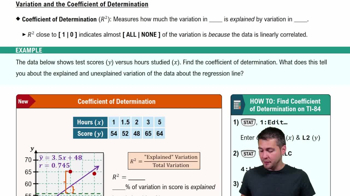
Coefficient of Determination

Confidence Level (c)

The confidence level, denoted as c, represents the probability that the confidence interval will contain the true population parameter. A confidence level of 0.95 indicates that if the same population were sampled multiple times, approximately 95% of the calculated confidence intervals would capture the true parameter, reflecting a high degree of certainty in the estimate.
추천 영상:
06:33
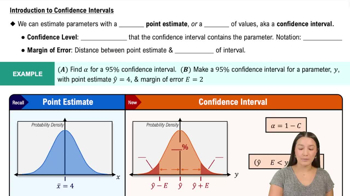
Introduction to Confidence Intervals

Margin of Error (E)

The margin of error, denoted as E, quantifies the range within which the true population parameter is expected to lie, given a certain confidence level. It is a critical component in survey results and statistical estimates, as it indicates the potential deviation from the observed sample statistic, thus influencing the reliability of the conclusions drawn from the data.
추천 영상:
06:33
Introduction to Confidence Intervals