
Ch. 12 - Analysis of Variance
Triola - Elementary Statistics 14th Edition
Triola14th EditionElementary StatisticsISBN: 9780137366446당신이 사용하는 게 아니라요?교과서 변경
12장, 문제 12.2.11d

Transformations of Data Example 1 illustrated the use of two-way ANOVA to analyze the sample data in Table 12-3. How are the results affected in each of the following cases?


d. The first sample value in the first cell is changed so that it becomes an outlier.

검증된 단계별 안내
1
Understand the context of the problem: Two-way ANOVA is used to analyze the effects of two independent variables on a dependent variable, as well as their interaction. Outliers can significantly affect the results of statistical tests, including ANOVA, by distorting the means and increasing variability.
Identify the specific change: The problem states that the first sample value in the first cell is altered to become an outlier. This means the value is now significantly different from the other values in the same group or cell.
Consider the impact on assumptions: Two-way ANOVA assumes normality and homogeneity of variances. An outlier can violate these assumptions by skewing the data distribution or inflating the variance within a group.
Analyze the potential effects on results: The presence of an outlier can lead to misleading F-statistics, as it may artificially increase the within-group variance (denominator of the F-ratio) or distort the group means (numerator of the F-ratio). This can affect the significance of main effects and interaction effects.
Suggest a course of action: To address the outlier, consider using robust statistical methods, transforming the data (e.g., log transformation), or conducting a sensitivity analysis to determine how the results change with and without the outlier. Additionally, verify the assumptions of ANOVA after the outlier is introduced.

비슷한 문제에 대한 검증된 영상 답변:

이 영상 해법은 위 문제에 도움이 된다고 튜터들이 추천한 것입니다.
영상 길이:
5m
도움이 되었나요?

주요 개념

질문에 올바르게 답하기 위해 반드시 이해해야 하는 핵심 개념들은 다음과 같습니다.

Two-Way ANOVA

Two-way ANOVA (Analysis of Variance) is a statistical method used to determine the effect of two independent categorical variables on a continuous dependent variable. It helps in understanding how different groups interact and whether the means of the groups are significantly different from each other. This technique is particularly useful when analyzing complex datasets with multiple factors.
추천 영상:
가이드 코스
03:50
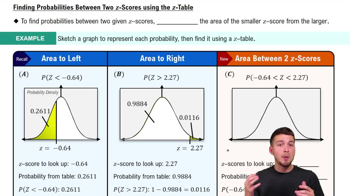
Probabilities Between Two Values

Outliers

Outliers are data points that differ significantly from other observations in a dataset. They can skew results and affect statistical analyses, such as ANOVA, by influencing the mean and variance. Identifying and understanding the impact of outliers is crucial, as they can lead to misleading conclusions if not properly addressed.
추천 영상:
가이드 코스
04:48
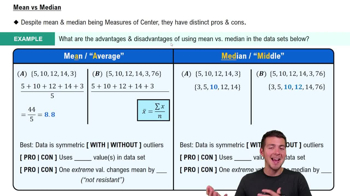
Comparing Mean vs. Median

Effect on ANOVA Results

The presence of an outlier can significantly affect the results of an ANOVA test by increasing the variability within groups, which may lead to a Type I error (false positive) or Type II error (false negative). This alteration can change the F-statistic and p-values, potentially leading to incorrect interpretations of the data. Understanding how outliers influence ANOVA is essential for accurate data analysis.
추천 영상:
가이드 코스
07:19
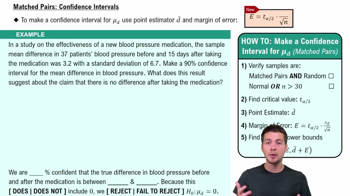
Matched Pairs: Confidence Intervals