Ch. R - Algebra Review
Lial - Trigonometry 12th Edition
Lial12th EditionTrigonometryISBN: 9780136552161당신이 사용하는 게 아니라요?교과서 변경
1장, 문제 89

Simplify each inequality if needed. Then determine whether the statement is true or false. 7 ≤ 7

검증된 단계별 안내
1
Identify the inequality given: \(7 \leq 7\).
Recall that the symbol \(\leq\) means "less than or equal to," so the statement says "7 is less than or equal to 7."
Since both sides of the inequality are equal, the "equal to" part of the inequality holds true.
Therefore, the inequality \(7 \leq 7\) is true because 7 is indeed equal to 7.
No further simplification is needed as the inequality is already in its simplest form.

비슷한 문제에 대한 검증된 영상 답변:

이 영상 해법은 위 문제에 도움이 된다고 튜터들이 추천한 것입니다.
영상 길이:
1m
도움이 되었나요?

주요 개념

질문에 올바르게 답하기 위해 반드시 이해해야 하는 핵심 개념들은 다음과 같습니다.

Inequality Symbols and Their Meaning

Inequality symbols like ≤ (less than or equal to) compare two values to show their relative size. The symbol ≤ means the left side is either less than or exactly equal to the right side. Understanding these symbols is essential to interpret and solve inequalities correctly.
추천 영상:
5:10
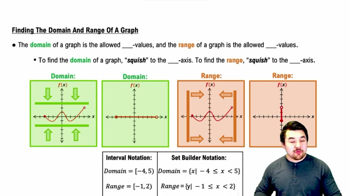
Finding the Domain and Range of a Graph

Evaluating Inequalities

To determine if an inequality is true or false, substitute the values and check the relationship. For example, 7 ≤ 7 means 7 is less than or equal to 7, which is true because both sides are equal. This evaluation step confirms the validity of the inequality.
추천 영상:
7:28
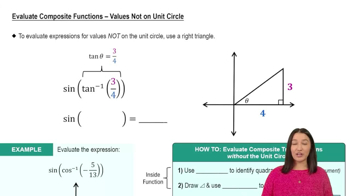
Evaluate Composite Functions - Values Not on Unit Circle

Simplification of Inequalities

Simplifying inequalities involves reducing expressions to their simplest form without changing their truth value. In this case, the inequality 7 ≤ 7 is already simplified, so no further steps are needed before evaluating its truthfulness.
추천 영상:
5:10
Finding the Domain and Range of a Graph