Which field of economics deals primarily with the problems faced by low-income countries, such as obstacles to economic development?
Development economics is the field of economics that focuses on the challenges and obstacles faced by low-income countries, including issues related to natural resources, human capital, capital goods, technology, socio-cultural factors, and institutional problems.
How does foreign ownership of natural resources impact developing countries' economic growth?
Foreign ownership means profits from natural resources often leave the country, limiting local economic benefits and development.
What is 'brain drain' and how does it affect developing countries?
Brain drain refers to skilled and educated workers leaving developing countries for better opportunities abroad, reducing the local talent pool.
Why do wealthy individuals in developing countries often invest in industrially advanced countries instead of their own?
They perceive investments in developed countries as less risky and more secure, leading to less capital investment at home.
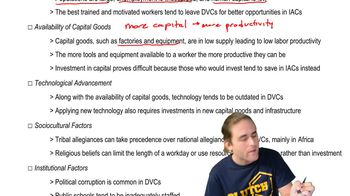
How does the lack of capital goods affect worker productivity in developing countries?
Without sufficient capital goods like factories and equipment, workers are less productive and overall economic output is lower.
What challenge do developing countries face when trying to implement new technology?
Implementing new technology requires significant investment in infrastructure and capital, which is often unavailable.
How can tribal allegiances hinder national economic development in some countries?
Tribal allegiances can lead to a focus on local rather than national interests, reducing cooperation for nationwide economic growth.
In what ways can religious practices impact economic productivity in developing countries?
Religious practices may limit work hours or redirect resources away from economic activities, reducing overall productivity.
What are some examples of institutional problems that impede development in low-income countries?
Institutional problems include government corruption, poorly staffed public schools, and inefficient or arbitrary tax systems.
Why is education often inadequate in developing countries, and what is its effect on human capital?
Public schools are often understaffed and underfunded, resulting in low human capital and limited economic growth.


 04:49
04:49