Pearson+ LogoPearson+ Logo

Monetary vs Fiscal Policy quiz #1 Flashcards

Back
Monetary vs Fiscal Policy quiz #1
Control buttons has been changed to "navigation" mode.
1/10
  • What is the difference between fiscal policy and monetary policy in macroeconomics?

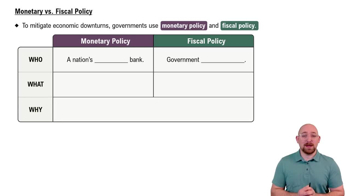
    Monetary policy is controlled by the central bank and involves managing interest rates and the money supply to influence aggregate demand, GDP, and inflation. Fiscal policy is managed by government policymakers and involves adjusting taxes and government spending to affect disposable income, consumption, and employment. Monetary policy tends to act faster and is more politically neutral, while fiscal policy can be slower and more politically influenced.
  • Who is responsible for implementing monetary policy in a country?

    The nation's central bank is responsible for implementing monetary policy. They manage interest rates and the money supply.
  • How can lowering interest rates through monetary policy encourage consumer spending?

    Lowering interest rates makes borrowing cheaper, so consumers are more likely to finance big purchases like cars. This increased spending helps stimulate economic activity.
  • What role do government policymakers play in fiscal policy?

    Government policymakers or elected officials control fiscal policy. They adjust taxes and government spending to influence the economy.
  • How might a tax break provided by fiscal policy affect consumer behavior during an economic decline?

    A tax break increases disposable income, making consumers more likely to spend on goods and services. This can help boost overall economic demand.
  • In what way does monetary policy impact GDP during a recession?

    Monetary policy can lower interest rates, encouraging spending and investment. This increased economic activity helps raise GDP.
  • Why is monetary policy generally considered more politically neutral than fiscal policy?

    Monetary policy is managed by the central bank, which is typically independent from political influence. Fiscal policy involves elected officials and can be influenced by political considerations.
  • What is one reason fiscal policy may take longer to implement compared to monetary policy?

    Fiscal policy changes often require legislative approval and voting, which can delay action. In contrast, central banks can adjust monetary policy more quickly.
  • How can both monetary and fiscal policy help maintain employment during economic downturns?

    By stimulating spending, both policies help keep businesses productive and able to retain employees. This reduces the risk of rising unemployment.
  • What are two main tools used in fiscal policy to influence the economy?

    The two main tools are adjusting taxes and changing government spending. These tools directly affect consumers' disposable income and overall demand.