What triggered the Great Recession and what were its economic consequences?
The Great Recession was triggered by risky subprime lending and the collapse of the real estate market, leading to defaults on mortgages, a banking crisis, and a government bailout through the Troubled Asset Relief Program (TARP).
In the wake of the Great Recession, how did the amount of reserves held by banks change?
After the Great Recession, banks significantly increased the amount of reserves they held to protect against future financial instability and potential bank runs.
What is the difference between commercial banks and investment banks in terms of deposit insurance?
Commercial banks are FDIC insured up to \$250,000 per depositor, while investment banks are not insured and thus more exposed to losses during financial crises.
How did the process of securitization contribute to the financial crisis of 2007-2009?
Securitization involved bundling various home loans into mortgage-backed securities, which were sold to investors; when homeowners defaulted, the value of these securities collapsed, causing widespread financial losses.
What role did subprime mortgages play in the buildup to the Great Recession?
Subprime mortgages were high-interest loans given to risky borrowers with little or no down payment, increasing the likelihood of defaults when the housing market crashed.
Why did many homeowners choose to walk away from their mortgages during the crisis?
Homeowners walked away because the value of their homes fell below the amount they owed on their mortgages, making repayment financially irrational.
What is the 'shadow banking system' and how did it affect the financial crisis?
The shadow banking system refers to unregulated financial activities outside traditional banking, which loosened credit standards and contributed to the proliferation of risky loans.
Why did the government consider some banks 'too big to fail' during the financial crisis?
The government believed that the failure of large investment banks would trigger a domino effect, potentially collapsing the entire financial system and leading to a depression.
What is moral hazard and how did it arise from the government's bailout of banks?
Moral hazard is the risk that banks may take on excessive risks, believing they will be bailed out by the government in future crises, as happened after the bailout during the Great Recession.
 Back
Back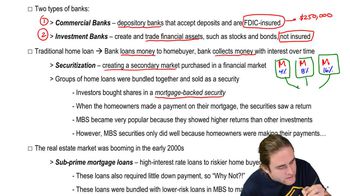
 10:32
10:32