Pearson+ LogoPearson+ Logo

Unemployment: Minimum Wage Laws and Efficiency Wages quiz #1 Flashcards

Back
Unemployment: Minimum Wage Laws and Efficiency Wages quiz #1
Control buttons has been changed to "navigation" mode.
1/10
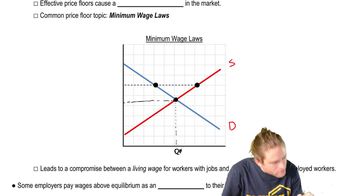
  • Why does setting a minimum wage above the equilibrium wage result in unemployment in the labor market?

    A minimum wage set above the equilibrium wage acts as a price floor, increasing the wage firms must pay. This leads to a surplus of labor because more workers are willing to work at the higher wage, but firms demand less labor due to the increased cost. The result is unemployment, as there are more people seeking jobs than there are jobs available at the higher wage.
  • What is the role of firms in the labor market graph discussed in the video?

    Firms represent the demand for labor in the labor market graph. They decide how many workers to hire at different wage levels.
  • Why is a minimum wage set below the equilibrium wage considered ineffective?

    A minimum wage below equilibrium does not affect the market because employers are already paying above that rate. Therefore, it does not change hiring or unemployment outcomes.
  • How does a surplus of labor manifest in the context of minimum wage laws?

    A surplus of labor means more people are willing to work at the higher minimum wage than there are jobs available. This results in unemployment for those who cannot find jobs.
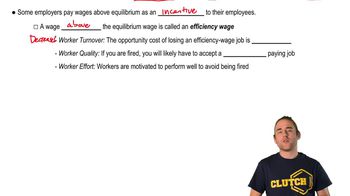
  • What is the opportunity cost for workers who lose a job that pays an efficiency wage?

    The opportunity cost is high because they would likely have to accept a lower-paying job elsewhere. This makes them more motivated to keep their current job.
  • How do efficiency wages affect the quality of job applicants?

    Efficiency wages attract more and potentially better-qualified applicants. This allows employers to select higher-quality workers from a larger pool.
  • What motivates workers to exert more effort when paid an efficiency wage?

    Workers are motivated to avoid being fired from a higher-paying job. The fear of losing the premium wage encourages them to work harder.
  • Why do employers benefit from decreased worker turnover when paying efficiency wages?

    Lower turnover means employers spend less time and resources retraining new workers. This increases overall efficiency and productivity.
  • What happens to the quantity of labor demanded when the minimum wage is set above equilibrium?

    The quantity of labor demanded decreases because firms are less willing to hire at the higher wage. This contributes to unemployment.
  • How does the minimum wage law create a compromise in the labor market?

    It provides a living wage for those who find jobs but increases unemployment for those who cannot. Thus, it benefits some workers while disadvantaging others.