The main purpose of a labor union is to negotiate higher wages and better working conditions for its members through collective bargaining.
What is collective bargaining?
Collective bargaining is when workers negotiate as a group with employers to secure better wages and working conditions.
How do labor unions influence the supply of labor?
Labor unions restrict the supply of labor by requiring workers to meet higher qualification standards, such as apprenticeship programs and certifications.
What effect do unions have on the demand for labor?
Unions increase the demand for labor by providing higher-skilled workers who are more productive, making them more attractive to employers.
What is the typical impact of unions on equilibrium wage and job quantity?
Unions generally lead to a higher equilibrium wage but a lower equilibrium quantity of jobs, meaning fewer jobs but higher pay for unionized workers.
Why did labor unions originally form during the Industrial Revolution?
Labor unions formed to address abuses such as long hours, low pay, and poor working conditions experienced by workers during the Industrial Revolution.
How do unions use apprenticeship programs to restrict labor supply?
Unions require workers to complete apprenticeship programs or technical certifications, limiting the pool of eligible workers to those with specialized skills.
What is the marginal product of labor and how do unions affect it?
The marginal product of labor is the additional output produced by one more worker; unions increase it by ensuring workers are more skilled and productive.
How do unions support minimum wage laws?
Unions support minimum wage laws because higher minimum wages encourage employers to hire skilled, unionized workers, increasing demand for their labor.
What happens to the labor market equilibrium when unions decrease labor supply and increase labor demand?
The equilibrium wage rises and the equilibrium quantity of jobs falls, resulting in fewer but better-paid jobs for unionized workers.
What percentage of U.S. workers are currently union members?
About 10% of workers in the United States are currently members of labor unions.
How does union membership in Sweden compare to the United States?
Union membership in Sweden is much higher, with up to 70% of workers belonging to unions, compared to only 10% in the U.S.
What is the main takeaway about the effect of labor unions on wages?
Labor unions generally increase wages for their members by negotiating collectively and raising job qualification standards.
Why do employers prefer to hire unionized workers when minimum wage laws are in place?
Employers prefer unionized workers because if they must pay higher wages, they want to hire more skilled and productive employees.
What is the trade-off unions create in the labor market?
The trade-off is higher wages for unionized workers but fewer jobs available, as unions restrict supply and raise qualification standards.
 Back
Back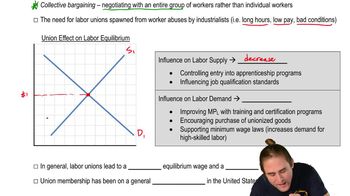
 06:50
06:50