 Back
BackComparative Advantage and International Trade
 04:36
04:36
Terms in this set (26)
International trade is the exchange of goods and services between countries, involving imports and exports.
A tariff is a tax imposed by a government on imports to protect domestic industries or raise revenue.
Imports are goods and services bought domestically but produced abroad; exports are goods and services produced domestically but sold abroad.
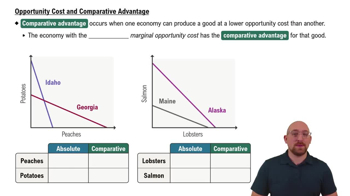
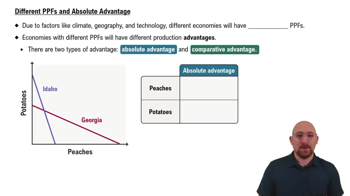
Absolute advantage is the ability to produce more of a good or service than competitors using the same resources.
Comparative advantage is the ability to produce a good or service at a lower opportunity cost than competitors.
Opportunity cost is the highest-valued alternative that must be given up to engage in an activity.
When countries specialize in goods where they have a comparative advantage and trade, both can consume more than without trade.
Autarky is a situation where a country does not trade with other countries and consumes only what it produces.
Terms of trade is the ratio at which a country trades its exports for imports; it must be between the opportunity costs of the trading countries.
Because some goods can't be traded, production involves increasing opportunity costs, and tastes differ, countries often produce multiple goods.
Some firms and workers in industries without comparative advantage may lose jobs and profits due to foreign competition.
Governments use tariffs, quotas, and voluntary export restraints (VERs) to limit imports and protect domestic industries.
A tariff raises domestic prices, increases producer surplus, generates government revenue, but causes deadweight loss reducing overall economic surplus.
A quota limits the quantity of imports, raising domestic prices and benefiting producers but harming consumers and causing deadweight loss.
Because benefits are concentrated among few producers who lobby strongly, while costs are spread thinly among many consumers.
A 1930 U.S. law that raised tariffs to historic highs, leading to retaliatory tariffs and reduced global trade.
Free trade is international trade without government restrictions like tariffs or quotas.
Dumping is selling a product abroad at a price below its cost of production, often seen as unfair competition.
Globalization is the process of countries becoming more open to foreign trade and investment.
Comparative advantage can come from climate, natural resources, labor and capital abundance, technology differences, and external economies.
Protectionism is the use of trade barriers to shield domestic firms from foreign competition.
Trade restrictions persist because the concentrated benefits to producers outweigh the dispersed costs to consumers, influencing politicians.
The WTO oversees international trade agreements and provides a dispute resolution process among member countries.
Deadweight loss is the loss of economic efficiency when trade restrictions reduce total surplus in the market.
Some propose tariffs on imports from countries with lax environmental regulations to level the playing field and reduce emissions.
Winners from trade gains should compensate losers to create a net positive outcome for society.