 Back
Basics of the Autonomic Nervous System (ANS): Structure, Function, and Pharmacology
Study Guide - Smart Notes
 Tailored notes based on your materials, expanded with key definitions, examples, and context.
Autonomic Nervous System (ANS): Structure and Function
Overview of the ANS
The autonomic nervous system (ANS) is a division of the peripheral nervous system responsible for regulating involuntary physiological processes, including heart rate, blood pressure, respiration, digestion, and glandular activity. The ANS maintains homeostasis by balancing the activity of its two main divisions: the sympathetic and parasympathetic systems.
Sympathetic Division (SNS): Prepares the body for 'fight or flight' responses during stress or emergency situations.
Parasympathetic Division (PSNS): Promotes 'rest and digest' activities, conserving energy and facilitating routine maintenance functions.
Parts of the Nervous System
Central Nervous System (CNS): Brain and spinal cord.
Peripheral Nervous System (PNS): Nerves outside the CNS, including the ANS.
Sympathetic vs. Parasympathetic Divisions
Key Physiological Effects
Sympathetic ("Fight or Flight"):
Increased heart rate (HR) and blood pressure (BP)
Dilated pupils and bronchi
Decreased gastrointestinal (GI) activity
Urinary retention
Parasympathetic ("Rest and Digest"):
Decreased HR
Constricted pupils
Increased GI motility
Neurotransmitters of the ANS
Major Neurotransmitters and Their Actions
Acetylcholine (ACh): Main neurotransmitter of the PSNS; acts at muscarinic receptors. Cholinergic activity is associated with 'rest and digest' effects.
Norepinephrine (NE): Main neurotransmitter of the SNS; acts mainly at alpha and beta adrenergic receptors. Adrenergic activity is associated with 'fight or flight' effects.
Epinephrine: Acts at both alpha and beta receptors, amplifying SNS responses (e.g., increased HR/BP, bronchodilation).
Receptors of the ANS
Types and Effects of Autonomic Receptors
Receptor Type | Main Effect | Example Medication |
|---|---|---|
Alpha-1 | Vasoconstriction, increased BP, pupil dilation | Phenylephrine |
Beta-1 | Increased HR and contractility | Metoprolol (blocker), Propranolol (blocker) |
Beta-2 | Bronchodilation | Albuterol, Propranolol (blocker) |
Muscarinic/Cholinergic | Decreased HR, increased GI activity | Atropine (anticholinergic), Bethanechol |
Agonists and Antagonists
Mechanisms of Drug Action
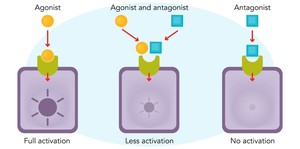
Agonist: Activates a receptor, producing the expected physiological effect (e.g., beta-2 agonist causes bronchodilation).
Antagonist: Blocks a receptor, preventing activation and often producing the opposite effect (e.g., beta-1 blocker decreases heart rate).
Autonomic Drug Selectivity
Selective vs. Non-Selective Drugs
Drug selectivity refers to a drug’s ability to bind to a specific receptor type. Selective drugs target one receptor, while non-selective drugs affect multiple receptors, increasing the risk of adverse effects.
Metoprolol: Selective for beta-1 receptors (mainly affects the heart).
Propranolol: Non-selective; blocks both beta-1 and beta-2 receptors (affects heart and lungs).
Common Autonomic Medications
Adrenergic and Cholinergic Drugs
Adrenergic Agonists (SNS stimulators): Albuterol, Clonidine
Adrenergic Antagonists (SNS blockers): Propranolol, Metoprolol
Cholinergic Agonists (PSNS stimulators): Bethanechol, Pilocarpine, Nicotine
Cholinergic Antagonists (PSNS blockers): Atropine, Scopolamine
Autonomic Reflexes and Homeostasis
Role of Reflexes in Physiological Regulation
Baroreceptors: Detect changes in blood pressure and help maintain cardiovascular stability.
Chemoreceptors: Sense changes in blood pH, oxygen (pO2), and carbon dioxide (pCO2) levels.
Other Homeostatic Functions: Regulation of blood glucose and body temperature.
Clinical Application: Bronchial Smooth Muscle Control
ANS Regulation of Bronchioles
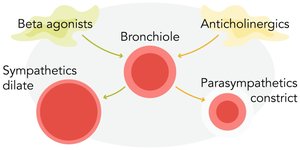
The diameter of bronchioles is regulated by the balance between sympathetic and parasympathetic activity. Sympathetic stimulation (via beta agonists) dilates bronchioles, while parasympathetic stimulation (or anticholinergic blockade) constricts them.
Clinical Application: Anticholinergic Effects
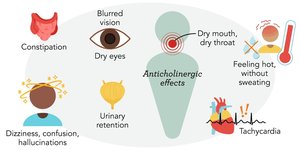
Common Side Effects of Anticholinergic Drugs
Constipation
Blurred vision, dry eyes
Dry mouth, dry throat
Feeling hot without sweating
Tachycardia (increased heart rate)
Urinary retention
Dizziness, confusion, hallucinations
Discussion and Clinical Reasoning
Integration of SNS and PSNS in Homeostasis
During exercise, the SNS predominates, increasing HR, BP, and respiratory rate to meet metabolic demands.
During rest, the PSNS predominates, promoting digestion and energy conservation.
Imbalance or dysfunction in the ANS can lead to symptoms such as dizziness upon standing (orthostatic hypotension), suggesting impaired baroreceptor or sympathetic response.
Summary Table: Sympathetic vs. Parasympathetic Effects
Organ/System | Sympathetic Effect | Parasympathetic Effect |
|---|---|---|
Heart | Increased HR and contractility | Decreased HR |
Pupils | Dilation | Constriction |
Bronchi | Dilation | Constriction |
GI Tract | Decreased motility | Increased motility |
Bladder | Urinary retention | Promotes urination |
Additional info: This guide expands on the provided notes with definitions, clinical context, and summary tables to ensure a comprehensive understanding of the ANS for medical terminology students.
