 Back
BackCell Organelles: Structure and Function in Medical Terminology
Study Guide - Smart Notes
 Tailored notes based on your materials, expanded with key definitions, examples, and context.
Cell Organelles
Introduction to Cell Organelles
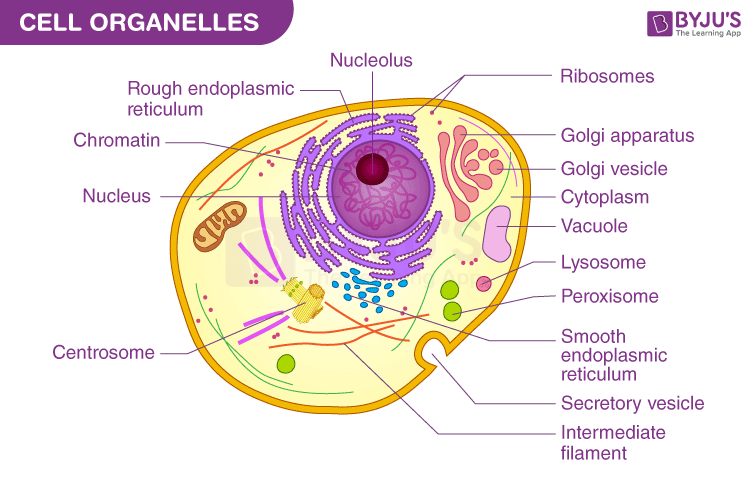
Cell organelles are specialized structures within cells that perform distinct functions necessary for cellular life. Understanding these organelles is foundational for medical terminology, as many terms relate to cellular structure and function. This knowledge is essential for comprehending body organization and medical care (Ch. 2).
Main Cell Organelles and Their Functions
Nucleus: The control center of the cell, containing genetic material (DNA) organized as chromatin. It regulates cell activities and gene expression.
Nucleolus: Located within the nucleus, it is responsible for ribosome synthesis.
Chromatin: The complex of DNA and proteins found in the nucleus, which condenses to form chromosomes during cell division.
Rough Endoplasmic Reticulum (RER): Studded with ribosomes, it is involved in protein synthesis and transport.
Smooth Endoplasmic Reticulum (SER): Lacks ribosomes and is involved in lipid synthesis and detoxification.
Ribosomes: Sites of protein synthesis, found either free in the cytoplasm or attached to the RER.
Golgi Apparatus: Modifies, sorts, and packages proteins and lipids for secretion or delivery to other organelles.
Golgi Vesicle: Small membrane-bound sacs that transport substances from the Golgi apparatus to their destination.
Cytoplasm: The gel-like substance filling the cell, containing organelles and facilitating cellular processes.
Vacuole: Storage organelle for nutrients, waste products, and other materials.
Lysosome: Contains digestive enzymes to break down waste materials and cellular debris.
Peroxisome: Contains enzymes for breaking down fatty acids and detoxifying harmful substances.
Centrosome: Organizes microtubules and is important for cell division.
Secretory Vesicle: Transports and releases substances outside the cell via exocytosis.
Intermediate Filament: Provides structural support and maintains cell shape.
Example: Medical Terminology Related to Cell Organelles
Hepatocyte: A liver cell, rich in smooth endoplasmic reticulum for detoxification.
Leukocyte: A white blood cell, containing lysosomes for destroying pathogens.
Comparison Table: Cell Organelle Functions
Organelle | Main Function | Medical Relevance |
|---|---|---|
Nucleus | Genetic control | Mutations can cause genetic diseases |
Rough ER | Protein synthesis | Defects affect enzyme production |
Lysosome | Waste breakdown | Lysosomal storage diseases |
Golgi Apparatus | Protein modification | Impaired secretion disorders |
Peroxisome | Detoxification | Peroxisomal disorders |
Additional info: Cell organelles are fundamental to understanding medical terminology related to cellular pathology, diagnostics, and treatment. This overview provides a basis for further study in body organization and medical care.
