 Back
BackChapter 1: Introduction to Medical Terminology – Study Notes
Study Guide - Smart Notes
 Tailored notes based on your materials, expanded with key definitions, examples, and context.
Introduction to Medical Terminology
Overview
Medical terminology is the specialized language used by health professionals to describe the human body, its conditions, processes, and procedures in a precise and standardized way. Understanding the structure and meaning of medical terms is essential for effective communication in healthcare settings.
Medical terms are often constructed from Latin and Greek word parts.
Most terms can be broken down into word roots, combining forms, prefixes, and suffixes.
The Four Types of Word Parts
Word Roots
Word roots form the foundation of most medical terms and usually indicate the involved body part.
Examples of word roots indicating color:
cyan/o: blue
erythr/o: red
leuk/o: white
melan/o: black
poli/o: gray
Combining Forms
A combining form is a word root with a vowel (usually 'o') added to make pronunciation easier.
Used when joining two word roots or when the suffix begins with a consonant.
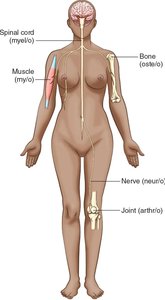
Example: neur/o (nerve), oste/o (bone)
Suffixes
Suffixes are added to the end of word roots to complete the term and usually indicate a procedure, condition, disorder, or disease.
Examples: -itis (inflammation), -algia (pain), -osis (abnormal condition), -ology (study of)

Prefixes
Prefixes are added to the beginning of a word to modify its meaning, often indicating location, time, number, or status.
Examples: pre- (before), sub- (under), hyper- (excessive), hypo- (deficient)
Building and Analyzing Medical Terms
Steps to Analyze Medical Terms
Start at the end (suffix) and work toward the beginning.
Identify and define each word part.
Combine the meanings to understand the full term.

Example: Otorhinolaryngology
ot/o: ear
rhin/o: nose
laryng: throat
-ology: study of
Meaning: Study of the ears, nose, and throat
Combining Word Parts
When a suffix begins with a vowel, a combining vowel is not used (e.g., tonsillitis).
When a suffix begins with a consonant, a combining vowel is used (e.g., neuroplasty).

Suffixes: Types and Functions
Suffixes as Noun Endings
Change the word root into a noun (e.g., crani + -um = cranium).
Suffixes Meaning "Pertaining To"
Common suffixes: -ac, -al, -ary, -eal, -ior, -tic
Example: cardiac (pertaining to the heart)
Suffixes Meaning "Abnormal Condition or Disease"
Common suffixes: -osis, -ago, -iasis, -pathy
Example: gastrosis (any disease of the stomach)
Suffixes Related to Pathology
-algia: pain and suffering
-itis: inflammation
-megaly: enlargement
-sclerosis: abnormal hardening
Suffixes Related to Procedures
-centesis: surgical puncture to remove fluid
-graphy: process of producing a picture or record
-gram: a picture or record
-plasty: surgical repair
-scopy: visual examination
The "Double R" Suffixes
-rrhage, -rrhagia: bleeding, especially sudden and severe
-rrhaphy: surgical suturing
-rrhea: flow or discharge
Prefixes: Modifying Meaning
Prefixes can indicate location, time, number, direction, quantity, size, or amount.
Examples:
pre-: before
peri-: surrounding
post-: after
ab-: away from
ad-: toward
hyper-: excessive
hypo-: deficient
Medical Dictionary Use
Finding Terms
If you know the spelling, search alphabetically.
If unsure, consider alternative spellings based on pronunciation (e.g., F/PH, J/G, K/C/CH/QU, S/C/PS, Z/X/Z).
Check categories (e.g., Diseases, Syndromes) if the term is not found directly.
For multiple-word terms, start with the last word (e.g., "Heart failure, congestive").
Online Searches
Use reputable sources and cross-check definitions.
Be cautious of suggested search terms and ensure accuracy.
Pronunciation and Spelling
Pronunciation
The "sounds-like" system helps with correct pronunciation.
Primary emphasis is shown in uppercase boldface; secondary in lowercase boldface.
There may be more than one correct pronunciation, often based on origin.
Spelling
Accurate spelling is critical; small changes can alter meaning significantly.
Be aware of alternative spellings in different English-speaking countries.
Singular and Plural Endings
Medical terms often have irregular plural forms due to their language origins.
Example: phalanx (singular), phalanges (plural)
Basic Medical Terms to Describe Diseases
Acute: Rapid onset, severe course, short duration
Chronic: Long duration
Look-Alike, Sound-Alike Terms and Word Parts
Commonly Confused Terms
arteri/o: artery
ather/o: plaque or fatty substance
arthr/o: joint
-ectomy: surgical removal
-ostomy: creation of an artificial opening
-otomy: cutting or surgical incision
fissure: groove or crack-like sore
fistula: abnormal passage
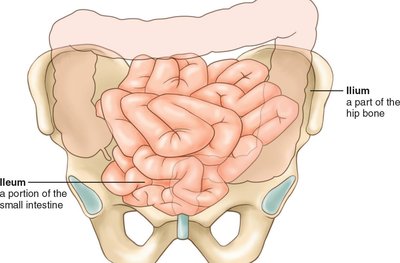
ileum: last portion of the small intestine
ilium: part of the hip bone
infection: invasion by pathogenic organism
inflammation: localized response to injury
laceration: torn or jagged wound
lesion: pathologic tissue change
mucous: describes membranes
mucus: fluid secreted by membranes
myc/o: fungus
myel/o: bone marrow or spinal cord
my/o: muscle
-ologist: specialist
-ology: study of
palpation: examination technique
palpitation: pounding or racing heart
pyel/o: renal pelvis
py/o: pus
pyr/o: fever or fire
supination: rotating the arm so the palm is forward/upward
suppuration: formation of pus
triage: medical screening for priority
trauma: wound or injury
viral: pertaining to a virus
virile: qualities of an adult male
Using Abbreviations
Abbreviations are common but can cause confusion and errors.
Follow facility policies and use only accepted abbreviations.
When in doubt, spell out the term.
The Joint Commission maintains a "Do Not Use" list to prevent errors (e.g., MS, QD, QOD, U).
Summary Table: Common Medical Word Parts
Word Part | Meaning | Example |
|---|---|---|
-itis | inflammation | tonsillitis |
-algia | pain | neuralgia |
-ology | study of | cardiology |
-osis | abnormal condition | gastrosis |
leuk/o | white | leukocyte |
neuro- | nerve | neurology |
gastro- | stomach | gastrectomy |
hypo- | deficient | hypoglycemia |
pre- | before | prenatal |
sub- | under | subcutaneous |
