 Back
BackDigestive System: Medical Terminology and Anatomy Study Guide
Study Guide - Smart Notes
 Tailored notes based on your materials, expanded with key definitions, examples, and context.
Digestive System Overview
Main Functions and Organization
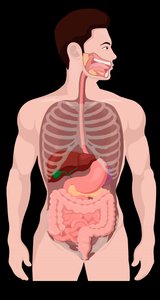
The digestive system is responsible for the breakdown of food, absorption of nutrients, and elimination of solid waste. It consists of two main groups of organs:
Alimentary Canal (Gastrointestinal Tract): A muscular tube extending from the mouth to the anus, where food is processed.
Accessory Organs: Organs that assist in digestion but are not part of the alimentary canal, such as the liver, gallbladder, and pancreas.
Oral Cavity
Structures and Functions
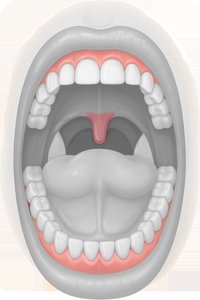
The oral cavity is formed by the palate (top), tongue (bottom), and cheeks (sides). It is the entry point for food and initiates digestion.
Gingiva (Gums): Specialized part of the oral mucous membrane that seals off teeth in their sockets.
Uvula: Hangs down the posterior edge of the soft palate; location of the gag reflex.
Mastication: Mechanical breakdown of food by chewing and mixing with saliva.
Deglutition: Swallowing of food, facilitated by saliva.
Esophagus and Stomach
Anatomy and Function
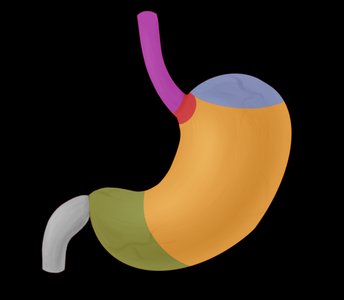
The esophagus is a muscular tube connecting the pharynx to the stomach. The stomach is a J-shaped hollow organ that collects and churns food with digestive juices.
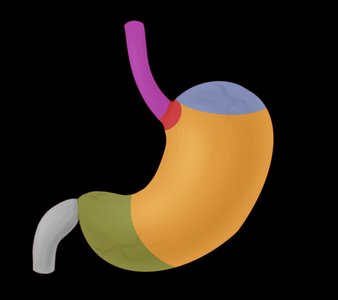
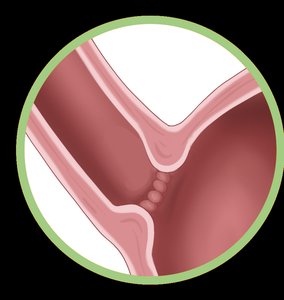
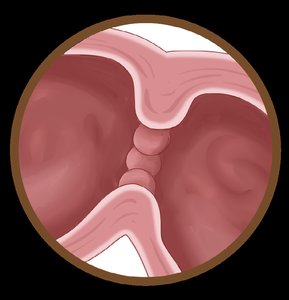
Stomach Regions: Cardia (where esophagus attaches), Fundus (upper part), Body (largest central part), Pyloric Part (lower part, connects to small intestine).
Curvatures: Greater and lesser curvatures define the shape of the stomach.
Sphincters: Cardiac sphincter prevents backflow into the esophagus; pyloric sphincter regulates passage into the small intestine.
Small Intestine
Structure and Absorption
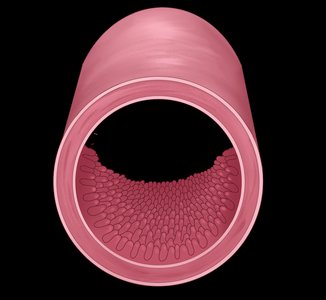
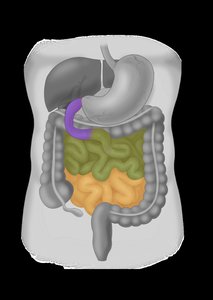
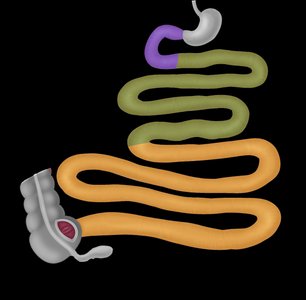
The small intestine is a long, narrow muscular tube extending from the pyloric sphincter to the large intestine. It is the major site of digestion and nutrient absorption.
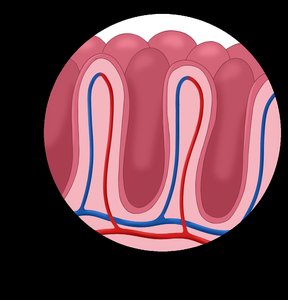
Villi: Tiny finger-like projections on the internal walls that increase surface area for absorption.
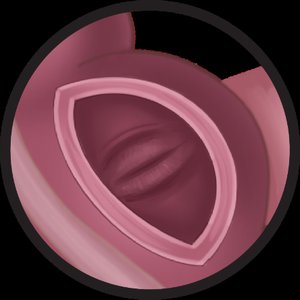
Sections: Duodenum (first C-shaped section), Jejunum (central part, most absorption), Ileum (last and longest part, connects to colon via ileocecal sphincter).
Large Intestine
Structure and Function
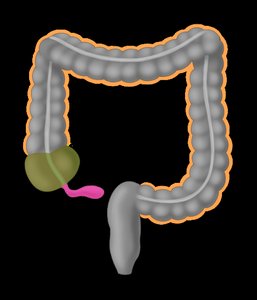
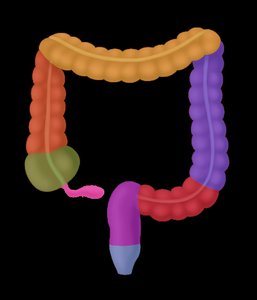
The large intestine is a muscular tube extending from the ileocecal valve to the anus. It absorbs water from the fluid remaining after digestion and absorption in the small intestine.
Sections: Cecum (pouch-like beginning), Appendix (finger-like pouch), Colon (ascending, transverse, descending, sigmoid), Rectum (stores feces), Anal Canal (passageway to anus).
Salivary Glands
Types and Locations
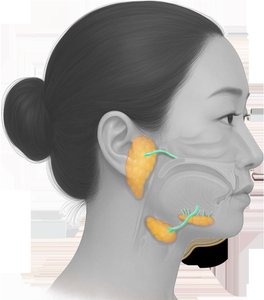
Salivary glands produce saliva that moistens, lubricates food, and contains enzymes. There are three pairs of salivary glands:
Parotid Glands: Located in front of the ears.
Submandibular Glands: Located in the floor of the mouth.
Sublingual Glands: Located below the tongue.
Liver, Gallbladder, and Pancreas
Accessory Organs and Duct System
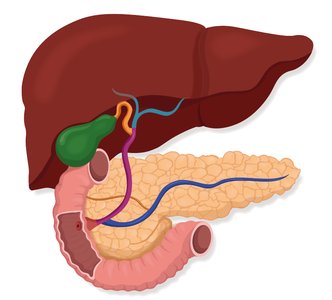
The liver, gallbladder, and pancreas are accessory organs that play crucial roles in digestion.
Liver: Produces bile, processes nutrients, detoxifies substances.
Gallbladder: Stores and concentrates bile.
Pancreas: Produces buffers and enzymes for digestion.
Duct System: Hepatic duct (liver), cystic duct (gallbladder), common bile duct (merges hepatic and cystic), pancreatic duct (pancreas to duodenum).
Bile: Important for fat digestion; emulsifies fat globules.
Digestive System: Word Building
Combining Forms and Definitions
Medical terminology for the digestive system uses combining forms to describe compositional aspects, processes, and pathology.
stomat/o: Mouth
bucc/o: Cheek
cheil/o: Lip
gloss/o: Tongue
sial/o: Saliva, salivary gland
ptyal/o: Saliva, salivation
halit/o: Breath
bil/o, chol/e: Bile
cyst/o: Bladder, sac
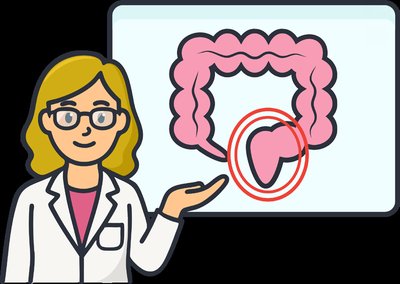
proct/o: Anus, rectum






Processes and Pathology of Digestive System
Combining Forms and Clinical Terms
Combining forms are also used to describe processes and pathology in the digestive system.
orex/o: Appetite
peps/o, pept/o: To digest, digestion
anabol/o: Build up
catabol/o: Break down
steat/i: Fat
cirrh/o: Orange-yellow
volv/o: To roll





Digestive Pharmacology & Pathology
Clinical Disorders and Treatments
Medical terms describe clinical disorders and pharmacological treatments related to the digestive system.
Ascites: Accumulation of fluid in the peritoneal space, causing abdominal swelling.
Borborygmus: Rumbling and gurgling sounds made as gas and fluids move through the intestines.
Eructation: Belching or burping.
Cachexia: Severe loss of weight or muscle due to chronic illness or cancer.
Emetics: Agents that induce vomiting.
Dysentery: Inflammation of the intestines caused by bacteria, resulting in diarrhea with blood or mucus.
Crohn’s Disease: Chronic inflammatory bowel disease, primarily affecting the ileum.
Celiac Disease: Autoimmune disorder causing bloating of small intestines due to gluten ingestion.
Biliary Colic: Acute abdominal pain caused by obstruction of a bile duct.
H2–receptor Antagonists: Medications that reduce stomach acid production.


Digestive Diagnostic and Laboratory Terms
Diagnostic Procedures and Tests
Medical terms also relate to diagnostic and laboratory procedures for the digestive system.
Tissue Transglutaminase Antibody Test (tTG): Blood test for Celiac Disease; measures antibodies formed in response to gluten.
Gavage: Introduction of food or medicine into the stomach via tube.
Gastric Banding (Lap Band Surgery): Places a band at the upper part of the stomach to limit its capacity and slow food progression.
Gastric Bypass: Creates a small stomach pouch and bypasses the duodenum, which may result in malabsorption of nutrients.
