 Back
Endocrine System: Medical Terminology Study Guide
Study Guide - Smart Notes
 Tailored notes based on your materials, expanded with key definitions, examples, and context.
Endocrine System Overview
Components of the Endocrine System
The endocrine system is a network of glands that produce and release hormones to regulate various bodily functions. These hormones are transferred through the blood to target tissues or organs, influencing growth, metabolism, and homeostasis.
Endocrine glands: Ductless glands that secrete hormones directly into the bloodstream.
Main glands: Pineal gland, pituitary gland, thyroid gland, parathyroid glands, pancreas, adrenal glands, ovaries, testes, thymus.
Hormones: Chemical messengers that act on distant or nearby organs.
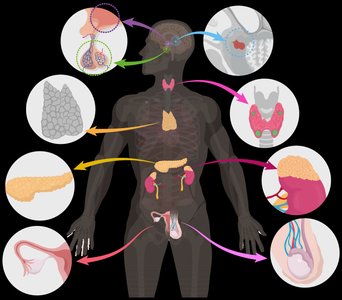
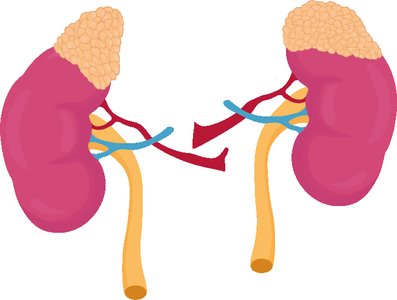
Example: The human body has two adrenal glands, one on top of each kidney. Endocrine glands are ductless, and hormones are released by one organ to act on another.
Pituitary Gland
Structure and Function
The pituitary gland, often called the "master gland," releases hormones that control other endocrine glands. It is divided into anterior and posterior lobes and is directly connected to and controlled by the hypothalamus.
Anterior pituitary: Secretes hormones such as growth hormone (GH), adrenocorticotropic hormone (ACTH), follicle-stimulating hormone (FSH), and thyroid-stimulating hormone (TSH).
Posterior pituitary: Releases hormones like vasopressin (antidiuretic hormone, ADH) and oxytocin.
Control: The hypothalamus regulates pituitary function via neural and hormonal signals.
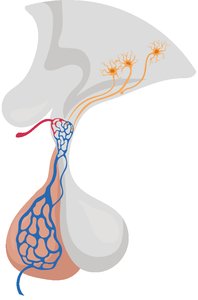
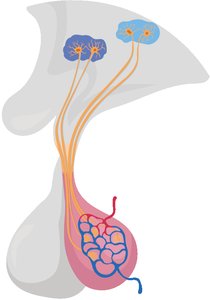
Example: The anterior pituitary secretes growth hormone to stimulate cell division, while the posterior pituitary releases vasopressin to regulate fluid balance.
Major Hormones and Their Functions
Adrenal Glands
The adrenal glands produce hormones involved in metabolism, stress response, and electrolyte balance.
Glucocorticoids: Regulate carbohydrate metabolism and stress response.
Mineralocorticoids: Control electrolyte and water balance.
Adrenaline (epinephrine) & norepinephrine: Mediate the fight-or-flight response.
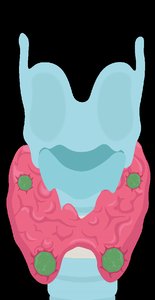
Thyroid and Parathyroid Glands
The thyroid gland produces hormones that regulate metabolism, while the parathyroid glands control calcium levels.
T4 (Thyroxine) & T3 (Triiodothyronine): Major metabolic hormones.
Calcitonin: Lowers blood calcium.
Parathyroid hormone: Raises blood calcium.
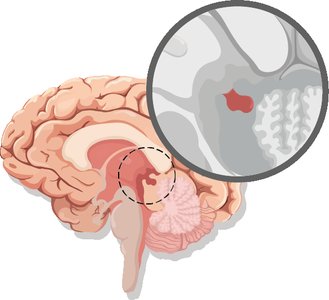
Pineal Gland
The pineal gland secretes melatonin, which regulates the sleep-wake cycle (circadian rhythm).
Pancreas
The pancreas produces insulin and glucagon, which regulate blood sugar levels.
Insulin: Lowers blood sugar.
Glucagon: Raises blood sugar.

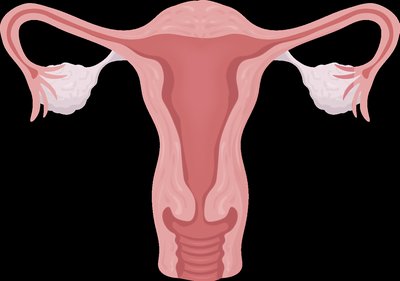
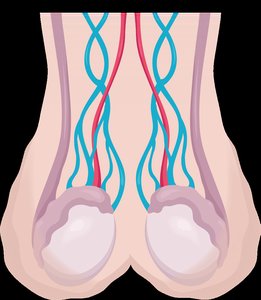
Gonads (Ovaries & Testes)
The gonads produce sex hormones essential for reproductive function.
Ovaries: Estrogen and progesterone (female sex hormones).
Testes: Testosterone (male sex hormone).
Medical Terminology: Word Building
Combining Forms
Combining forms are used to construct medical terms related to the endocrine system.
Combining Form | Definition | Memory Tool |
|---|---|---|
adren/o | adrenal gland | Hormones into action! |
hormon/o | excite, to set in motion | |
viril/o | masculine | Mr. Anderson |
andr/o | male | |
estr/o | female | Lady Estrella |
gonad/o | seed, sex glands | “Gonna” add life. |
kal/i | potassium (K) | Potassium rich kale. |
natr/o | sodium (Na) | Naturally salty. |
myx/o | mucus | Mucus mixer |
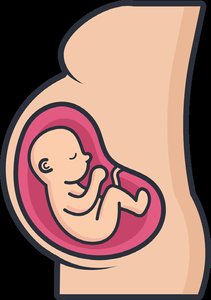
gest/o | to carry, carry young | |
ger/o | old age | Grandpa Gerry. |
hirsut/o | hairy | Suit of hair. |









General Body Structures
Additional combining forms are used for general anatomical terms relevant to the endocrine system.
Combining Form | Definition | Memory Tool |
|---|---|---|
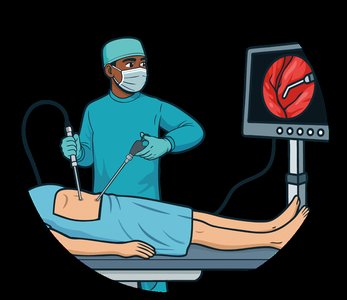
lapar/o | abdomen | |
mast/o | breast | |
or/o | mouth |


Suffixes
Suffixes are added to root words to form terms describing endocrine functions and conditions.
Suffix | Definition | Memory Tool |
|---|---|---|
-tropin | to stimulate | Tropical |
-tropic | pertaining to stimulating | |
-prandial | pertaining to a meal | |
-dipsia | thirst | Dip sea |



Endocrine Pharmacology & Pathology
Common Disorders and Terms
Medical terms describe the pharmacology and clinical disorders of the endocrine system.
Medical Term | Definition | Memory Tool |
|---|---|---|
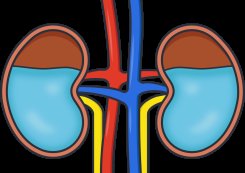
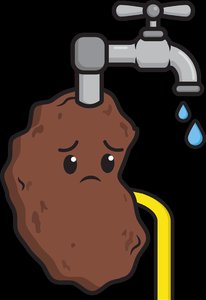
Aquaretics | A diuretic without loss of electrolytes | Aqua-exit |
Diabetes Insipidus | Disorder marked by intense thirst due to antidiuretic hormone deficiency | Dry Inside |
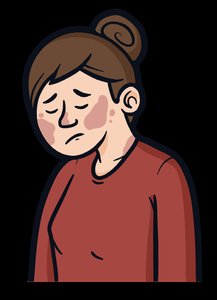
Addison’s Disease | Adrenocortical hormone deficiency, chronic fatigue, hyperpigmentation | Turns Addy’s Skin Deficiency |
Cushing Syndrome | Swelling caused by prolonged exposure to cortisol | Overstuffed Cushion |
Goiter | Enlargement of thyroid gland due to iodine deficiency | Great Organ In The Esophageal Region |
Simmonds Disease | Atrophy of anterior pituitary gland | Simultaneously Destroyed Pituitary |
Graves Disease | Autoimmune hyperactivity of thyroid gland | Graveyard of Hyper-activity |
Hashimoto’s Disease | Autoimmune destruction of thyroid gland | Thyroid into HASHbrowns |
Endocrine Diagnostic and Laboratory Terms
Common Diagnostic Tests
Diagnostic and laboratory tests are essential for evaluating endocrine function and disorders.
Medical Term | Definition | Memory Tool |
|---|---|---|
Fasting Blood Sugar (FBS) | Blood test measuring glucose after 12-hour fast | Fast Before Sampling |
Glucose Tolerance Test (GTT) | Blood test measuring body's response to glucose | Gulp, Time, Test |
HbA1C Test | Blood test for average glucose over 3 months | Average 1-time Check |
Thyroid Function Test (TFT) | Blood test for thyroid hormones (T3, T4, TSH) | |
Protein-Bound Iodine Test (PBI) | Measures iodine attached to serum protein | |
Radioactive Iodine Uptake (RAIU) | Measures thyroid absorption of radioactive iodine | Radiation Absorbed Into Us |
Summary Table: Major Endocrine Glands and Hormones
Gland | Hormone(s) | Main Function |
|---|---|---|
Pituitary | GH, ACTH, FSH, TSH, ADH, Oxytocin | Controls other glands, growth, fluid balance |
Thyroid | T3, T4, Calcitonin | Metabolism, lowers blood calcium |
Parathyroid | Parathyroid hormone | Raises blood calcium |
Adrenal | Glucocorticoids, mineralocorticoids, adrenaline | Metabolism, stress, electrolyte balance |
Pancreas | Insulin, glucagon | Blood sugar regulation |
Pineal | Melatonin | Sleep-wake cycle |
Ovaries | Estrogen, progesterone | Female sex hormones |
Testes | Testosterone | Male sex hormone |
Key Equations and Formulas
Blood Glucose Regulation
Blood glucose regulation is a critical function of the pancreas, involving insulin and glucagon.
Insulin: Promotes uptake of glucose by cells, lowering blood sugar.
Glucagon: Stimulates release of glucose from liver, raising blood sugar.
Formula:
Additional info:
Some memory tools and cartoon images are used to reinforce terminology and concepts for easier recall. All content is expanded for academic completeness and clarity.
