 Back
BackEvidence-Based Practice: Theory and Research in Nursing
Study Guide - Smart Notes
 Tailored notes based on your materials, expanded with key definitions, examples, and context.
Evidence-Based Practice: Theory and Research
Introduction to Nursing Theory
Nursing theory provides a structured framework for understanding and guiding nursing practice, education, and research. It helps nurses find meaning in their experiences, organize their thinking, and develop new insights into their work.
Nursing Theory: An organized set of related ideas and concepts that answer questions such as "What is this?" and "How does it work?"
Applications: Used to describe, explain, and predict human behavior in practice, education, and research.
Essential Concepts: Person, Environment, Health, Nursing
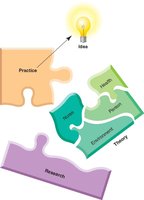
Components of a Theory
Theories are built from several foundational components that guide their development and application.
Assumptions: Accepted truths without proof
Phenomena: Observable occurrences or events
Concepts: Abstract ideas representing phenomena
Definitions: Clarify the meaning of concepts (theoretical and operational)
Statements/Propositions: Relationships between concepts
Paradigm, Framework, Model, and Theory
These terms describe different levels of abstraction in organizing nursing knowledge.
Paradigm: A worldview or ideology
Framework: Conceptual or theoretical structure
Model: Symbolic representation of a framework or concepts
Developing Nursing Theories
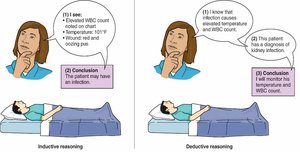
The development of nursing theories involves logical reasoning and evidence collection. Ideas are explored, validated, and used to build theories.
Inductive Reasoning: Drawing general conclusions from specific observations
Deductive Reasoning: Applying general principles to specific cases
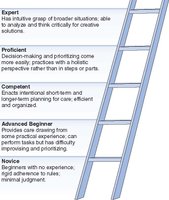
Benner’s Novice to Expert Model
Patricia Benner’s model describes the progression of nursing expertise through five stages, from novice to expert.
Novice: No experience, relies on rules
Advanced Beginner: Some practical experience, difficulty prioritizing
Competent: Intentional planning, efficient care
Proficient: Holistic decision-making, prioritizing comes easily
Expert: Intuitive grasp, critical thinking for creative solutions
Important Nurse Theorists
Several nurse theorists have contributed foundational ideas to nursing theory.
Florence Nightingale: Environment and health
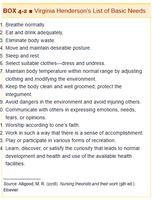
Virginia Henderson: Basic needs addressed by nurses
Hildegard Peplau: Communication and patient relations
Patricia Benner: Unique knowledge development
Madeleine Leininger: Cultural caring and competence
Jean Watson: Caring from a nursing perspective
Theories from Other Disciplines
Nursing incorporates theories from other fields to enhance care and understanding.
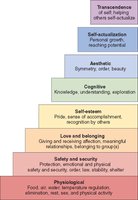
Maslow's Hierarchy of Basic Human Needs: Prioritizes needs from physiological to self-actualization
Validation Theory: Focuses on communication and validation
Stress and Adaptation Theory: Explains responses to stress
Developmental Theory: Describes stages of human development
System Theory: Views individuals as part of interconnected systems
Nursing Research
What is Nursing Research?
Nursing research is a systematic, objective process for analyzing phenomena important to nursing. It encompasses clinical practice, education, and administration, aiming to enhance patient care quality.
Professional Competence: Required by standards from organizations such as the American Nurses Association
Ways to Gain Knowledge: Trial and error, authority, intuition, logical reasoning, scientific method

Educational Preparation for Nursing Research
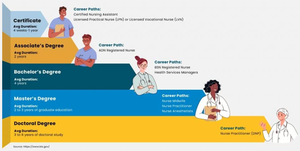
Nursing research skills are developed through various educational pathways, from associate degrees to doctorates.
Associate Degree: Basic research participation
Baccalaureate Degree: Research design and implementation
Master’s Degree: Advanced research and leadership
Doctoral Degree: Independent research and theory development
Scientific Method in Nursing Research
The scientific method is used to systematically collect, observe, verify, explain, or predict events in nursing. The goal is to find solutions to problems and develop explanations (theories).
Quantitative Research: Uses measurable data to test hypotheses
Qualitative Research: Explores experiences and themes
Steps of the Research Process
The research process involves several key steps to ensure validity and reliability.
Select and define the problem
Select a research design
Search for credible sources
Formulate research question, hypothesis, or problem statement
Collect and analyze data
Use research findings
Rights of Research Participants
Protecting research participants is a priority in nursing research. Institutional Review Boards (IRBs) ensure ethical standards are met.
Informed Consent
Right to Refuse Participation
Right to Not Be Harmed
Right to Full Disclosure
Right to Self Determination
Right to Privacy and Confidentiality
Practicing with Best Evidence: PICOT Method
The PICOT method is used to formulate searchable questions for guiding literature searches and evidence-based practice.
P: Patient or Problem
I: Intervention
C: Comparison Intervention
O: Outcomes
T: Time
Searching the Literature
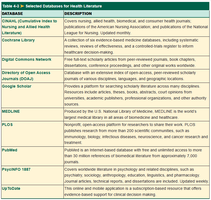
Indexes and databases are used to find credible sources for nursing research. Analytic reading and research appraisal are essential for evaluating quality.
Database | Description |
|---|---|
CINAHL | Covers nursing, allied health, biomedical, and consumer health journals |
Cochrane Library | Collection of evidence-based reviews and clinical trials |
Digital Commons Network | Free scholarly articles from peer-reviewed journals |
Directory of Open Access Journals (DOAJ) | Free access to peer-reviewed journals |
Google Scholar | Searches scholarly literature across disciplines |
MEDLINE | Database of the U.S. National Library of Medicine |
PLOS | Open access journals in science and medicine |
PubMed | Free access to biomedical literature |
PsycINFO 1987 | Database of psychology and related fields |
UpToDate | Evidence-based clinical decision support |
Summary Table: Virginia Henderson's List of Basic Needs
Basic Need | Description |
|---|---|
Breathe normally | Maintain adequate oxygenation |
Eat and drink adequately | Maintain nutrition and hydration |
Eliminate body wastes | Proper excretion |
Move and maintain desirable posture | Physical mobility |
Sleep and rest | Recovery and energy |
Select suitable clothes | Dress and undress appropriately |
Maintain body temperature | Adjust clothing and environment |
Keep body clean and well groomed | Protect the integument |
Avoid dangers in the environment | Prevent injury |
Communicate with others | Express emotions, needs, fears, opinions |
Work and accomplish | Sense of accomplishment |
Play or participate in recreation | Enjoy leisure activities |
Learn, discover, satisfy curiosity | Normal development and health |
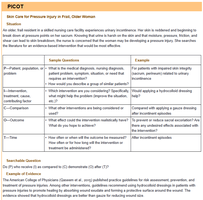
Summary Table: PICOT Example for Pressure Injury
P | I | C | O | T |
|---|---|---|---|---|
Patients with pressure injury | Application of a hydrocolloid dressing | Compared with applying a gauze dressing | Healing of the pressure injury | After four incident reports |
Summary Table: Selected Databases for Health Literature
Database | Description |
|---|---|
CINAHL | Covers nursing, allied health, biomedical, and consumer health journals |
Cochrane Library | Evidence-based reviews and clinical trials |
Digital Commons Network | Free scholarly articles from peer-reviewed journals |
Directory of Open Access Journals (DOAJ) | Free access to peer-reviewed journals |
Google Scholar | Searches scholarly literature across disciplines |
MEDLINE | Database of the U.S. National Library of Medicine |
PLOS | Open access journals in science and medicine |
PubMed | Free access to biomedical literature |
PsycINFO 1987 | Database of psychology and related fields |
UpToDate | Evidence-based clinical decision support |
Additional info:
Inductive reasoning is used when a nurse draws a general conclusion from specific patient symptoms.
Deductive reasoning applies known principles to specific patient cases.
Evidence-based practice integrates the best available research with clinical expertise and patient values.
