 Back
BackIntegumentary System: Medical Terminology and Clinical Concepts
Study Guide - Smart Notes
 Tailored notes based on your materials, expanded with key definitions, examples, and context.
Integumentary System Overview
Introduction to the Integumentary System
The integumentary system consists of the skin and its accessory structures, including hair, nails, sebaceous glands, and sweat glands. It is the largest organ system in the body and serves as the primary interface between the body and the external environment.
Accessory Structures: Hair, nails, sebaceous (oil) glands, and sudoriferous (sweat) glands.
Major Functions: Protection, regulation, sensation, and secretion.

Functions of the Skin
Main Functions
The skin performs several essential functions that are vital for maintaining homeostasis and protecting the body from external harm.
Protection: Acts as a barrier against pathogens, mechanical injury, water loss, and ultraviolet radiation. Also helps in vitamin D synthesis.
Regulation: Maintains body temperature through vasodilation, vasoconstriction, and sweat production.
Sensation: Contains specialized nerve endings for detecting pain, touch, temperature, and pressure.
Secretion: Sweat glands secrete perspiration for cooling; sebaceous glands secrete sebum for lubrication.
Anatomy of the Skin
Layers of the Skin
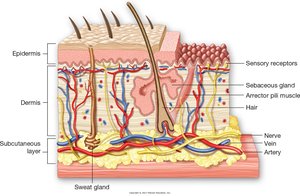
The skin is composed of two primary layers: the epidermis and the dermis, with an underlying subcutaneous layer.
Epidermis: The outermost layer, consisting of five strata (stratum basale, spinosum, granulosum, lucidum, corneum). It is thinnest on the eyelids and thickest on the palms and soles.
Dermis: Also called the corium or true skin, it contains connective tissue, blood vessels, nerves, glands, and hair follicles. It is divided into the papillary (upper) and reticular (lower) layers.
Subcutaneous Layer: Supports, nourishes, insulates, and cushions the skin.
Accessory Structures of the Skin
Hair
Hair is a threadlike structure formed by cells within a follicle. Each hair consists of a visible shaft and a root embedded in the follicle. The arrector pili muscle attaches to the follicle, and hair in certain areas (e.g., nose, ears) helps filter foreign particles.
Nails
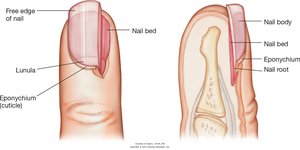
Nails are hard keratinized structures of the epidermis. The nail body covers the nail bed, while the root is hidden beneath the cuticle (eponychium). The lunula is the pale, crescent-shaped area at the base of the nail.
Glands
Sebaceous (Oil) Glands: Secrete sebum into hair follicles for lubrication; secretion is influenced by hormones.
Sudoriferous (Sweat) Glands: Two types: eccrine (widespread, for cooling) and apocrine (armpits, groin, secrete fluid with proteins and lipids).
Developmental and Age-Related Changes
Fetal and Neonatal Skin
Fetal skin is covered by vernix caseosa and develops lanugo hair.
Newborns have less subcutaneous fat, making them more sensitive to temperature changes.
Aging Skin
Skin becomes looser, less elastic, and more prone to wrinkles due to decreased collagen and elastic fibers.
Hair may gray and thin; nails may become brittle and discolored.
Common Diseases and Conditions
Acne and Related Disorders
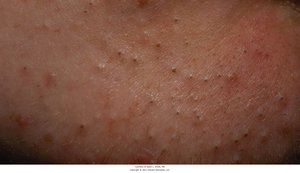
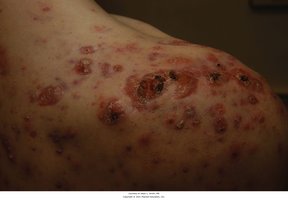
Acne is a common inflammatory condition of the sebaceous glands, often seen in adolescents. Severe forms, such as acne fulminans, can cause ulcerative lesions and systemic symptoms.
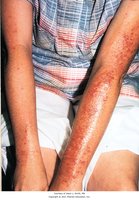
Dermatitis and Allergic Reactions
Dermatitis refers to inflammation of the skin, which can be caused by allergens, irritants, or autoimmune reactions. Contact with plants like poison ivy can cause allergic dermatitis.

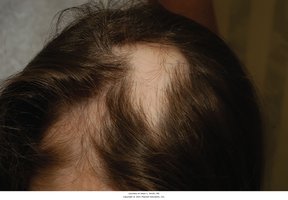
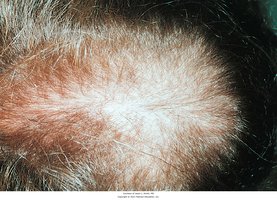
Alopecia
Alopecia is hair loss, which can be patchy (alopecia areata) or diffuse (androgenetic alopecia).
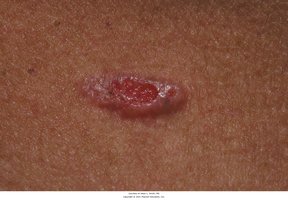
Skin Cancer
Basal cell carcinoma (BCC) is the most common skin cancer, especially in older adults. It is usually slow-growing but should be removed surgically.
Insect Bites and Infestations
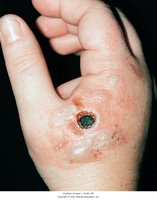
Brown Recluse Spider Bite: Can cause necrotic skin lesions.
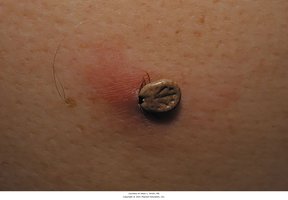
Tick Bite: May transmit infectious diseases.
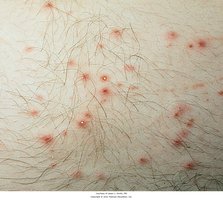
Flea Bites: Cause itchy, red papules.
Burns
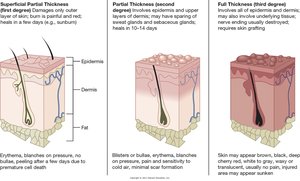
Burns are classified by depth: superficial (first degree), partial thickness (second degree), and full thickness (third degree). Each type has distinct clinical features and healing times.
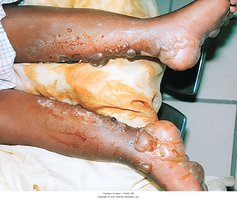
Other Skin Disorders
Candidiasis: Fungal infection, often in moist areas.
Carbuncle: Cluster of boils caused by bacterial infection.
Cellulitis: Acute, spreading bacterial infection of the skin and subcutaneous tissues.
Impetigo: Contagious bacterial skin infection, common in children.
Keloid: Overgrowth of scar tissue at the site of a healed skin injury.
Melanoma: Malignant tumor of melanocytes, highly metastatic.
Psoriasis: Chronic autoimmune condition with red, scaly plaques.
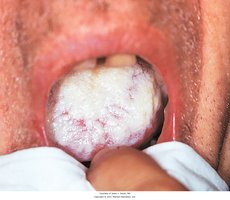
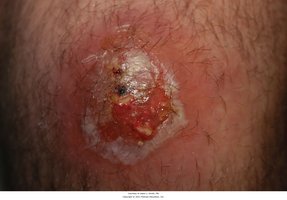
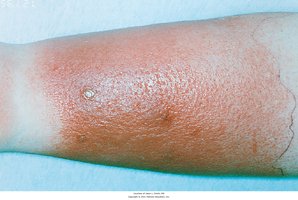
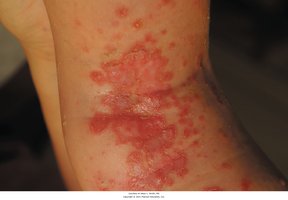
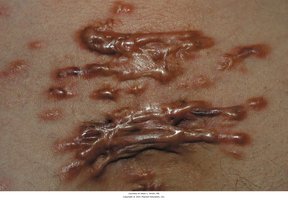
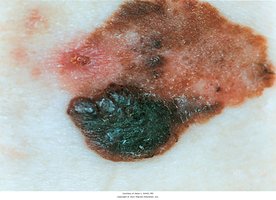
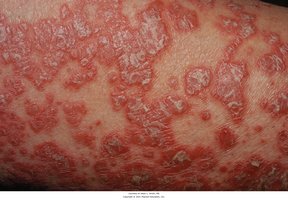
Medical Terminology Building Blocks
Word Construction
Medical terms are constructed from word roots, prefixes, suffixes, and combining forms. Understanding these components aids in the analysis, spelling, and pronunciation of complex terms.
Causalgia: caus (heat) + -algia (pain) = burning pain.
Excoriation: ex- (out) + coriat (corium) + -ion (process) = process of scraping away skin.
Hypodermic: hypo- (under) + derm (skin) + -ic (pertaining to) = pertaining to under the skin.
Rhytidoplasty: rhytid/o (wrinkle) + -plasty (surgical repair) = surgical repair of wrinkles.
Drug Highlights
Common Drug Classes for Skin Disorders
Emollients: Oily substances for dry skin.
Keratolytics: Promote loosening of keratin layers.
Local Anesthetics: Reduce pain by inhibiting nerve impulses.
Antihistamines: Prevent histamine action (allergy relief).
Antipruritics: Relieve itching.
Antibiotics: Destroy or inhibit microorganisms.
Antifungals: Inhibit fungi and yeast.
Antivirals: Combat viral diseases.
Anti-inflammatories: Relieve swelling, redness, and pain.
Antiseptics: Prevent pathogen growth.
Other: Retin-A (acne), Rogaine (hair loss), Botox (wrinkles).
Diagnostic and Laboratory Tests
Common Tests
Tuberculosis Skin Test (Mantoux): Intradermal injection of PPD to detect TB infection.
Interferon-Gamma Release Assays (IGRAs): Blood test for TB infection.
Scratch/Prick Test: Detects allergies by observing skin reaction to allergens.
Sweat Test (Chloride): Measures chloride in sweat; used in cystic fibrosis diagnosis.
Tzanck Test: Microscopic exam of tissue from a pustule to identify viral infection.
Wound Culture: Identifies microorganisms in wound exudate.
Biopsy: Microscopic examination of tissue to distinguish benign from malignant lesions.
Erythrocyte Sedimentation Rate (ESR): Measures rate of red blood cell settling; indicates inflammation.
Selected Abbreviations and Acronyms
Abbreviations are commonly used in medical documentation. Students should refer to the textbook appendix for a comprehensive list.
Summary Table: Integumentary System at-a-Glance
Structure | Function |
|---|---|
Skin (epidermis, dermis, subcutaneous) | Protection, regulation, sensation, secretion |
Hair | Protection, sensory input, filtration |
Nails | Protection, manipulation of objects |
Sebaceous glands | Lubrication of skin and hair |
Sudoriferous glands | Thermoregulation, excretion |
Additional info: This guide expands on the textbook content with definitions, clinical context, and logical groupings for exam preparation. For visual identification of skin lesions, refer to the textbook's illustrated figures and tables.
