Back
BackIntegumentary System: Medical Terminology Study Guide
Study Guide - Smart Notes
 Tailored notes based on your materials, expanded with key definitions, examples, and context.
Integumentary System
Introduction to the Integumentary System
The integumentary system is a complex organ system that includes the skin and its accessory structures such as hair and nails. It serves as the body's primary barrier against environmental hazards and plays a vital role in protection, sensation, and regulation. The medical specialty concerned with this system is dermatology, and professionals in this field diagnose and treat a variety of skin-related conditions.
Dermatology: The study and treatment of the integumentary system.
Dermatologists: Physicians specializing in skin disorders.
Plastic Surgeons: Perform reconstructive and cosmetic procedures involving the skin.
Pharmacists: Manage medications for skin conditions.
Components: Skin (largest organ), hair, nails.

Functions of the Integumentary System
The integumentary system performs several essential functions that are critical for maintaining homeostasis and overall health.
Protection: Acts as a two-way barrier, preventing pathogen entry and water loss.
Temperature Regulation: Sweat evaporation and blood vessel dilation cool the body; constriction conserves heat; subcutaneous fat insulates.
Sensation: Contains sensory receptors for touch, pressure, temperature, and pain.
Waste Disposal: Excretes small amounts of waste (e.g., excess salt) through sweat.
Structures of the Skin
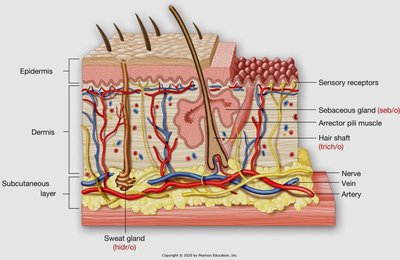
The skin is composed of three main layers, each with specialized structures and functions.
Epidermis: Outermost layer, provides a waterproof barrier and creates skin tone.
Dermis: Middle layer, contains connective tissue, hair follicles, and sweat glands.
Subcutaneous Layer (Hypodermis): Deepest layer, made of fat and connective tissue for insulation and cushioning.
Accessory Structures: Hair shafts, sebaceous (oil) glands, sweat glands, sensory receptors, nerves, blood vessels.
Medical Terminology: Word Parts
Root Words Related to the Integumentary System
Root words are the foundation of medical terms. Understanding these roots helps in deciphering complex terminology.
Root Word | Definition | Root Word | Definition |
|---|---|---|---|
aden/ | gland | hidr/ | sweat |
alges/ | sensitivity to pain | esthes/ | feeling or sensation |
bi/ | life | lip/ | fat |
carcin/ | cancer | leuk/ | white |
cry/ | cold | melan/ | black |
cutane/ | skin | myc/ | fungus |
cyan/ | bluish in color | necr/ | death |
derm/ | skin | onych/ | nail |
erythr/ | red | tox/ | toxic |
Suffixes Related to the Integumentary System
Suffixes modify the meaning of root words, often indicating a procedure, condition, or disease.
Suffix | Definition | Suffix | Definition |
|---|---|---|---|
-cyte | cell | -oma | tumor |
-derma | skin condition | -pathy | disease |
-ectomy | surgical removal | -plasty | surgical repair |
-itis | inflammation of | -rrhea | discharge |
-malacia | abnormal softening | -sclerosis | hardening |
-megaly | enlarged |
Prefixes Related to the Integumentary System
Prefixes are added to the beginning of root words to alter their meaning, often indicating location, number, or status.
Prefix | Meaning |
|---|---|
a- or an- | without / no |
epi- | above |
hyper- | excessively elevated |
hypo- | low, below, insufficient |
intra- | within |
sub- | under |
Building and Analyzing Medical Terms
Medical terms are constructed from prefixes, root words, and suffixes. Understanding how to build and break down these terms is essential for accurate communication in healthcare.
Example: Lipoma – lip (fat) + -oma (tumor) = fatty tumor.
Example: Dermoplasty – derm (skin) + -plasty (surgical repair) = surgical repair of the skin.
Pathological Conditions and Disorders
Common Disorders of the Integumentary System
Many disorders affect the skin, each with characteristic signs and symptoms. Recognition of these conditions is crucial for diagnosis and treatment.
Term / Disorder | Explanation / Signs & Symptoms |
|---|---|
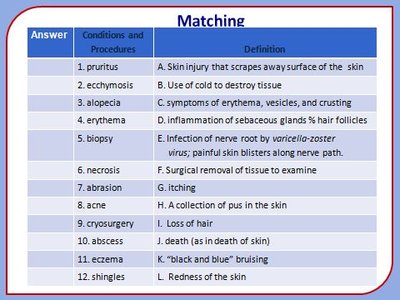
abrasion | Skin injury that scrapes away the surface; redness and pain. |
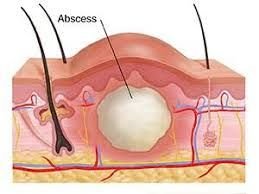
abscess | Collection of pus in the skin; redness, elevation, pain. |
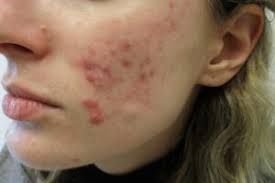
acne | Inflammation of sebaceous glands and hair follicles. |
alopecia | Absence or loss of hair, especially on the head. |
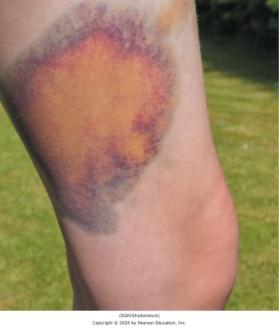
ecchymosis | "Black-and-blue" bruise caused by blood collecting under the skin after trauma. |
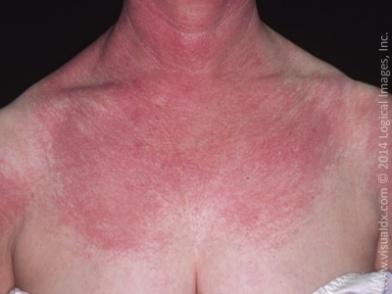
erythema | Redness of the skin. |
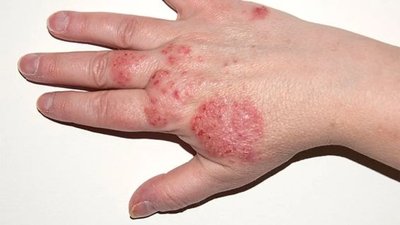
eczema | Skin condition with erythema, vesicles, itching, and crusting. |
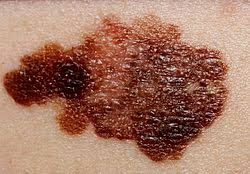
malignant melanoma | Skin cancer originating in melanocytes; changes in moles or new growths. |
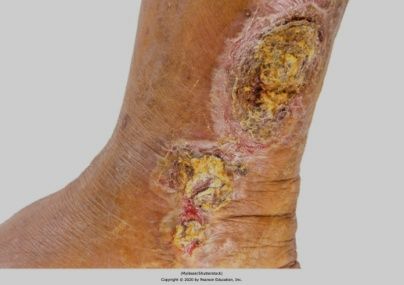
necrosis | Death of tissue, usually due to lack of oxygen. |
pruritus | Severe itching. |
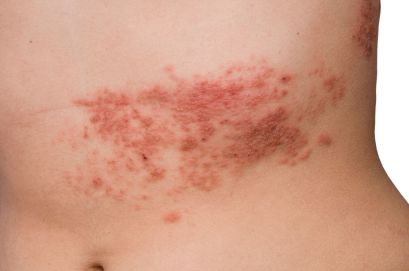
shingles | Infection of nerve root by varicella-zoster virus; painful band of blisters along nerves. |
Burns: Classification and Characteristics
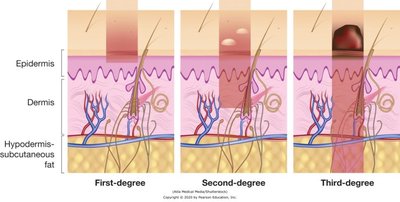
Burns are classified by depth and severity, affecting different layers of the skin and underlying tissues.
First-degree burn: Damages only the epidermis; causes erythema, no blisters, no scarring.
Second-degree burn: Extends into the dermis; causes blisters, possible scarring.
Third-degree burn: Full-thickness damage into underlying tissues; infection and fluid loss are major concerns; requires skin grafts, scarring occurs.
Diagnostic Tests and Treatments
Diagnostic Procedures
Biopsy: Surgical removal of a tissue sample for microscopic examination to aid diagnosis.
Medical and Surgical Treatments
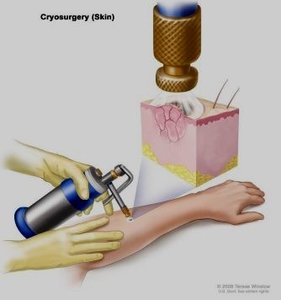
Cryosurgery: Use of extreme cold (often liquid nitrogen) to freeze and destroy abnormal tissue.
Pharmacological Treatments
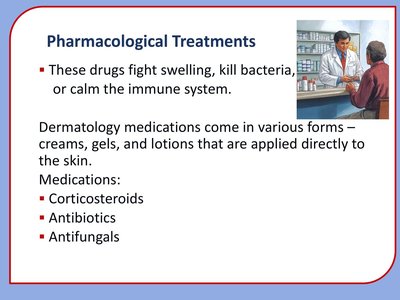
Medications for skin conditions may include corticosteroids, antibiotics, and antifungals, often applied topically as creams, gels, or lotions. These drugs reduce inflammation, fight infection, or calm the immune response.
Abbreviations in the Integumentary System
ID: Intradermal (within the skin)
Subcut or subQ: Subcutaneous (under the skin)
IM: Intramuscular (into the muscle)
IV: Intravenous (into the vein)
Practice: Matching Terms and Definitions
Review the following table to reinforce your understanding of integumentary system terminology.
Answer | Conditions and Procedures | Definition |
|---|---|---|
1. pruritus | G. itching | |
2. ecchymosis | K. "black and blue" bruising | |
3. alopecia | H. loss of hair | |
4. erythema | L. redness of the skin | |
5. biopsy | F. surgical removal of tissue to examine | |
6. necrosis | J. death (as in death of skin) | |
7. abrasion | A. skin injury that scrapes away surface of the skin | |
8. acne | D. inflammation of sebaceous glands & hair follicles | |
9. cryosurgery | B. use of cold to destroy tissue | |
10. abscess | H. collection of pus in the skin | |
11. eczema | C. symptoms of erythema, vesicles, and crusting | |
12. shingles | E. infection of nerve root by varicella-zoster virus; painful skin blisters along nerve path |